
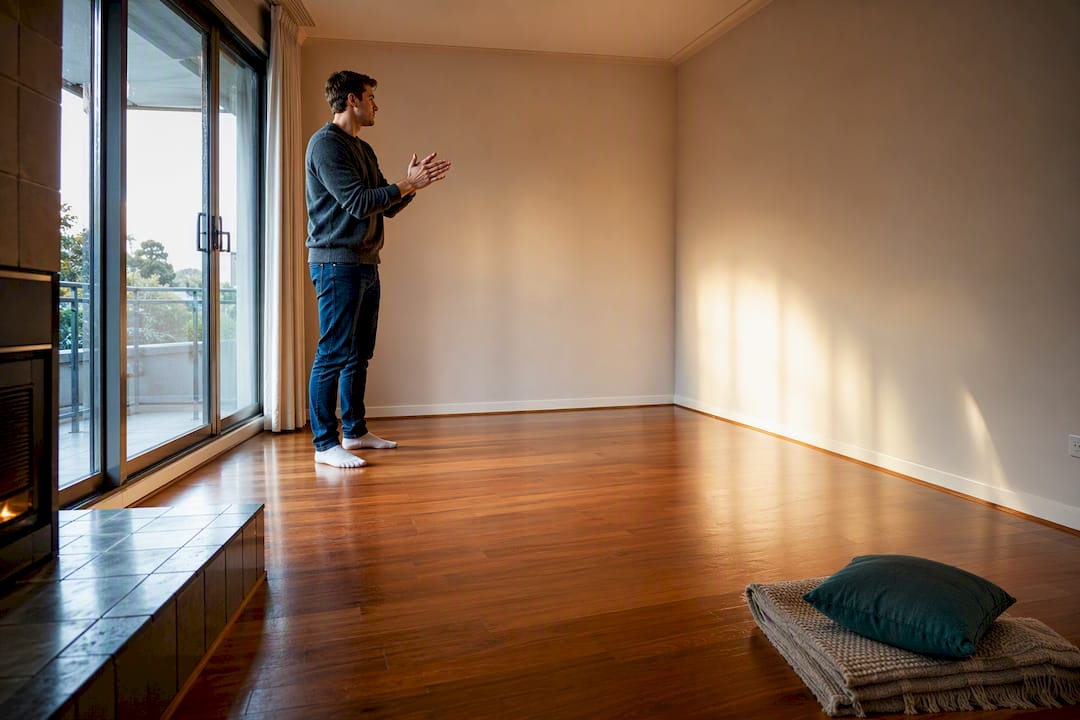
The fastest fix is layering, not gutting the room. Add a large rug with a thick pad, hang full length curtains, pull upholstered seating off bare walls, fill a bookcase, and treat first reflection points with soft panels. This softens reverberation noticeably within a weekend. It won’t stop sound travelling to neighbours, though. That’s soundproofing, a different job entirely.
TL;DR:
- Large rugs with dense pads and full-length, heavyweight curtains hung wider and higher significantly reduce high-frequency reflections in a room.
- Moving upholstered furniture away from bare walls and filling bookshelves with irregular objects help scatter sound and diminish reflections effectively.
- Targeted wall panels placed at first reflection points address echoes in rooms with high ceilings or open layouts, especially where soft furnishings alone fall short.
- Regular cleaning of soft furnishings and panels maintains their sound-absorbing effectiveness, especially in dusty environments that pack fibres tighter.
- Vertical treatment at mid and upper wall levels, particularly in rooms with high ceilings, offers the greatest acoustic improvement without permanent wall damage.
Table of Contents
- Why living rooms echo: surfaces, geometry and reflection paths
- High-impact fixes you can do today
- When acoustic panels, bass traps and ceiling treatment earn their keep
- A simple test and adjust plan for treating echo
- A designer’s take on making acoustic fixes look intentional
- Keeping your acoustic treatments working over time
- Why most echo advice stops half a step short
- Colour, texture and no-drill panels: the DwellForms™ approach
- Sources
- FAQ
Why living rooms echo: surfaces, geometry and reflection paths
Echo starts with hard, flat surfaces. Hardwood floors, tiled hearths, drywall, stone benchtops and glass doors all reflect sound waves rather than absorbing them, which is exactly why a nearly empty rental with polished boards sounds like a lecture hall the moment you clap. Sound waves bounce off these materials and keep travelling until something soft or uneven interrupts them.
Room shape matters just as much as surface. Parallel walls bounce sound back and forth in a straight line, creating what acousticians call flutter echo, that fast, metallic repeat you hear in a bare stairwell. High ceilings stretch the reflection path even further, giving sound more distance to build energy before it reaches your ears.
Not every fix tackles the same problem. A few things worth understanding before you spend a cent:
- Rugs and curtains absorb high frequencies well but do almost nothing for bass rumble.
- Bass and low frequencies need mass and depth, usually solved with corner treatment, not surface coverage.
- Soft, porous, or uneven textures at multiple heights interrupt reflections more effectively than one large flat surface ever will.
- A room with more glass, tile, or exposed concrete will always need more treatment than a carpeted, curtained one.
Matching the fix to the cause is the difference between a room that sounds calmer and one where you’ve bought a rug for nothing.
High-impact fixes you can do today
Most of the improvement in a living room comes from five moves, and none of them require a drill.
- Go big on the rug. Choose the largest rug that fits your seating zone, ideally one where the front legs of your sofa sit on it. A rug that’s too small just decorates the floor instead of doing acoustic work.
- Add a thick pad underneath. A dense rug pad roughly doubles the absorption a rug provides, because it traps air and adds mass beneath the fibres rather than letting sound bounce straight off the floor underneath.
- Hang curtains properly. Full length, heavyweight curtains mounted higher and wider than the window frame catch more reflected sound than a neat, tightly fitted pair ever will. Mounting curtains high and wide is one of the cheapest wins in the whole list.
- Move furniture off the walls. Upholstered sofas and armchairs pushed flush against bare drywall waste their absorption potential. Pull seating a little forward and stagger pieces at slight angles so sound has to work harder to bounce cleanly between surfaces.
- Fill a bookcase. An irregular wall of books, boxes, and objects scatters sound rather than reflecting it flat, which is diffusion doing its job without you spending anything on treatment.
Small additions stack up faster than people expect. Cushions and throws on a leather sofa, a layered rug over an existing one, or an upholstered ottoman in the middle of the room all chip away at reflections in the exact zones where people actually talk and listen. Everyday soft furnishings genuinely count as acoustic treatment, not just a workaround before the “real” fix.
Pro Tip: Before buying a single panel, do the clap test in each corner of the room. Wherever the echo lingers longest is where your next dollar should go, not necessarily where the room “feels” empty.
When acoustic panels, bass traps and ceiling treatment earn their keep
Soft furnishings hit a ceiling of their own. Once a room has large expanses of bare wall, an open-plan layout, or ceilings above roughly 2.7 metres, rugs and curtains alone usually can’t close the gap, particularly in bigger, taller spaces where reflections have more distance to build up. That’s when targeted panels start to matter.
Finding where to put them doesn’t require guesswork. Sit in your usual spot, have someone slide a mirror along the side wall, and mark every point where you can see the TV or speaker reflected back at you. Those are your first reflection points, and treating them first delivers more improvement than covering the whole wall evenly.
A few things to keep in mind before committing:
- Corner bass traps handle the low rumble that rugs and curtains can’t touch, and are worth exploring if a room still sounds “boomy” after softening the surfaces.
- Extend panel coverage around each marked reflection point rather than treating a single small square.
- Vertical, mid to upper wall coverage is the piece most people skip, yet it matters most in rooms with high ceilings.
Absorptive treatment reduces flutter echo and early reflections, but total coverage isn’t the goal. For renters and homeowners who don’t want holes in the wall, adhesive backed textile panels and modular PET felt kits give you that vertical coverage without a single screw, and they can come down or move rooms whenever you do.
A simple test and adjust plan for treating echo
Guesswork is how people end up with three rugs and a wall of panels they didn’t need. A short, repeatable sequence gets you there with far less spending.
- Test first. Clap sharply in the centre of the room and in each corner, or record a few seconds of speech on your phone and play it back. A harsh, ringing tail after the clap means untreated hard surfaces nearby.
- Treat the biggest surface first. Start with the floor, then windows, then the seating zone, then side walls, then the ceiling or back wall, then corners last.
- Retest after every change. Treating one surface and listening again before adding more stops you overbuying, and it’s the single habit that separates people who fix the problem from people who just keep shopping.
| Stage | What to check | Signal you’re done |
|---|---|---|
| Floor | Clap test, listen for high-frequency ring | Rug and pad installed, sharp ring softened |
| Windows | Speech clarity near the glass | Full-length curtains hung, echo off glass reduced |
| Seating zone | Furniture spacing off walls | Sofas and chairs no longer flush against bare surfaces |
| Walls and ceiling | Mirror method at ear height | First reflection points identified and covered |
| Corners | Low bass rumble on music or TV | Boominess noticeably reduced |
Stop once conversations sound clear and TV dialogue doesn’t blur. Over treating a room can make it feel flat and lifeless, and a living room isn’t a recording booth. If bass problems persist after corner treatment, that’s usually the point to bring in a specialist rather than keep adding soft furnishings.
A designer’s take on making acoustic fixes look intentional
Acoustic treatment doesn’t have to look like an afterthought bolted onto a nice room. Removable PET felt panels and textile wall art can do the absorption work of a “proper” treatment while reading as a deliberate design choice, not a patch job.
The best acoustic fixes are the ones guests never clock as acoustic fixes at all. They just notice the room feels calmer, and the wall looks better than it did before.
Adhesive pads mean no drilling and no wall damage, which matters as much for a rental inspection as it does for a homeowner who doesn’t want to fill holes later. Panels can be repositioned as furniture shifts, taken down for a repaint, or moved to a new flat entirely.
— Michelle
Keeping your acoustic treatments working over time
Soft furnishings and panels lose effectiveness if they’re neglected, mostly through dust build-up, not wear. Dust settles into rug fibres, curtain weaves and felt panel surfaces, filling the tiny air pockets that do the absorbing. A rug that’s due for a vacuum is measurably less effective than a freshly cleaned one, simply because compacted dust makes fibres denser and less porous.
Vacuum rugs weekly, and give heavyweight curtains a gentle shake-out or a low-heat tumble every few months if the fabric allows it, since packed folds absorb less than fabric with some loft to it. Bookcases collect dust on shelves and spines, and wiping them down monthly keeps the diffusion surfaces doing their job rather than just looking cluttered.
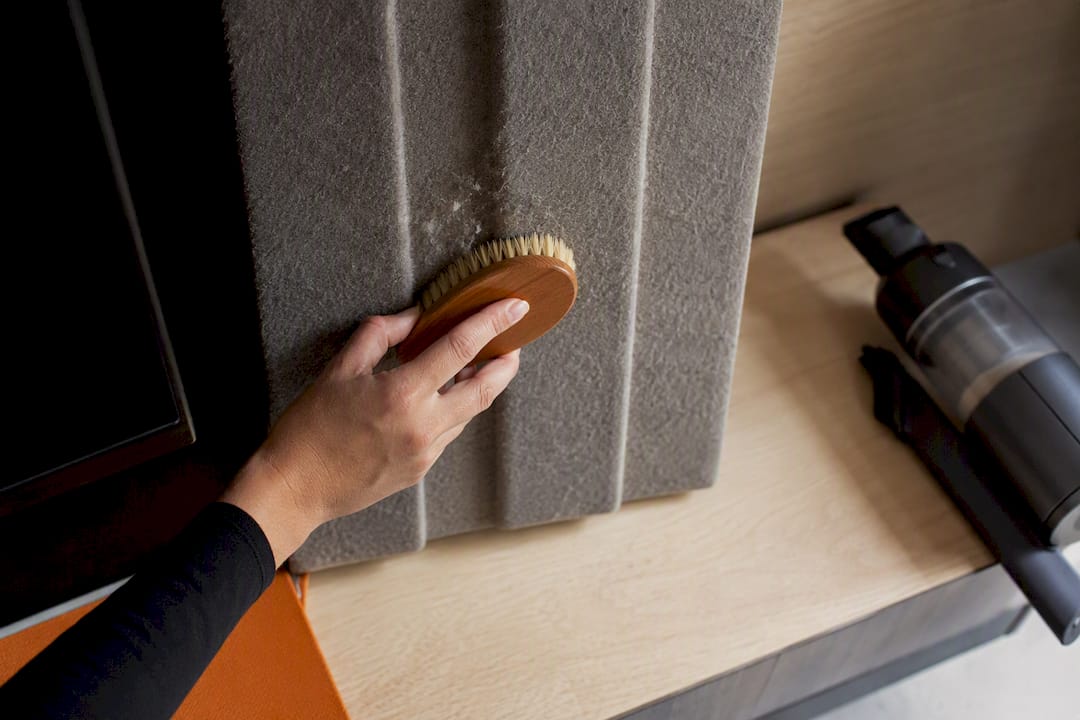
PET felt panels are simpler again. A soft brush or the low suction setting on a vacuum removes surface dust without flattening the felt’s texture, and because the material is moisture resistant, a slightly damp cloth handles the occasional mark without soaking through. Avoid heavy scrubbing, which can compress the felt’s texture and quietly reduce how well it absorbs sound.
Reassess the room every year or two, especially after moving furniture or swapping a rug. A layout change can quietly reopen reflection paths you’d already solved, and a quick clap test is enough to catch it before it becomes a habit you stop noticing.
Why most echo advice stops half a step short
Most guides hand you a checklist and stop there, as if a rug and a curtain automatically make a room sound right. They don’t mention that a rug in the wrong size or a curtain hung too tight barely moves the needle, which is why so many people try “the fixes” and still feel like the room echoes.
The bigger gap in conventional advice is treating soft furnishings and proper wall treatment as separate categories, one for people who care about style and one for people who care about acoustics. In a living room, they’re the same job. A textured, colourful panel at a first reflection point does the absorption work of a purpose-built acoustic tile while adding the kind of visual interest a bare rental wall usually lacks entirely.
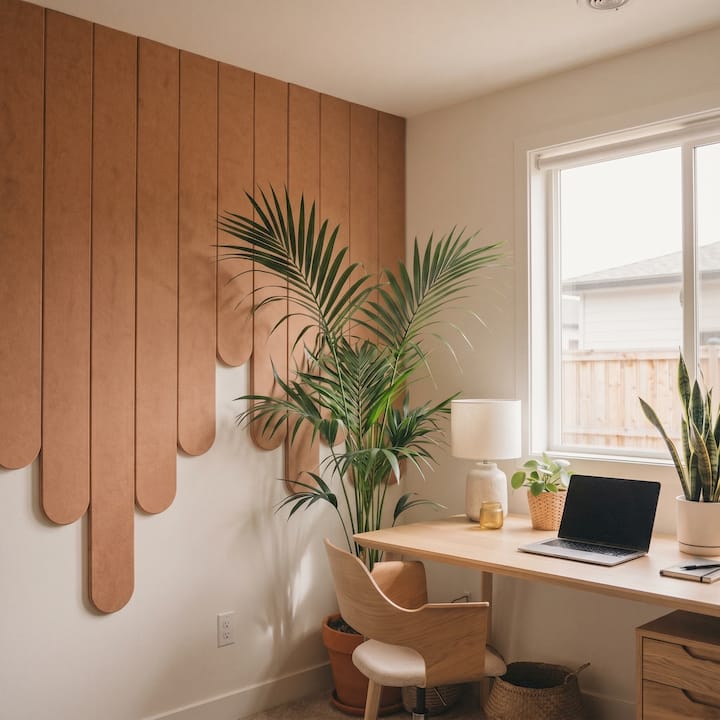
If you take one thing from this, prioritise vertical coverage before you assume the floor and windows have solved everything. It’s the surface people forget, and in rooms with any ceiling height at all, it’s often the one still bouncing sound around after every other fix is in place.
Colour, texture and no-drill panels: the DwellForms™ approach
Once you’ve worked through rugs, curtains, and furniture placement, a wall still doing the most reflecting is usually the biggest blank one, and that’s where DwellForms™ by Liftedplus earns its place. Each kit is made from precision cut PET felt produced from recycled plastic, arranged in modular panels that install with tested adhesive pads, no drilling, no paint, no landlord conversation required.

That matters most for renters and apartment dwellers who want colour without commitment and a feature wall that doesn’t put their bond at risk, but it works just as well for homeowners who’d rather not commit to a full renovation to get texture and shape onto a plain wall. Because the panels arrange across multiple heights, they help cover exactly the mid to upper wall zones that soft furnishings alone tend to miss.
If you’re weighing up options, start with the DwellForms™ Skyline modular wall panel kit and order a colour sample kit first to check the tone against your room’s light before committing to a full wall. Measure your space, order swatches, and see how a considered wall changes the way the whole room sounds and feels.
Sources
- How to reduce echo in living room
- Room acoustics guide
- A beginner’s guide to acoustic treatment
- How to improve your room acoustics | DALI
FAQ
How do I make my living room less echoey?
Add a large rug with a thick pad, hang full length curtains, move upholstered furniture off bare walls, fill a bookcase, and treat first reflection points with soft panels or textile wall art.
What should I put in a room to reduce echo?
Rugs, heavyweight curtains, upholstered furniture, filled bookcases, cushions and throws, and targeted wall panels such as removable PET felt kits all help absorb or scatter sound.
How do I fix an echoey room without renovating?
Layer soft furnishings first, then add no-drill, adhesive-mounted panels like DwellForms™ at first reflection points for vertical coverage that doesn’t require drilling or damaging rental walls.
What causes a room to be echoey?
Hard, flat surfaces such as hardwood floors, tile, drywall and glass reflect sound rather than absorbing it, and parallel walls or high ceilings stretch the reflection path further, making the echo more noticeable.