

TL;DR:
- Renters can enhance their spaces using reversible decor methods like peel-and-stick wallpaper, removable decals, and leaning art to avoid damage. Soft furnishings, lighting, and hardware swaps add personality without structural changes, transforming rental homes into personalized sanctuaries. Focusing on one signature corner and choosing meaningful thrifted pieces create a sense of ownership and style despite temporary living arrangements.
Decorating a rental feels like a puzzle with missing pieces. You want to put your mark on the space, but your lease sits somewhere in the back of your mind, quietly reminding you about bond deductions and landlord inspections. The good news is that renter friendly home decor has come a long way. There are genuinely stylish, affordable options that let you shape a space that feels like yours, without touching a paintbrush or drilling a single permanent hole. This guide walks you through exactly how to make it happen.
Table of Contents
- Key takeaways
- 1. Build a clear framework before you spend a cent
- 2. Lean into removable wallpaper as your biggest surface tool
- 3. Use leaning art and picture ledges for gallery-quality walls
- 4. Claim one corner as your signature
- 5. Bring softness in through rugs, throws, and cushions
- 6. Follow the 70/30 rule when mixing patterns
- 7. Upgrade your lighting without touching a single fitting
- 8. Swap hardware to make furniture feel like yours
- 9. Use thrifted pieces as style anchors
- My honest take on decorating as a renter
- Bring your rental to life with Liftedplus
- FAQ
Key takeaways
| Point | Details |
|---|---|
| Non-permanent methods work | Removable adhesives, leaning art, and peel-and-stick surfaces give you style with zero damage. |
| Soft furnishings carry the room | Rugs, throws, and curtains transform atmosphere and dampen sound without touching a single wall. |
| Wall decor is possible for renters | Small nail holes are easily repaired, and peel-and-stick wallpaper offers big visual impact for little cost. |
| Hardware swaps are underrated | Replacing cabinet knobs and doorknobs is reversible and high-impact, adding character in minutes. |
| Scent and lighting shape mood | Candles, diffusers, and plug-in sconces shift the feeling of a space without any structural changes. |
1. Build a clear framework before you spend a cent
The best renter friendly home decor decisions start with a filter, not a shopping cart. Before buying anything, hold each idea up against four criteria: affordability, reversibility, style impact, and how easily it comes down when you leave.
Affordability versus style impact is the real tension here. Some options look expensive but cost very little; others cost a lot and read as generic. Reversibility matters most when it comes to walls and floors, since those are the surfaces landlords scrutinise most. Easy setup and removal matters more than you’d expect on a rainy moving day.
Multi-functionality is worth weighting heavily. A storage ottoman that doubles as a coffee table, a bookcase used as a room divider, a curtain that softens both sound and light. These choices do more work per dollar and leave no trace when you go.
Pro Tip: Scent is linked to memory and comfort in ways most decor guides overlook. A signature candle or diffuser can make a bare rental feel like home before a single piece of furniture is arranged.
2. Lean into removable wallpaper as your biggest surface tool
Peel-and-stick wallpaper is the single most transformative tool available for renter friendly wall ideas. A single feature wall in a bold print or warm earthy tone pulls the entire room into focus without a drop of permanent adhesive in sight.
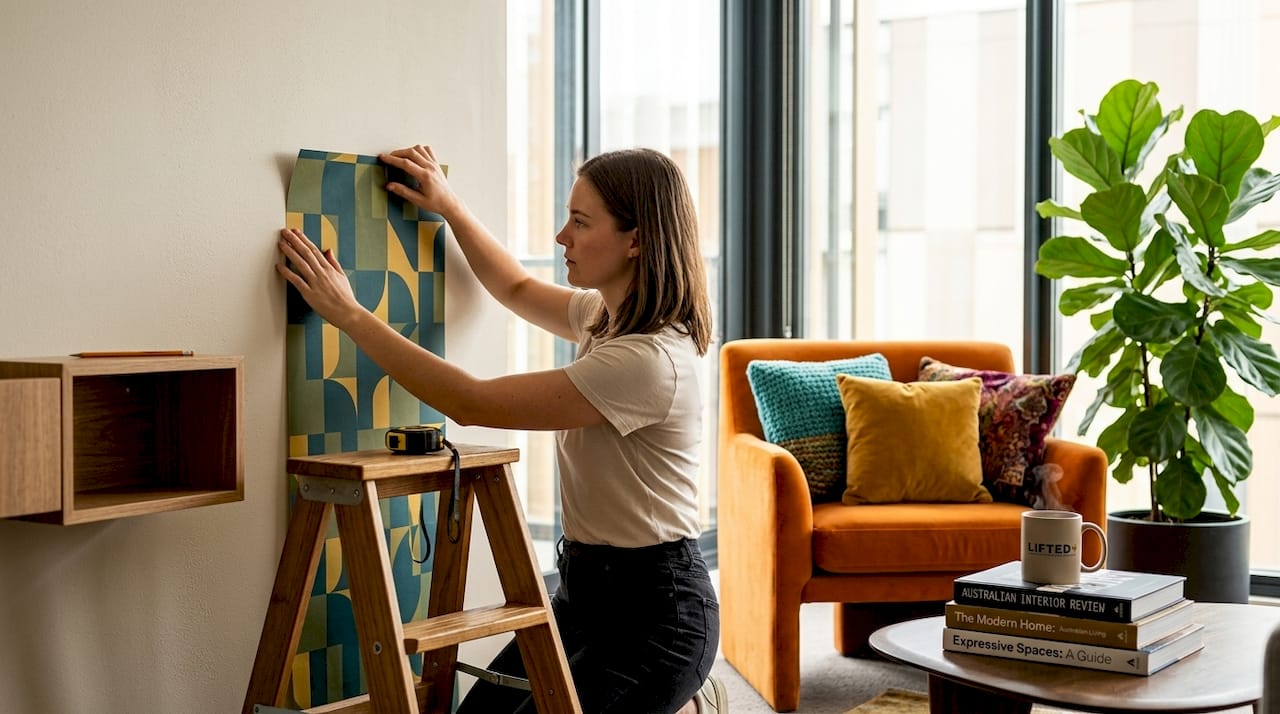
The cost argument alone is striking. DIY accent walls typically run $50 to $300 in materials, compared to $800 to $2,500 for professional installation. For renters, removable wallpaper options sit firmly at the affordable end of that range, and they come down cleanly when your lease ends.
Before you commit, test a small piece in an inconspicuous corner. Some painted walls react poorly to adhesive, particularly if the paint is old or oil-based. Letting the test strip sit for 24 hours tells you everything you need to know before you paper an entire wall.
Pro Tip: Before choosing a pattern, spend 20 minutes on Pinterest saving images that resonate with your style. Look for a shared thread in texture or colour across the images you save. That thread is your design direction.
Here’s a quick comparison of common renter-safe wall treatments to help you choose:
| Option | Cost | Reversibility | Style impact | Best for |
|---|---|---|---|---|
| Peel-and-stick wallpaper | Low to medium | High | High | Feature walls, bedrooms |
| Removable decals | Low | Very high | Medium | Subtle accents, children’s rooms |
| Leaning framed art | Low | Very high | High | Living areas, hallways |
| Picture ledges | Low | High | High | Gallery displays, reading nooks |
| Damage-free adhesive hooks | Very low | Very high | Medium | Small prints, mirrors, plants |
3. Use leaning art and picture ledges for gallery-quality walls
Not every great wall display requires a nail. Leaning framed art against a wall or resting it on a low shelf is a high-return approach that reads as intentional rather than hesitant. It allows you to rearrange at will, which suits the kind of restless, evolving aesthetic that comes with living in a rented space.
Picture ledges, the narrow floating shelves that hold frames upright, are installed with small screws and are easily patched when removed. They let you rotate artwork, lean prints without frames, or mix ceramics and books into the display. The result feels curated rather than permanent.
Non-permanent wall art doesn’t have to mean sparse. A leaned mirror, a large framed print on the floor beside a sideboard, and a small picture ledge above a desk can together hold the visual weight of an entire wall. The trick is committing to scale. One oversized piece reads more confidently than five small ones scattered without intention.
4. Claim one corner as your signature
Minimal but focused personalisation is one of the most psychologically powerful moves a renter can make. Rather than trying to overhaul an entire flat, pick one corner or one wall and make it entirely yours.
This might be a reading corner with a textured rug, a floor lamp with a sculptural silhouette, a stack of books, and a single piece of art leaned against the wall. It might be a bedside moment built around a pendant-style plug-in light, a small tray of objects that matter to you, and a piece of patterned wallpaper covering just the wall behind the bed.
The psychological effect of owning one deliberately styled corner is disproportionate to its size. It anchors the space emotionally. Everything else in the flat feels less generic simply because that one corner exists. You don’t need to redecorate the whole place to feel at home in it.
5. Bring softness in through rugs, throws, and cushions
Soft furnishings are the most underestimated tools in apartment decorating ideas. They require no installation, no landlord approval, and no patching when you leave. And they do genuine functional work: rugs and textiles dampen sound in echoey rooms, add warmth underfoot, and layer texture that painted walls simply cannot provide.
A rug defines a zone in an open-plan space, turning a floating sofa arrangement into a proper living room. It also protects the floor beneath it, which your landlord will quietly appreciate. Choose a size that allows at least the front legs of your main furniture pieces to rest on it. A rug that’s too small reads as tentative; one that’s proportioned correctly holds the room.
Designers note that layering vintage textiles over removable wall treatments adds a depth of warmth that neither element achieves alone. A patterned throw over a plain sofa, a stack of cushions mixing a geometric with a solid, a linen curtain pooling slightly at the floor. Each addition builds texture without a single permanent fixture.
6. Follow the 70/30 rule when mixing patterns
Pattern mixing intimidates most renters into choosing everything plain. The 70/30 rule offers a way through. Use one dominant pattern for 70% of a room’s visual surface and a complementary accent pattern for the remaining 30%.
In practice, this might mean a large check on your curtains and sofa cushions, balanced with a small floral on a couple of scatter cushions or a lampshade. The check reads as the backbone; the floral provides the lift. The same principle works with texture rather than print: a linen-covered sofa as the dominant, a boucle cushion and a rattan lamp as the 30%.
What makes this rule useful for renters is that it applies entirely to soft furnishings and accessories. You can achieve a fully considered, layered aesthetic without touching the walls at all. And when you move, everything comes with you.
7. Upgrade your lighting without touching a single fitting
Lighting transforms mood more than almost any other element. The problem for renters is that ceiling fixtures are fixed, and the default pendant in most rentals was chosen for cost, not character.
Plug-in wall sconces with fabric cords are the answer. They create ambient warmth without any wiring and mount cleanly to walls with damage-free strips or a single small hook. Positioned either side of a bed or flanking a reading chair, they shift the entire energy of a room from flat to felt.
A floor lamp with a warm-toned bulb placed in a corner adds shape to the air, casting light upward and outward in a way that softens harsh overhead brightness. Swap globe bulbs to a warmer colour temperature without any changes to the fitting itself. These small shifts in light quality change how a space reads at every hour of the day.
8. Swap hardware to make furniture feel like yours
Cabinet knobs and doorknobs are among the most overlooked surfaces in any rental. They’re also among the easiest to change. Replacing standard issue hardware with something that carries a bit of personality, a brass knob, a ceramic pull, a matte black handle, is a reversible, high-impact upgrade that takes about 20 minutes with a screwdriver.
Keep the original hardware in a small ziplock bag in a drawer. When you move out, simply reinstall what came with the place. Your landlord will never know. And in the meantime, your kitchen or bathroom feels like something you chose rather than something you inherited.
The same principle applies to peel-and-stick backsplash tiles in a kitchen or bathroom. Applied over existing tiles, they create the impression of a deliberate design choice and lift the entire room. They remove cleanly without residue when your lease ends.
Pro Tip: When choosing replacement knobs, pick a finish that appears elsewhere in the room, even if only in a small lamp base or picture frame. Repetition of a metal tone creates visual cohesion that makes the whole space feel considered.
9. Use thrifted pieces as style anchors
A rented flat often comes furnished with pieces that share no common language. Adding one strong vintage or thrifted piece, a timber sideboard, a rattan armchair, a ceramic lamp base with real presence, gives the room something to organise itself around. It becomes a visual anchor that makes the mix of existing furniture feel intentional.
Budget-friendly decor tips rarely highlight this, but thrifted pieces carry a sculptural quality that catalogue furniture rarely replicates. They have weight, history, and particularity. Against the blank neutrality of a rental, that particularity is exactly what makes a space feel inhabited rather than staged.
You can explore styling rental spaces with non-permanent art displays alongside thrifted furniture to understand how the two elements reinforce each other. They both read as chosen rather than default, and that distinction is what separates a home from a temporary stop.
My honest take on decorating as a renter
I’ve spent time thinking about why so many renters hold back from decorating, and I think it comes down to permission. We’re waiting for someone to tell us the space is ours before we act like it is. That logic is backwards.
The spaces where I’ve seen renters live most beautifully are never the ones with the most expensive furniture. They’re the ones where someone decided to claim the space fully. A good rug. A piece of art that means something. A corner that makes you pause when you walk past it.
Impermanence doesn’t dilute good design. If anything, the constraint sharpens it. When you can’t rely on permanent fixtures, you’re forced to make every moveable element count. That’s not a limitation. It’s a discipline. And the art wall guide at Liftedplus is one of the clearest frameworks I’ve seen for renters wanting to build a gallery wall without any anxiety about damage.
My advice: start with one corner. Make it entirely yours. Then let the rest of the flat follow.
— Michelle
Bring your rental to life with Liftedplus
Renter friendly home decor works best when the pieces you choose carry genuine presence. Generic accessories from a discount catalogue will always read as filler. What transforms a rented flat is decor with intention: a lamp that holds the room, a piece of wall art that pulls the space out of the polite middle, a colourful furniture piece that becomes the room’s personality.
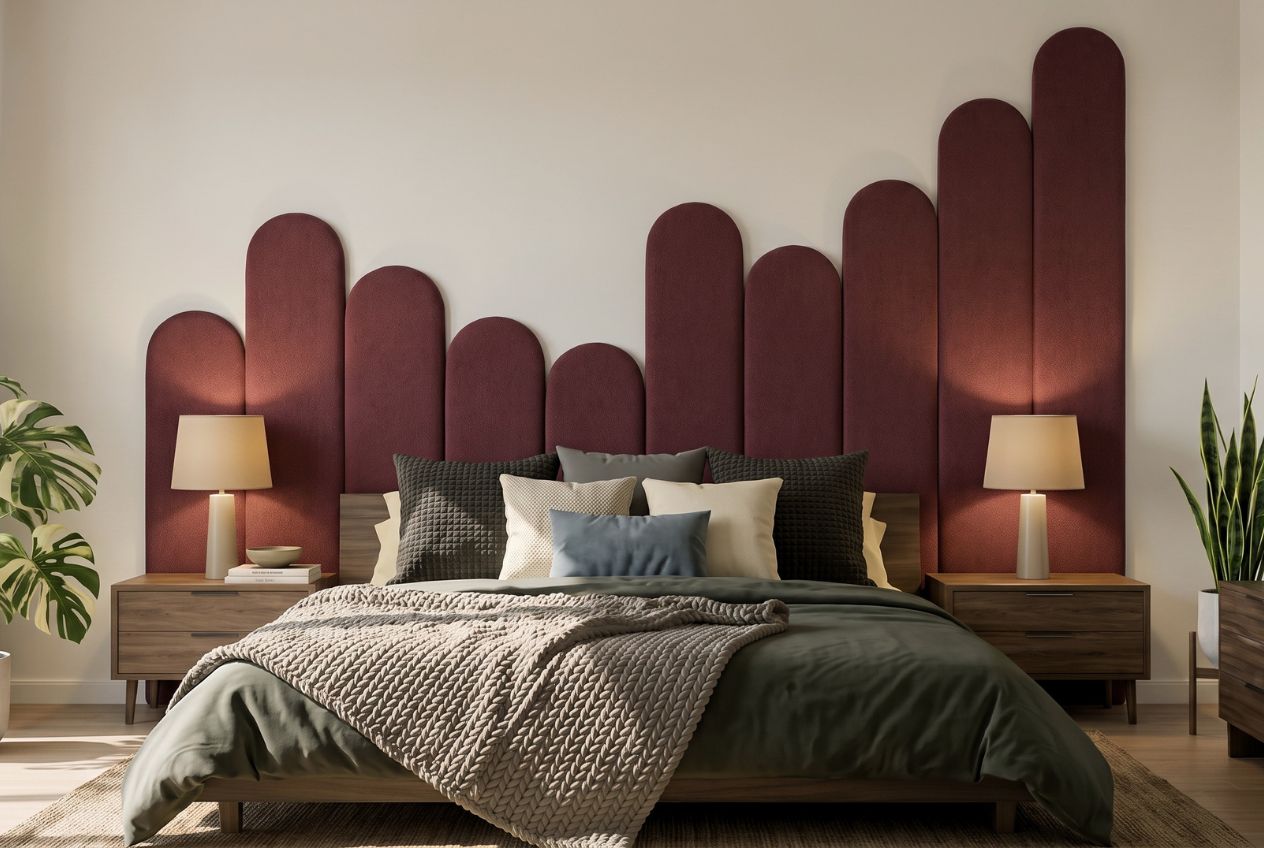
Liftedplus curates colour-led, sculptural home decor designed specifically for modern New Zealand interiors. From wall art to lighting to statement accessories, every piece is chosen for form, mood, and lasting impact rather than trend. Whether you’re decorating a first flat or a long-term rental, Liftedplus offers pieces that move with you and mean something wherever you land. Browse the modern decor collection and find the pieces that will make your current space worth coming home to. You can also discover how decor shapes mood in ways that go well beyond aesthetics.
FAQ
Can renters hang art without damaging walls?
Yes. Small nail holes are straightforward to repair with filler and touch-up paint, and damage-free adhesive strips handle lighter frames without any nail at all.
What is the best temporary home decor for rental walls?
Peel-and-stick wallpaper and removable decals offer the highest visual impact with full reversibility. Leaning framed art on picture ledges is another low-risk option that reads as intentional and styled.
How do I make a rental feel like home on a tight budget?
Soft furnishings, scented candles, and a single strong vintage or thrifted piece do more work than most expensive purchases. Focus your budget on one well-chosen rug and one piece of art that genuinely speaks to you.
Is it worth replacing cabinet hardware in a rental?
Absolutely. Hardware swaps take less than 30 minutes, cost very little, and are fully reversible. Store the originals and reinstall them when you leave. The style lift is immediate and significant.
How do plug-in lights improve a rental space?
Plug-in sconces and floor lamps allow you to layer warm, ambient light without any permanent wiring or landlord approval. They shift the mood of a room more dramatically than almost any other single change.
Recommended
- How To Decorate A Rental: Stylish, Damage-free Ideas
- 9 Small Living Room Colour Ideas For NZ – Lifted+ | More Colour. More Mood. More Life.
- 11 Apartment Wall Art Ideas For NZ Homes – Lifted+ | More Colour. More Mood. More Life.
- 9 Fresh Alternatives To A Gallery Wall – Lifted+ | More Colour. More Mood. More Life.