

TL;DR:
- Personalizing home decor enhances mood, relaxation, and emotional connection to your space.
- Incorporating natural elements and intentional color choices create a welcoming, restorative environment.
- Seasonal updates and evolving items keep homes lively and aligned with personal growth.
Your home is more than four walls and furniture. The objects you choose, the colors you live with, and the art you hang all shape how you feel the moment you walk through the door. Over 70% of homeowners feel more emotionally connected to spaces filled with personal touches, and that connection runs deeper than aesthetics. In New Zealand homes, where light, landscape, and seasonal shifts play a real role in daily life, thoughtful decor choices can reflect who you are and how you want to feel. This article walks you through the why and the how of personalizing your space with color, art, and seasonal intention.
Table of Contents
- Why personalization matters in home decor
- Color and artistic choices that reflect you
- Bringing nature and biophilic elements indoors
- Seasonal updates and evolving your space
- A fresh perspective: Personalization is a lifelong process
- Find your next statement piece with Lifted+
- Frequently asked questions
Key Takeaways
| Point | Details |
|---|---|
| Personalized spaces boost mood | Choosing decor that reflects your personality can improve your emotional connection with your home. |
| Color and art make a difference | Artistic choices and thoughtful color use are key to making your space feel unique. |
| Nature elements are powerful | Incorporating plants and natural textures can increase well-being but require balanced placement. |
| Evolve with the seasons | Small, seasonal updates prevent monotony and refresh your space year-round. |
Why personalization matters in home decor
Personalization is not just about making a room look nice. It is about making a room feel like yours. When your surroundings reflect your personality, your history, and your values, something shifts. You relax more easily. You feel more at ease. Research backs this up: personalized decor boosts mood and creates a genuine sense of restorativeness, that feeling of being restored after a long day.
“A home that reflects who you are is not a luxury. It is one of the most practical investments you can make in your daily wellbeing.”
The science points to a clear pattern. Empirical data supports the idea that personalization boosts both mood and productivity. When your environment feels aligned with your identity, your brain stops treating it as a neutral backdrop and starts treating it as a source of comfort and energy.
Here is what personalized decor actually does for you:
- Reduces mental fatigue by creating familiar, comforting visual cues
- Strengthens your emotional connection to your home over time
- Supports a sense of identity and pride in your living space
- Encourages you to spend more time at home, which compounds wellbeing benefits
- Makes guests feel the warmth of a space that has been genuinely thought through
Biophilic design, which means incorporating natural elements like plants, wood, stone, and natural light, adds another layer to this. These elements tap into a deep human need for connection with the natural world. When you bring them into your home intentionally, you are not just decorating. You are creating an environment that supports your nervous system.
If you are just starting out, exploring minimalist color ideas can help you find a starting point that feels grounded rather than overwhelming. And if you want a broader framework, learning how to build a curated homewares edit gives you a practical method for choosing pieces that genuinely belong together.
Color and artistic choices that reflect you
Color is the fastest way to shift the mood of a room. It works before you even consciously register it. Warm terracotta tones create a sense of grounded calm. Deep greens feel lush and restorative. Bright, saturated hues energize. The key is matching your color choices to how you actually want to feel in that room, not just what looks good in a photo.
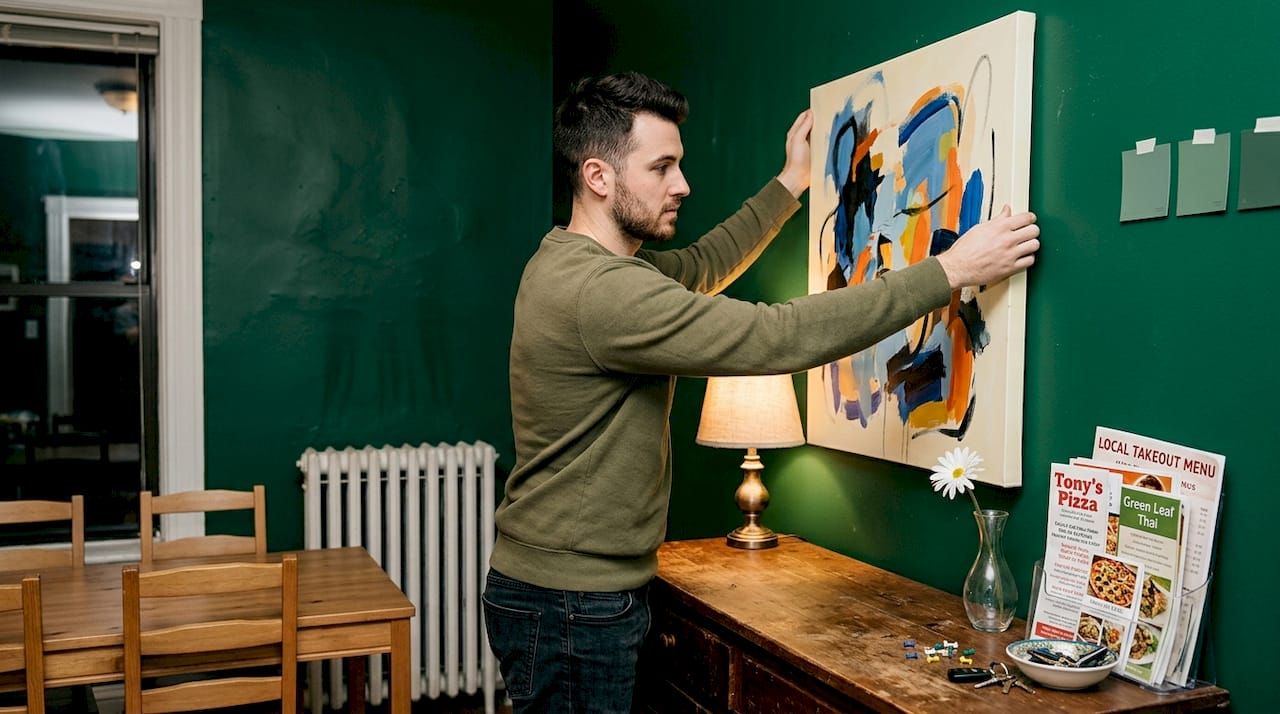
Statement art works differently. A single strong piece can anchor an entire room, giving it a focal point that everything else orbits around. It does not need to be expensive. It needs to mean something to you, or at least hold your attention in a way that feels rewarding over time.
| Approach | Best for | Risk |
|---|---|---|
| Trend-led color | Fast refresh, current feel | Feels dated quickly |
| Personality-led color | Lasting satisfaction | Takes more self-knowledge |
| Statement art as anchor | Strong visual identity | Needs space to breathe |
| Layered small objects | Texture and depth | Can become cluttered |
Pro Tip: Before committing to a bold wall color, live with a large paint swatch for a full week. Morning light and evening light will show you two completely different versions of the same shade.
Avoiding trend fatigue is one of the most practical things you can do for your home. Prioritize function and evolve your space slowly to avoid overbuying pieces that feel exciting in the store but hollow at home. The goal is a space that feels more like you over time, not one that chases what was trending six months ago.
Some practical ways to build a color story that is genuinely yours:
- Start with one color you are naturally drawn to and build outward from there
- Use art to introduce accent colors before committing to paint or large furniture
- Mix textures within the same color family to add depth without visual noise
Learning how to approach layering decor objects gives you a stylist’s eye for this kind of depth. And if you want to push further, bright room ideas and tips on using color to lift rooms can show you how color placement changes the entire feel of a space.
Bringing nature and biophilic elements indoors
Color and art are not the only ways to personalize your space. Nature-inspired design adds a layer of depth that is hard to replicate with manufactured objects alone. Plants, natural fibers, stone surfaces, and raw wood all carry a quality that feels alive, and that aliveness is part of what makes a room feel genuinely welcoming.
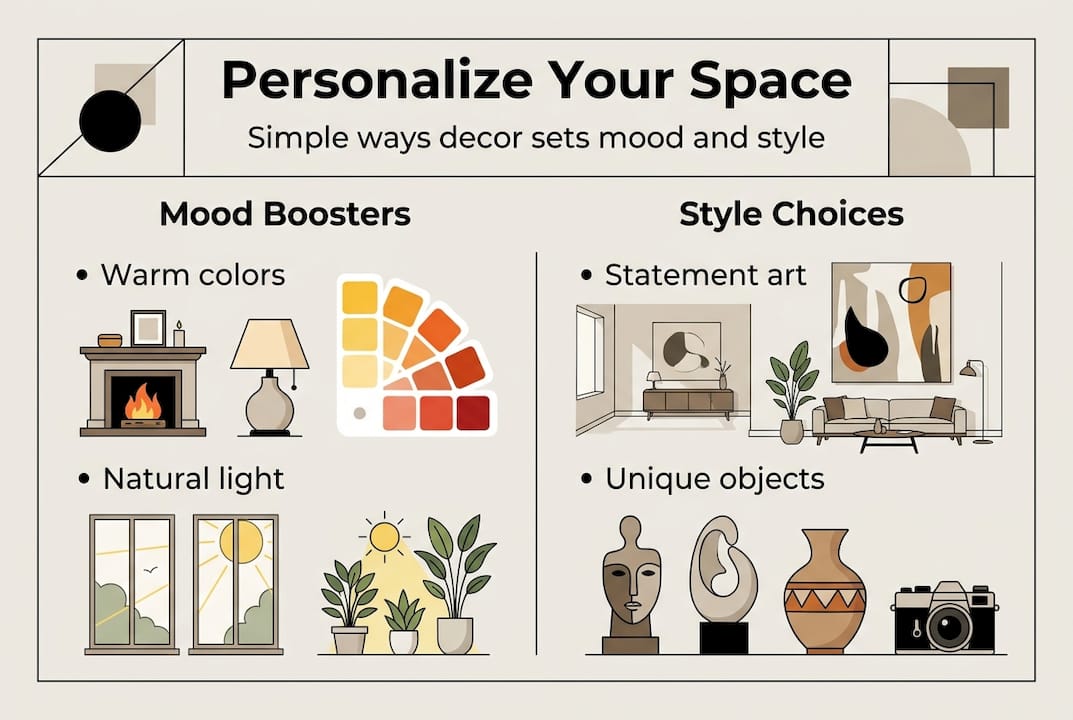
Biophilic elements like plants enhance restorativeness and positive affect in measurable ways. But there is a balance to strike. Integrated plants boost fascination and emotional engagement, but too many in a small space can tip into visual chaos, which works against the calm you are trying to create.
| Biophilic element | Mood effect | Placement tip |
|---|---|---|
| Large leafy plants | Restorative, grounding | Corners, beside furniture |
| Natural fiber rugs | Warmth, texture | Under seating areas |
| Raw wood surfaces | Organic, calm | Shelving, side tables |
| Stone or ceramic objects | Anchoring, tactile | Shelves, coffee tables |
Pro Tip: If you are unsure how many plants is too many, try the “one per surface” rule. One plant per visible surface keeps the space feeling intentional rather than overgrown.
Here is a simple approach to adding biophilic elements without overwhelming your space:
- Choose one anchor plant, something large enough to make a visual statement, and place it where it gets the most natural light
- Add natural texture through a rug, throw, or cushion in linen, cotton, or wool
- Introduce a small ceramic or stone object on a shelf to add tactile interest without bulk
- Reassess after two weeks. If the space feels right, add one more element. If it feels busy, hold there.
This slow-build approach is far more effective than filling a room all at once. If you want guidance on how to keep things looking intentional, professional decor services can help you find the right balance. And for shelf styling specifically, decluttered styling tips will show you how to keep natural objects looking curated rather than collected.
Seasonal updates and evolving your space
Once you have your main style established, the next question is how to keep it feeling alive without constantly buying new things. Seasonal updates are the answer. New Zealand’s four seasons bring real shifts in light, temperature, and mood, and your home can reflect that without a full redesign each time.
The key insight here is that evolving slowly avoids overbuying trends and keeps your space feeling intentional rather than reactive. Rotating what you already own is often more powerful than buying something new.
Here is a simple seasonal rotation system:
- At the start of each season, pull out a box of stored decor items you have not displayed recently
- Swap out two or three pieces from your current display with items from the box
- Adjust textiles: lighter linens in summer, heavier wool throws in autumn and winter
- Change one key color accent, a vase, a cushion, a candle color, to reflect the season’s palette
- Reassess your plants. Some will thrive in summer light; others do better pulled back from windows in winter
What to focus on for each season:
- Autumn and winter: Warmer tones, heavier textures, more candlelight, earthy ceramics
- Spring and summer: Lighter fabrics, brighter accents, fresh botanicals, open shelving with breathing room
This approach keeps your home lively and meaningful without the cost or waste of trend-chasing. For inspiration on what is resonating in 2026, bold color trends offer a useful reference point. And the interior tips journal is a great ongoing resource for seasonal styling ideas.
A fresh perspective: Personalization is a lifelong process
Here is something most decor advice gets wrong. It treats a personalized home as a destination, a finished product you arrive at once you have bought the right things. In reality, the most interesting homes are never finished. They are in process.
Your tastes will shift. Your needs will change. A room that felt perfect three years ago might feel wrong now, not because you made a mistake, but because you have grown. That is not a problem to fix. It is a sign that your space is doing its job, reflecting a real, evolving person.
The homes that feel most alive are the ones that carry traces of their own history. A piece bought on a trip. A color chosen during a difficult year that now feels like a quiet anchor. Art that made no sense to anyone else but always made sense to you.
We think the most useful shift you can make is from “getting it right” to “getting it closer.” Each choice moves you toward something more genuinely yours. And when a room starts to feel off, that is not failure. That is your instincts telling you it is time to lift a room’s mood in a new direction. Trust that signal.
Find your next statement piece with Lifted+
Ready to take the next step in making your home feel more like you? At Lifted+, we have built our entire edit around this idea: that the right piece, chosen with intention, can shift the entire feel of a room.

Our unique home decor shop brings together wall art, statement lighting, and curated objects that prioritize form and presence over trend. Whether you want to start with one strong piece or rethink a whole room, our guides on how to layer home decor and our collection of statement wall art give you both the inspiration and the pieces to move forward. Start where you are. Choose what genuinely resonates. Your space will follow.
Frequently asked questions
How does decor impact your mood at home?
Personalized decor boosts restorativeness and positive affect, meaning spaces that reflect your personality actively support emotional recovery and daily wellbeing. The effect is strongest when decor choices feel genuinely chosen rather than default.
Are plants the best way to personalize a space?
Plants are powerful for wellbeing, but integrated plants risk chaos if overdone. Balance them with other personal touches like art, color, and natural textures for a space that feels intentional.
What’s the best way to update decor without overspending?
Rotate what you already own seasonally and evolve slowly to avoid overbuying. Small textile swaps and accent changes can refresh a room without a significant spend.
Is following trends important for a personalized space?
Personal connection matters far more than trend alignment. Choosing what genuinely suits your tastes creates lasting value, while prioritizing function over trends keeps your space from feeling dated within a season.