

TL;DR:
- Recycled PET felt panels are sustainable interior materials made from post-consumer plastic bottles, offering acoustic benefits and tactile warmth. They vary in thickness and recycled content, with certifications like NRC ratings and fire safety verified through independent testing. These versatile panels can be flat, CNC-cut, perforated, printed, or used as ceiling baffles and room dividers to enhance interior design and acoustic comfort.
Recycled PET felt panels are interior design materials made from post-consumer plastic bottles, combining acoustic performance, tactile warmth, and genuine sustainability credentials in a single product. Known in the industry as acoustic PET felt, these panels contain 50–60% recycled content from shredded plastic bottles, making them one of the most credible eco-friendly felt panels available to designers today. They work as wall panels, ceiling baffles, room dividers, and modular accents, which is why demand has grown steadily across residential, commercial, and hospitality projects. If you are specifying sustainable interior materials or simply want a wall surface that does real acoustic work while looking considered, this guide covers everything you need to choose well.
What to look for in recycled PET felt panels for interior design
The right panel starts with recycled content. High-quality panels carry 50–60% post-consumer recycled content, sourced primarily from shredded plastic bottles. Higher recycled content reduces embodied carbon and supports circular economy credentials that matter in green building ratings.
Thickness shapes both acoustic performance and installation method. Standard commercial panels range from 9mm to 24mm thick, with a common sheet size of 1220x2440mm. Thinner panels suit decorative wall applications, while 24mm panels deliver serious sound absorption in open-plan offices or hospitality venues.
Acoustic performance is measured by the Noise Reduction Coefficient, or NRC. PET felt panels achieve NRC ratings between 0.40 and 0.90 depending on thickness and how densely they are installed. An NRC of 0.90 means the panel absorbs 90% of incident sound, which is exceptional for a wall-mounted material.
Fire safety certification is non-negotiable in commercial settings. Many commercial applications require ASTM E84 Class A or equivalent certification, such as GB8624-B1. Always verify the certificate against your local building code before specifying.
Sustainability certifications add another layer of confidence. Look for OEKO-TEX Standard 100 certification, which confirms the panel contains no harmful substances, and E0 formaldehyde grade, which matters in enclosed residential spaces.
| Specification | What to look for |
|---|---|
| Recycled content | 50–60% post-consumer PET minimum |
| Thickness | 9–24mm depending on acoustic need |
| NRC rating | 0.40 for decorative, 0.75+ for acoustic work |
| Fire rating | ASTM E84 Class A or local equivalent |
| Sustainability cert | OEKO-TEX Standard 100, E0 grade |
Pro Tip: Ask suppliers for a third-party test report for NRC and fire rating, not just a product brochure claim. Independent testing is the only reliable benchmark.
1. Standard flat acoustic wall panels
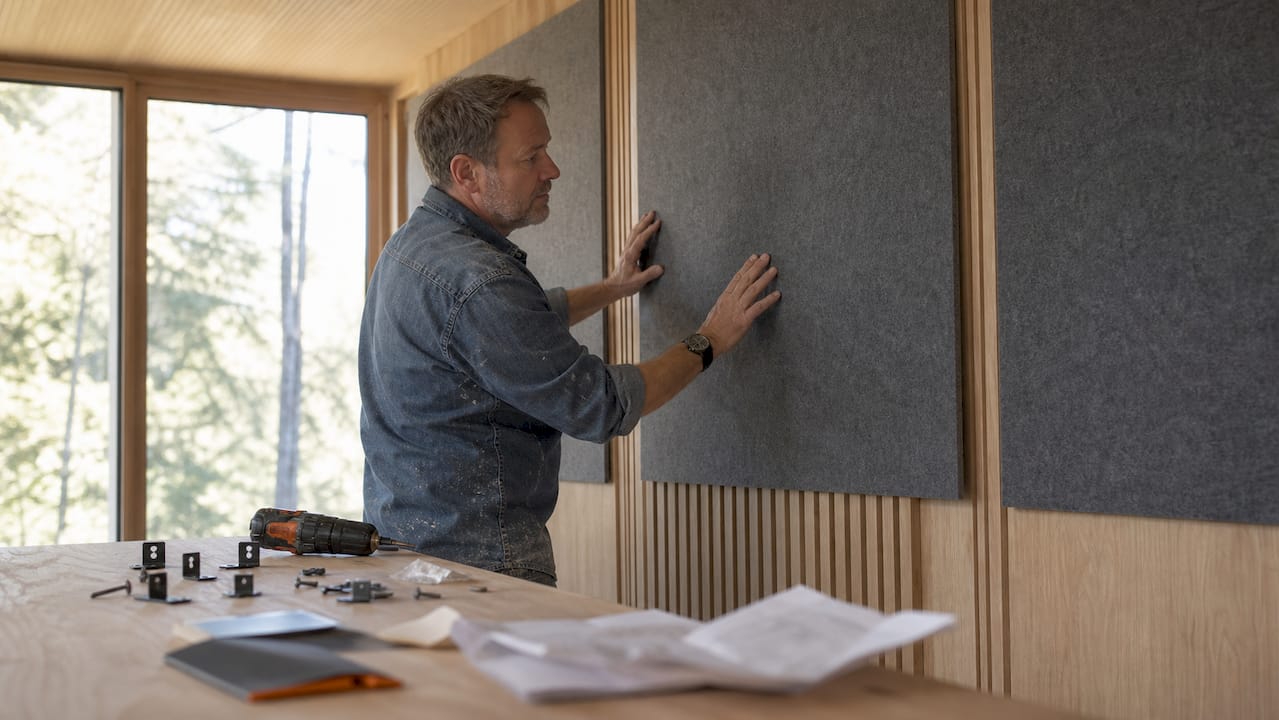
Flat acoustic PET felt panels are the most widely specified option. They install flush against walls, absorb mid and high-frequency sound, and come in a broad colour range. Most designers use them in offices, home studies, and media rooms where speech clarity matters. They are the lowest-cost entry point into acoustic PET felt and the easiest to source domestically.
2. Thick 24mm high-absorption panels
At 24mm, these panels push NRC ratings toward the upper end of the 0.40–0.90 range. They suit open-plan commercial spaces, restaurants, and recording environments where reverberation is a genuine problem. The added mass also improves low-frequency absorption, which thinner panels struggle with. Specify structural mounting hardware for 24mm panels, particularly on ceilings.
3. CNC-cut decorative panels
PET felt can be CNC-cut into complex geometric and organic shapes, turning an acoustic product into a sculptural wall feature. The precision of CNC cutting requires denser felt sheets, typically 1,900–2,300g per square metre, to hold clean edges without fraying. These panels suit hospitality lobbies, retail interiors, and residential feature walls where the material needs to carry visual weight as well as acoustic function.
Pro Tip: DIY cutting rarely achieves the edge quality of CNC fabrication. For complex patterns, always commission a fabricator with a dedicated CNC router.
4. Perforated PET felt panels
Perforation adds a graphic dimension to flat panels and subtly alters acoustic performance by increasing surface area. Designers use perforated panels to create rhythm across large wall surfaces without the visual heaviness of solid colour. They work particularly well in layered installations, where a perforated front panel sits over a denser backing panel for improved absorption.
5. Digitally printed PET felt panels
Digital printing onto PET felt allows custom imagery, brand graphics, or abstract colour fields to be applied directly to the panel surface. The felt’s texture gives printed images a soft, diffuse quality that reads very differently from a flat print on paper or vinyl. This option suits branded commercial environments, hospitality spaces, and residential commissions where a client wants something genuinely one-of-a-kind.
6. Ceiling baffles and hanging panels
Suspended ceiling baffles use the same recycled PET felt material in a vertical hanging format. They intercept sound from multiple angles, which makes them more acoustically efficient per square metre than wall-mounted panels in very live spaces. Baffles also add a three-dimensional quality to ceilings that flat tiles cannot achieve. Specify them in pairs or rows for the strongest visual and acoustic effect.
7. Modular interlocking tile systems
Modular PET felt tiles connect edge-to-edge using interlocking tabs or magnetic fixings, allowing designers and homeowners to build custom configurations without adhesive or drilling. This format suits renters and those who want to reconfigure a space over time. The trade-off is that modular systems typically use thinner felt, so acoustic performance sits at the lower end of the NRC range.
8. Room dividers and freestanding screens
Freestanding PET felt screens function as both acoustic treatment and spatial dividers in open-plan homes and offices. They require no wall fixings, which makes them genuinely flexible. Thicker felt in a rigid frame holds its shape without sagging. These work well in co-working environments and open-plan living areas where you want to define zones without building permanent walls.
9. Shaped and sculptural wall panels
Beyond flat and CNC-cut formats, some fabricators press PET felt into three-dimensional relief forms, creating panels with depth and shadow. The material’s density and slight flexibility make it well suited to pressing and moulding. These panels bring biophilic design qualities to a wall surface, with organic forms that reference natural textures like bark, stone, or woven fibre.
10. Domestically manufactured panels
Locally manufactured PET felt panels reduce lead times and improve quality consistency compared to panels shipped from overseas. For commercial projects with tight deadlines, domestic sourcing is a practical advantage that goes beyond sustainability. It also makes it easier to verify certifications, inspect samples, and resolve quality issues quickly. If you can source within your own country or region, the case for doing so is strong.
How recycled PET felt enhances interiors beyond sustainability
The material does more than reduce plastic waste. Its soft, slightly fibrous surface brings tactile warmth to spaces that would otherwise feel hard and reflective. That quality connects directly to biophilic design principles, which prioritise natural textures and sensory comfort to support occupant wellbeing. You can read more about this connection in the Liftedplus guide on interior design and mental wellbeing.
Acoustic comfort is the functional headline. A well-specified PET felt installation reduces reverberation, which lowers perceived noise levels and makes conversation easier. In residential settings, this translates to a calmer, more considered atmosphere. In commercial settings, it directly affects productivity and customer experience.
“The most underrated quality of PET felt is its ability to hold colour with depth. Unlike painted surfaces, the fibrous structure catches light differently across the day, giving a wall genuine presence without demanding attention. It is a material that rewards close looking.”
The design versatility of PET felt means a single material can serve as a wall panel, ceiling element, room divider, or decorative screen. That flexibility reduces the number of materials a designer needs to specify, which simplifies procurement and keeps a project’s material palette coherent. Explore tactile design ideas for more ways to bring this quality into a modern home.
Installation best practices for PET felt panels
Mounting method depends on panel thickness and location. Adhesive mounting suits lightweight panels, typically those under 12mm, on smooth, clean wall surfaces. Heavier panels require mechanical fixings, and panels thicker than 12mm on ceilings need structural brackets to prevent sagging over time.
Fire rating compliance must be verified before installation, not after. Fire rating requirements differ between commercial and residential spaces, and local building codes vary. Request the panel’s fire certificate and cross-check it against your project’s specific requirements before ordering.
Pro Tip: For ceiling installations, always use manufacturer-specified hardware. Improvised fixings are the most common cause of panel failure in the first twelve months.
Panel density affects edge quality during on-site trimming. If you need to cut panels to fit, use a sharp utility knife and a steel straight-edge. Avoid scissors, which compress the felt and leave a ragged edge. For complex shapes, commission CNC fabrication before delivery.
Key takeaways
Recycled PET felt panels deliver acoustic performance, design versatility, and genuine sustainability credentials, making them one of the most practical eco-friendly materials available for modern interiors.
| Point | Details |
|---|---|
| Recycled content matters | Specify panels with 50–60% post-consumer PET for credible sustainability credentials. |
| Match thickness to purpose | Use 9–12mm for decorative walls and 15–24mm for serious acoustic absorption. |
| Verify certifications independently | Request third-party NRC and fire rating test reports, not just supplier brochures. |
| Source domestically where possible | Local manufacturing reduces lead times and makes quality verification far easier. |
| Use the right mounting method | Panels over 12mm need structural hardware; adhesive alone is insufficient for heavy or ceiling-mounted panels. |
Why I think PET felt is the most underspecified material in sustainable design
The conversation around sustainable interior materials tends to circle the same names: reclaimed timber, recycled glass, natural stone. PET felt rarely gets the same attention, and I find that genuinely puzzling. It solves two problems at once, acoustic comfort and material sustainability, without asking you to compromise on aesthetics or workability.
What I have observed in recent years is that the designers who use PET felt most confidently are the ones who treat it as a design medium rather than a compliance checkbox. They CNC-cut it into forms that reference architecture. They layer colours to build depth. They combine it with hard materials like concrete and steel to create contrast that makes both surfaces read more clearly.
The trend toward domestic sourcing is one I expect to accelerate. The quality gap between locally fabricated panels and some imported options is real, and clients are noticing. Faster lead times also mean more room for iteration, which is where the best design decisions get made.
My caution is this: always verify certifications yourself. The market for acoustic panels has grown quickly, and not every product that claims OEKO-TEX or ASTM E84 compliance has the paperwork to back it up. A five-minute check before you specify saves a very uncomfortable conversation on site.
— Michelle
Liftedplus and the art of purposeful interior design
Acoustic PET felt panels do the structural work of a well-designed interior. The decor you layer around them shapes how a space actually feels to live in.
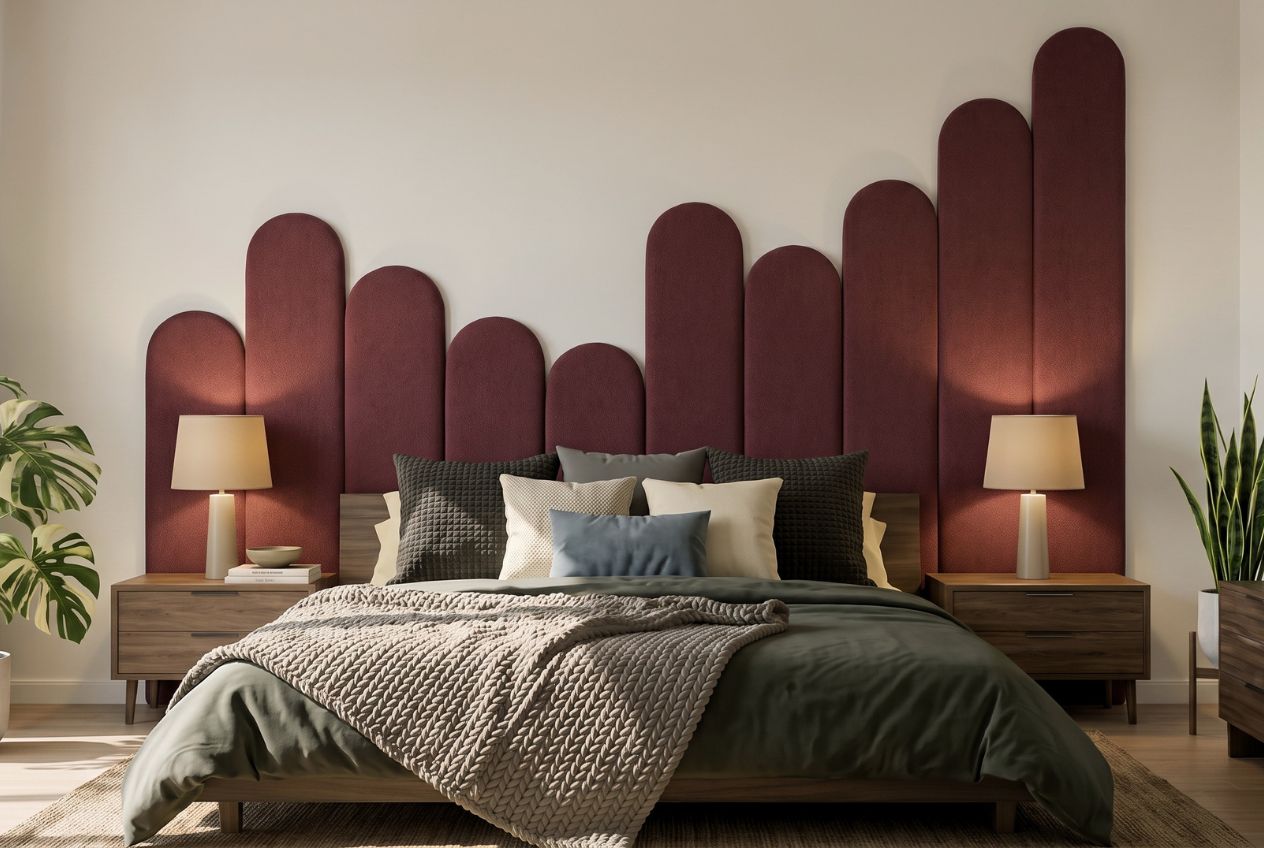
At Liftedplus, we curate colour-led furniture, wall art, and lighting designed to complement considered material choices like recycled PET felt. Whether you are building a calm home study or a statement living room, the right decor anchors the mood you are after. Our guide on how decor personalises your space is a strong starting point for pairing acoustic panels with the right decorative layer. For broader inspiration, the Liftedplus mood library offers curated visual references across colour palettes and interior styles that work beautifully alongside sustainable wall materials.
FAQ
What are recycled PET felt panels made from?
Recycled PET felt panels are made from post-consumer plastic bottles that are shredded, processed into fibres, and compressed into sheets. High-quality panels contain 50–60% recycled PET content.
What NRC rating should I look for in acoustic PET felt?
For serious acoustic work, specify panels with an NRC rating of 0.75 or above. Decorative applications can use panels rated as low as 0.40, which still provide a meaningful reduction in reverberation.
Can PET felt panels be cut into custom shapes?
Yes. PET felt supports CNC cutting, perforation, and digital printing. Complex shapes require denser felt, typically 1,900–2,300g per square metre, to maintain clean edges.
Are recycled PET felt panels fire safe?
Most commercial-grade panels carry fire ratings such as ASTM E84 Class A or GB8624-B1. Always verify the specific certificate against your local building code before specifying for commercial use.
How do I mount PET felt panels on a ceiling?
Panels thicker than 12mm require structural brackets rather than adhesive alone. Use manufacturer-specified hardware and check load ratings before installation to prevent sagging over time.