
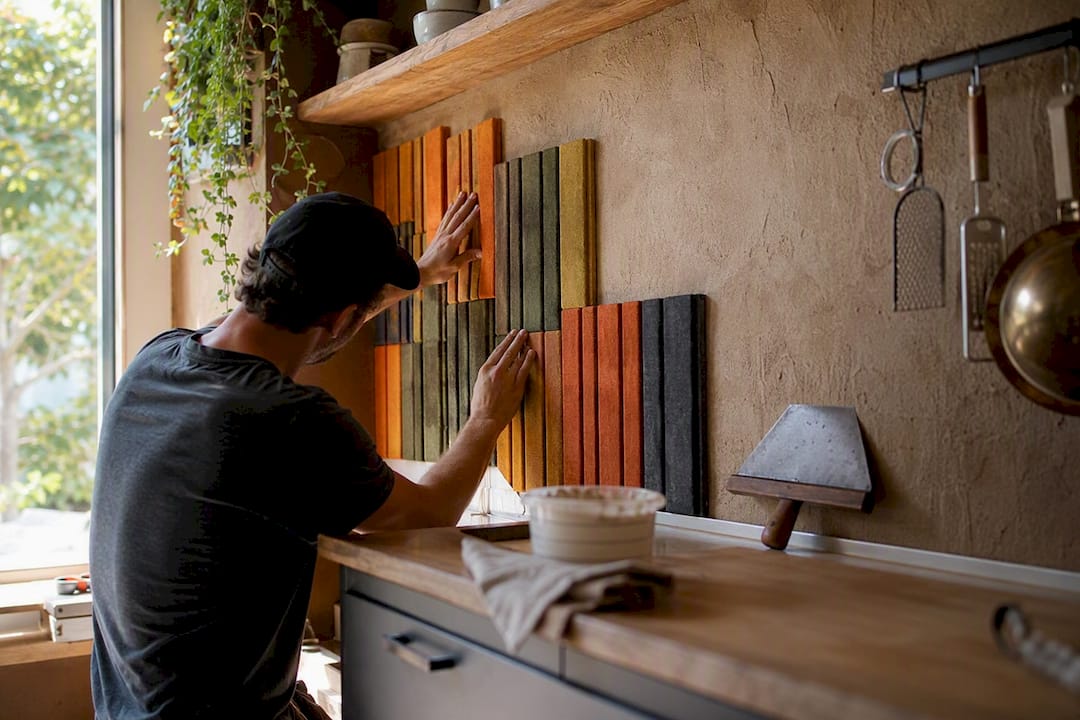
Yes, you can fit panels to textured walls. Three approaches work: install rigid panels directly, smooth or back the wall first, or use removable modular panels. Owners chasing a permanent, flawless finish should smooth or add backer board; renters or anyone wanting a fast, reversible feature wall should look at no-drill modular panels instead.
TL;DR:
- Rigid panels can be installed directly on mild textures if the wall has a solid backing and proper preparation, including marking outlets and fixing with nails or adhesive.
- Heavy or deep textures often require smoothing with joint compound or installing backer board to create a flat surface before paneling.
- Removable modular PET felt panels work well on moderate textures when using specially tested adhesive pads, making them suitable for renters who want a reversible solution.
- Testing a small sample patch for adhesive hold and texture show-through before full installation drastically reduces costly mistakes and rework.
- Thicker, flexible materials outperform thin peel-and-stick films on textured walls because they better conform to peaks and valleys for a durable, clean finish.
Table of Contents
- Which approach suits panels on textured walls best?
- How do you check what kind of texture you’re dealing with?
- How do you install rigid panels directly onto textured walls?
- Is smoothing or backer board worth the extra effort?
- Do removable panels really work on textured walls?
- What tools and materials do you actually need?
- What does it actually cost, and what goes wrong most often?
- How do you test a small area before committing?
- Michelle’s perspective: design-first, renter-friendly decisions
- Try DwellForms™ before you commit to a full wall
- Sources
- FAQ
Which approach suits panels on textured walls best?
The right method comes down to two questions: how deep is your texture, and how permanent do you want the result to be?
- Direct install suits mild texture (light orange peel, fine knockdown) on a wall you own outright. It’s quick and gives immediate visual payoff, but rigid panels need mechanical fixings or a strong construction adhesive to bite into an uneven surface.
- Smooth or backer board is the route for a genuinely flawless finish, especially over heavy texture or popcorn ceilings-turned-walls. It costs more time and money, and it’s permanent, so it’s the wrong call for a rental.
- Removable modular PET felt panels suit renters and anyone who wants texture without renovation. They tolerate moderate wall texture when the adhesive pads are placed correctly, and they come off cleanly when you move.
Most DIY guides for accent walls describe cleaning the surface and fixing boards straight over the texture, filling seams afterwards rather than sanding the wall flat first, which tells you how forgiving direct installs can be on the right surface.
How do you check what kind of texture you’re dealing with?
Not all texture behaves the same way under a panel, so run through this before buying anything.
- Look at the pattern first. Orange peel is fine, stippled and shallow. Knockdown has flattened, irregular blotches. Heavy texture or popcorn has pronounced peaks and valleys you can see across the room.
- Run your palm across the wall. Sharp, deep ridges mean less surface area for any adhesive to grip, which is why heavy texture pushes you towards backer board or thicker, more flexible removable panels.
- Do a coin test. Hold a coin against the wall in several spots. If it rocks or sits with visible gaps underneath, the texture is deep enough to affect adhesive contact and mechanical fixings alike.
- Stick down a small adhesive sample (a scrap of panel or heavy tape) for a few days and check for lifting at the edges. This tells you more than eyeballing ever will.
Independent testing on textured walls found that thin peel-and-stick films fail more often than heavier materials, with only four of twelve tested brands holding up cleanly over five months. Thickness and adhesive quality matter more than the brand name on the box.
How do you install rigid panels directly onto textured walls?
This is the fastest route to a finished look if you own the property and your texture is on the milder end.
- Confirm the substrate. Check for solid plasterboard or timber behind the texture, and locate studs with a stud finder before you commit to a layout.
- Prep the wall. Clean off dust and grease, mark any power outlets or switches, then measure and cut your panels to fit around them.
- Fix the panels. Brad nails into battens or mechanical fasteners driven into studs are the standard approach; pairing a construction adhesive with mechanical fixings gives extra grip where the texture is uneven enough to leave gaps behind the panel.
- Finish the joins. Fill nail holes and seams, run a bead of caulk along the edges, sand lightly once dry, then paint or stain to match your scheme.
Many how-to guides for panelled accent walls confirm this direct approach: clean, nail, fill, and finish without sanding the texture away first.
Pro Tip: Filler and paint sheen do more heavy lifting than most DIYers expect. A flat or matte finish over filled seams hides far more texture show-through than a gloss coat will.
Is smoothing or backer board worth the extra effort?
Sometimes, but only if permanence doesn’t bother you. Two options get you to a flat substrate.
- Skim coating spreads a thin layer of joint compound over the whole wall, then sands it smooth once cured. Expect multiple coats and a full day or two of drying time between them.
- Backer panels (thin MDF or melamine sheets) get screwed straight over the texture, creating an instant flat surface for wallpaper or rigid panels. Leave a small expansion gap around the edges and seal the seams with flexible caulk before finishing.
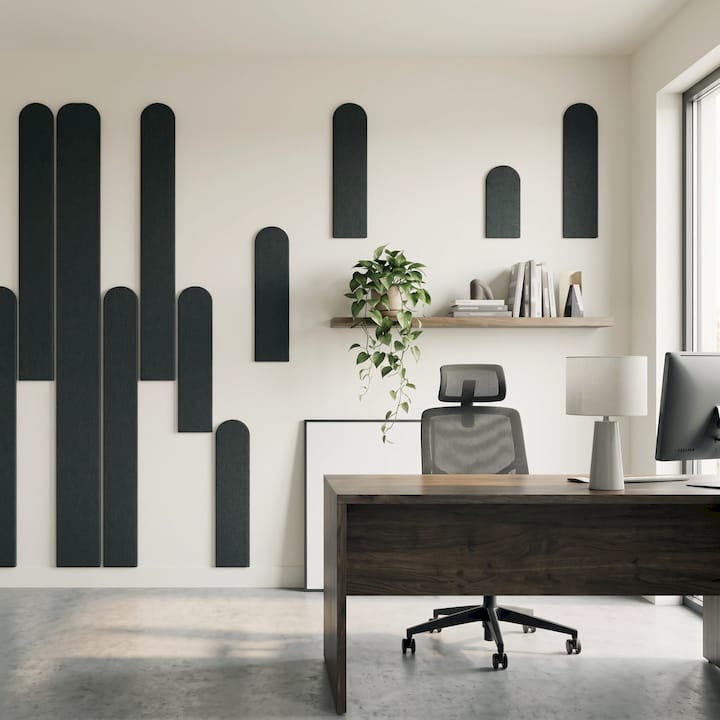
Both routes are more permanent and more disruptive than a direct install, which is exactly why they’re worth avoiding in a rental. A thin melamine buffer panel is a genuinely useful trick when you need a flat surface for wallpaper or rigid panels but don’t want a full skim coat across the whole room.
Do removable panels really work on textured walls?
Modular PET felt panels are the standout option here because thickness and flexibility do the work that thin vinyl films can’t. A stiff, paper-thin film sits on top of the peaks and bridges the valleys, which is exactly where lifting starts. A thicker, slightly flexible felt panel flexes into those low points and gives the adhesive far more surface to grip.
- Order a small sample kit first and test it on your actual wall, not a spare offcut.
- Place adhesive pads in a grid, concentrating extra pads where the texture dips lowest.
- Press each pad firmly with a felt squeegee, working section by section rather than slapping the whole panel up at once.
- Finish edges neatly. Panels that meet cleanly at corners read as designed, not stuck on.
Very heavy or aggressive texture (deep popcorn, thick stucco-style finishes) can still beat any removable system, so the sample test isn’t optional. For everything short of that, this is the route that gives you a renter-friendly feature wall with real sculptural presence rather than a flat sticker look.
Pro Tip: Vendors of peel-and-stick systems consistently recommend the same sequence: sample first, choose a thicker material, work in small sections with a squeegee. That advice holds whether you’re hanging wallpaper on textured walls or a modular felt panel.
What tools and materials do you actually need?
Your shopping list depends entirely on which method you’ve picked.
- Direct install: stud finder, nail gun or brad nailer, mitre saw, wood filler, paintable caulk.
- Smoothing or backer board: joint compound, a wide trowel, MDF or melamine sheets, drywall screws, sandpaper.
- Removable panels: a sample kit, manufacturer-tested adhesive pads (never generic double-sided tape), a felt squeegee.
- For every method: dust masks, drop sheets, and masking tape to protect skirting and trim.
What does it actually cost, and what goes wrong most often?
A quick direct-install accent wall over mild texture is the cheapest and fastest option, typically a weekend job. Backer board or a full skim coat adds real cost in materials and labour and can stretch across several days once drying time between coats is factored in. Removable modular panels sit in between on cost but win comfortably on time, since there’s no drying, sanding, or painting involved.
Most expensive mistakes trace back to skipping the sample test. Weak adhesive, texture show-through under paint, and panels that never quite sit flush all show up because someone skipped straight to a full wall.
Where the money gets wasted: installers report the costliest reworks come from committing to a full wall before testing a sample patch, then discovering the adhesive or fixing method doesn’t hold once the texture is fully engaged.
Test first, choose the right adhesive for your actual texture depth, and stage the install in sections if you’re unsure.
How do you test a small area before committing?
Run a proper trial before you buy enough panels for the whole wall.
- Stick down a 30 by 30 centimetre sample panel or offcut in an inconspicuous spot.
- Leave it for one to four weeks, checking for edge lift, bubbling, or paint pulling away when you eventually remove it.
- Try two different adhesive types side by side and compare which holds its edges better after a week.
- Look for three signs of success: no edge lift, minimal texture show-through, and a clean removal that doesn’t strip paint or plaster.
If your sample passes all three, you’ve got the green light to order for the full wall.
Michelle’s perspective: design-first, renter-friendly decisions
Most people treat textured walls as a problem to solve before decorating starts. I’d argue the opposite: a reversible, colour-led panel system is often the more confident choice, because it lets you commit to bold colour and shape without betting on a landlord’s goodwill or a permanent renovation. Keep the layout simple, run panels in a single strong colour block rather than scattering shapes, and the result reads as architecture rather than decoration. If you’re unsure where to start, our guide to decorating without painting and a sample kit will tell you more in a weekend than any amount of scrolling.
— Michelle
Try DwellForms™ before you commit to a full wall
DwellForms™ kits are built for exactly the scenario this article has walked through: a textured wall you don’t want to smooth, drill into, or permanently alter. Made from flexible, precision-cut recycled PET felt, the panels conform to moderate texture better than thin films, and they rely on tested adhesive pads rather than screws or construction adhesive, so there’s no landlord conversation required and no filling holes when you move out.
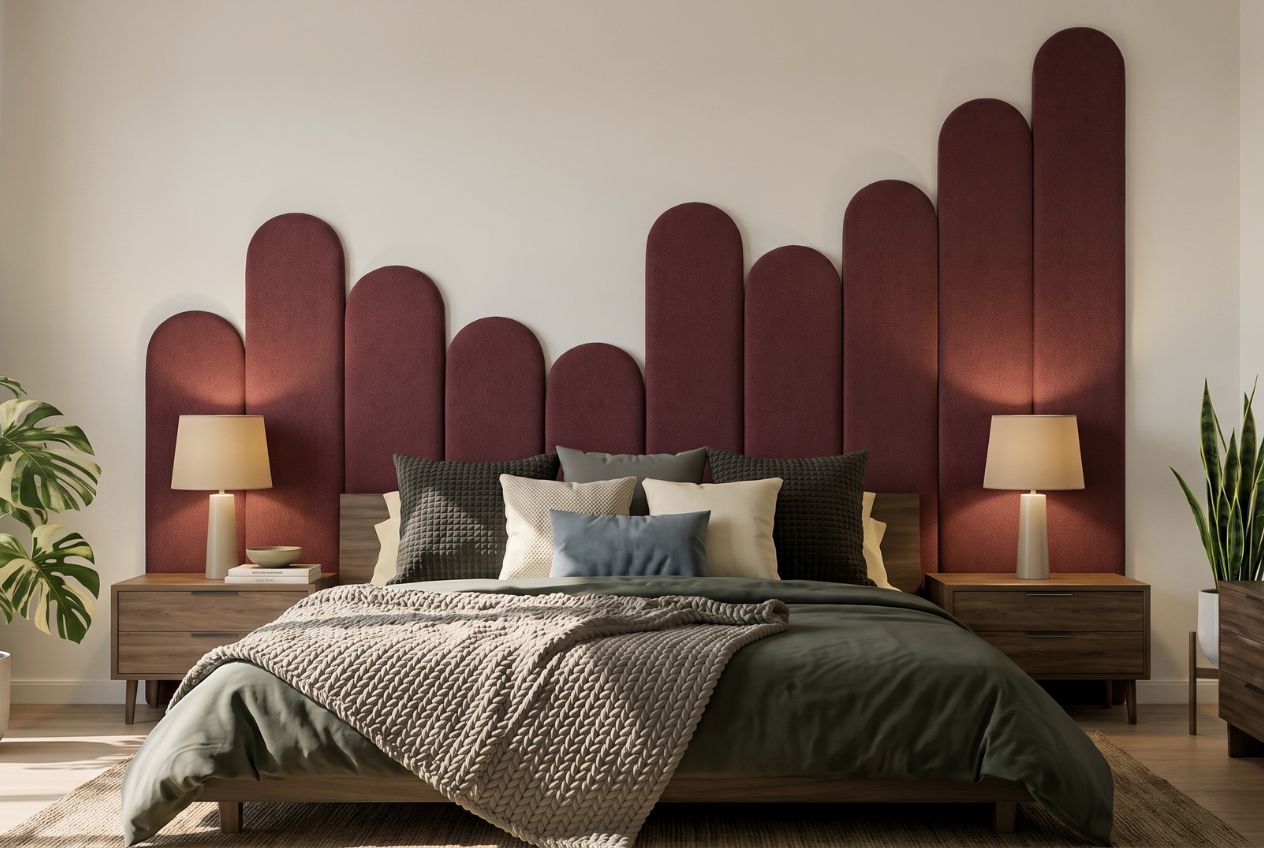
Start the same way this guide recommends testing any removable system: order a sample kit, run a 30 by 30 centimetre test patch on your actual wall, and check it after a week before committing further. Once you’re confident it holds, the DwellForms™ Skyline Kit gives you a full modular layout that goes up in an afternoon and comes down just as easily. If you want the fuller installation walkthrough first, our homeowner’s guide to decorative wall panels covers layout and colour pairing before you order.
Sources
For surface prep and moisture checks before any install, see wall waterproofing basics. For material behaviour, read our PET felt panel guide.
- Can You Do An Accent Wall on Textured Walls — Ashley French
- Does Peel and Stick Wallpaper Work on Textured Walls? A 5-Month Test — Anewall
- Expert tips for covering textured walls with peel and stick wallpaper — Tempaper
- How to cover textured walls with stick-on vinyl wallpaper — Quadrostyle
FAQ
Can you put wall panels on textured walls?
Yes. Mild texture takes rigid panels directly, moderate texture suits removable modular panels with the right adhesive pads, and heavy texture usually needs smoothing or backer board first.
What are the best wall panels to cover textured walls?
Thicker, flexible materials outperform thin films because they conform to the texture’s peaks and valleys instead of bridging over them. Modular PET felt panels and MDF or melamine backer panels are the two most reliable options depending on whether you want a removable or permanent result.
Is panelling outdated in 2026?
No. Panelling has shifted from full-wall timber cladding towards modular, colour-led feature walls, and removable systems have made it far more accessible for renters who couldn’t consider panelling a few years ago.
What can I cover textured walls with?
Options include rigid panels fixed directly to studs, a skim coat or thin backer board for a flat finish, or removable modular felt panels using tested adhesive pads. The right choice depends on your texture depth and whether you’re renting or own the wall outright.