

TL;DR:
- Sculptural interior design treats the entire space as a three-dimensional composition where architecture and form create emotional resonance. It emphasizes volume, negative space, and high-quality materials, integrating art into functional elements. Applying this approach involves selective anchoring, thoughtful lighting, and restraint to craft meaningful, enduring environments.
Sculptural interior design is one of those concepts that sounds self-explanatory until you actually try to define it. Most people assume it simply means putting a striking chair in the corner or hanging an interesting light fitting. The reality goes much further than that. What is sculptural interior design, truly? It is a spatial philosophy that treats the entire built environment as a three-dimensional composition, where walls, ceilings, furniture, and light all work together to create form, volume, and emotional resonance. It is not decoration layered on top of architecture. It is the architecture.
Table of Contents
- Key takeaways
- What sculptural interior design really means
- How sculptural design works in real living spaces
- The emotional and cultural depth of sculptural interiors
- Practical steps for bringing sculptural design into your home
- My perspective on sculptural design
- How Liftedplus supports your sculptural design vision
- FAQ
Key takeaways
| Point | Details |
|---|---|
| Form over flatness | Sculptural design prioritises three-dimensional volume and silhouette rather than surface pattern or colour alone. |
| Architecture as the starting point | The strongest sculptural interiors are planned at the structural level, not added as finishing touches after construction. |
| One anchor, generous space | A single strong sculptural element paired with deliberate negative space creates more impact than multiple competing pieces. |
| Materials carry meaning | Marble, carved wood, plaster, and hand-finished metals are chosen for how they interact with light and hold their shape over time. |
| Function and form are inseparable | Sculptural design works when each element responds to how people actually move through and use a space. |
What sculptural interior design really means
At its core, sculptural interior design treats three-dimensional form and volume as the primary design language. Rather than treating walls as blank canvases waiting for art, or ceilings as flat planes waiting for a coat of paint, the sculptural approach views every surface, structure, and object as an expressive gesture. Architecture itself becomes the artwork.
This is a meaningful distinction. Most interior design styles work within the fixed shell of a room. Sculptural design questions the shell itself. A spiralling staircase is not just a way to get from one floor to another. It is a vertical form that draws the eye upward, creates a sense of movement, and shapes the air around it. A textured plaster wall does not just add warmth. It catches light differently throughout the day, giving the room a quality that shifts with time.
The materials chosen in sculptural interiors are not incidental. Marble, plaster, carved wood, and hand-finished metals are selected specifically for their shaping qualities and their ability to interact with light in ways that reveal depth. Run your hand along a plaster relief wall and you feel what you also see. That multi-sensory quality is central to why sculptural interiors feel so memorable.
Furniture and lighting are equally part of the sculptural vocabulary. A chair with an organic, asymmetric silhouette does not just offer seating. It blends art with function in a way that a standard four-legged chair never can. A pendant light that curves and twists above a dining table is not a background element. It holds the room.
What ties all of this together is the deliberate use of negative space. Sculptural interiors breathe. Every form needs open space around it to be properly read and appreciated. Without that breathing room, the most beautiful carved wall or statement piece becomes visual noise.
Pro Tip: Think of your interior as a three-dimensional composition viewed from multiple angles. Walk through your space and notice what reads as a strong silhouette from each entry point. That is where your sculptural thinking should begin.
The defining elements at a glance
The following elements recur across sculptural interiors where art and architecture meet:
- Curved or spiral staircases that function as vertical sculptures
- Textured or relief ceilings and walls treated as expressive surfaces
- Statement fireplaces designed as structural art pieces
- Organic furniture forms with asymmetry and visual tension
- Artistic lighting that has its own strong silhouette
- Deliberate negative space that gives each element room to speak
How sculptural design works in real living spaces
Here is a question worth sitting with: can a home actually function well when its design is this considered, this intentional? The answer is not only yes, it is that sculptural design works because it responds to function, not in spite of it.
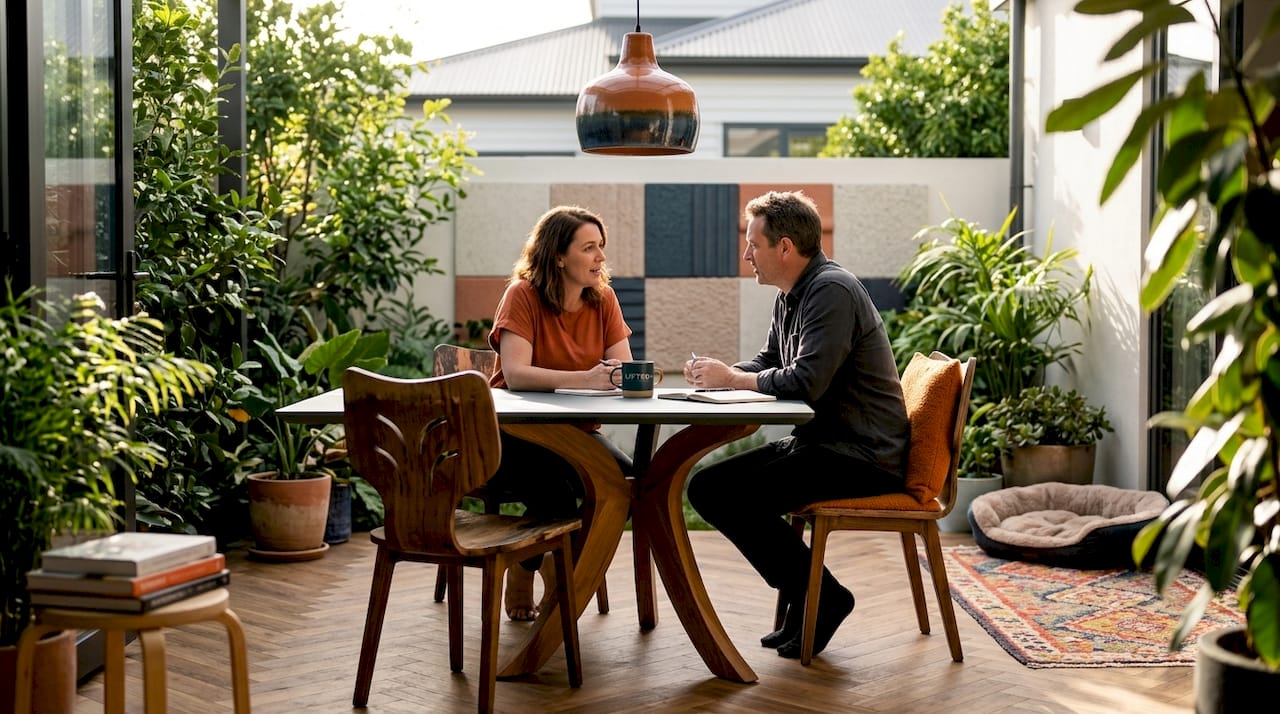
Effective sculptural interiors respond to circulation, scale, light, and function rather than treating aesthetics as a separate concern. A staircase that sweeps in a wide arc is beautiful, but it is also generous with the way it draws people through a home. A double-height living area with a singular pendant sculpture does not just look dramatic. It orients the room, gives it a centre of gravity, and makes the act of walking into that space feel like an arrival.
Consider how this plays out in practice across different areas of a home:
-
Entry halls and foyers. These transitional spaces are ideal for a single sculptural intervention, whether a curved console, a dramatic light form, or a textured wall treatment. The entry is the first spatial sentence your home speaks, and sculptural design gives it something worth saying.
-
Living rooms and communal zones. A sculptural fireplace or an organically shaped sofa anchors the room without requiring everything else to compete. The piece holds the space while the rest of the room breathes around it.
-
Staircases and vertical transitions. These are among the most rewarding areas for sculptural integration because they are already movement-driven. Sculptural staircases and millwork embedded into structure yield the strongest emotional and visual responses.
-
Dining areas. Overhead sculptural lighting in a dining space does more than illuminate the table. It creates a sense of occasion, marking the space as distinct from the rest of the room and giving meals a ceremony they might not otherwise have.
The guiding principle across all of these is restraint partnered with confidence. You choose one strong sculptural anchor and let negative space do the rest of the work. Overcrowding sculptural elements creates chaos where there should be clarity. One quietly radical piece, given room to exist, is almost always more powerful than five competing ones.
Pro Tip: Before purchasing a sculptural furniture piece, place a cardboard cutout of its approximate dimensions in the space. Live with it for a few days. Notice how the scale reads from different distances and how much space remains for the room to breathe around it.
The emotional and cultural depth of sculptural interiors
There is something a well-executed sculptural space does that no amount of surface decoration can replicate. It makes you feel something the moment you enter.
Sculptural interiors foster emotional connections by creating experiences that remain relevant over time. They are not designed to be fashionable. They are designed to be meaningful. A hand-carved timber wall panel that references the native forests of New Zealand. A plaster ceiling that echoes the organic curves of a coastline. These are not decorative flourishes. They are spatial stories.
This is where sculptural design diverges most sharply from trends-based decorating. Mass-produced, interchangeable pieces can make a space look polished, but they rarely make it feel inhabited in any deep sense. Custom and artisan pieces, chosen for their form and their resonance, accumulate meaning over time. They make a home feel like it was made for the person living in it.
“Sculptural choices create experiences that remain relevant over time, beyond mere drama. Meaningful sculptural design responds to space needs and cultivates enduring experiences.”
The cultural dimension of this is worth taking seriously. Sculptural design is one of the few interior approaches that can genuinely honour the material culture of a place. The grains, textures, and forms that artisans have worked with for generations carry that history into a space. When you choose a piece made from locally sourced materials worked by hand, you are not just selecting a form. You are selecting a story. That is something a catalogue item simply cannot offer.
You can explore how art shapes modern interiors in ways that go well beyond surface decoration, which is a useful companion to understanding why sculptural approaches resonate so deeply with people who want their homes to reflect something genuine.
Practical steps for bringing sculptural design into your home
You do not need to be building from scratch to apply sculptural design principles. Even within an existing home, the approach is available to you. What changes is the sequence of decisions.
The key considerations when applying sculptural interior design:
-
Start at the architectural level where possible. If you are renovating, embedding sculpture into structure from the beginning produces more coherent results than adding pieces later. Think about staircase profiles, ceiling treatments, and wall relief before selecting furniture.
-
Choose one strong anchor per room. A sculptural furniture piece with an organic silhouette, a statement light form, or a textured wall panel. Let that piece lead, and build restraint around it.
-
Use lighting to reveal form. Materials shaped and leveraged by lighting show their full depth only when lit well. Directional light across a textured wall creates shadow and dimension. Diffuse light from above flattens the very forms you want to celebrate. Get the lighting architecture right before you finalise material choices.
-
Prioritise quality and longevity. Sculptural furniture favouring organic curves and high-quality materials tells a story and acts as a long-term statement rather than a passing trend. Invest in fewer, better pieces.
-
Embrace asymmetry and organic curves. Rigidly symmetrical arrangements tend to read as formal rather than sculptural. Allow forms to create visual tension with one another, with one piece suggesting movement or weight that another balances.
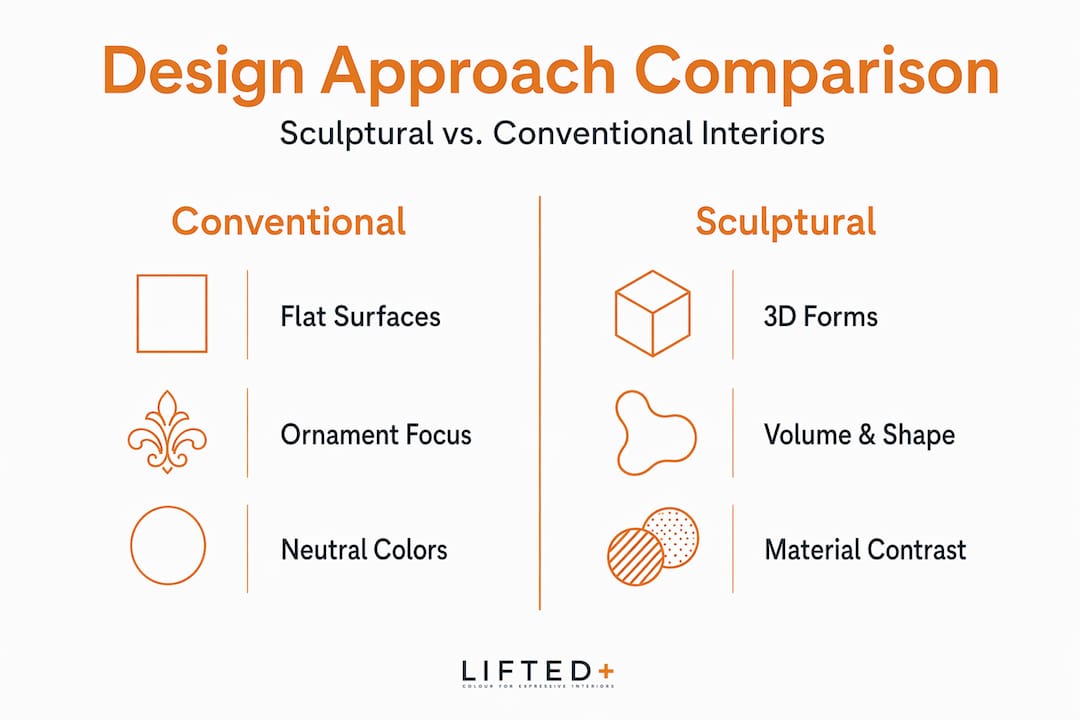
Here is a quick comparison of conventional decorating versus a sculptural interior approach:
| Consideration | Conventional decorating | Sculptural interior design |
|---|---|---|
| Starting point | Furniture selection and colour palette | Architectural form and spatial volume |
| Key focus | Surface finish and pattern | Three-dimensional silhouette and shadow |
| Furniture role | Functional with aesthetic consideration | Art piece with functional purpose |
| Material choice | Durability and colour match | Tactile quality and light interaction |
| Space planning | Maximising furniture in room | Deliberate negative space around key forms |
| Longevity | Trend-responsive | Enduring, materially and emotionally |
My perspective on sculptural design
I have seen a lot of interiors described as sculptural that are, in practice, just busy. Someone has added an unusual chair, a curved mirror, and a textured cushion and called the whole thing a sculptural interior. What is actually happening is that several interesting objects have been placed in the same room without any of them being given space to breathe or any clear hierarchy established. The result can feel restless rather than resolved.
What I have come to believe, after spending years looking at spaces that genuinely work and ones that do not, is that sculptural design is first and foremost a spatial discipline before it is an aesthetic one. The question is not “does this piece look sculptural?” The question is “does this piece bring shape and meaning to this specific space, in this specific context?”
The most transformative interiors I have encountered share one quality. There is always one thing in the room that you cannot quite explain your response to. A form that makes you slow down. A material that you want to touch. A ceiling that makes a room feel taller or more intimate than its dimensions suggest. That is the effect sculptural design is reaching for, and it almost never comes from accumulation. It comes from restraint. One considered choice, made with genuine conviction, changes a room more than ten decorative additions ever will.
If you are drawn to this way of thinking about your home, start small and specific. Choose one space. Choose one piece or architectural treatment that genuinely moves you. Give it room. See what it does to the quality of the space around it. That is sculptural thinking in practice.
— Michelle
How Liftedplus supports your sculptural design vision
At Liftedplus, we have built our collections around exactly this kind of intentional, form-led thinking. Our curated pieces are selected for their sculptural presence, not just their visual appeal. Whether you are looking for sculptural lighting that holds a room, statement wall art that brings shape and depth to a wall, or furniture with genuine organic character, each piece in our range is chosen to function as an anchor rather than a filler.
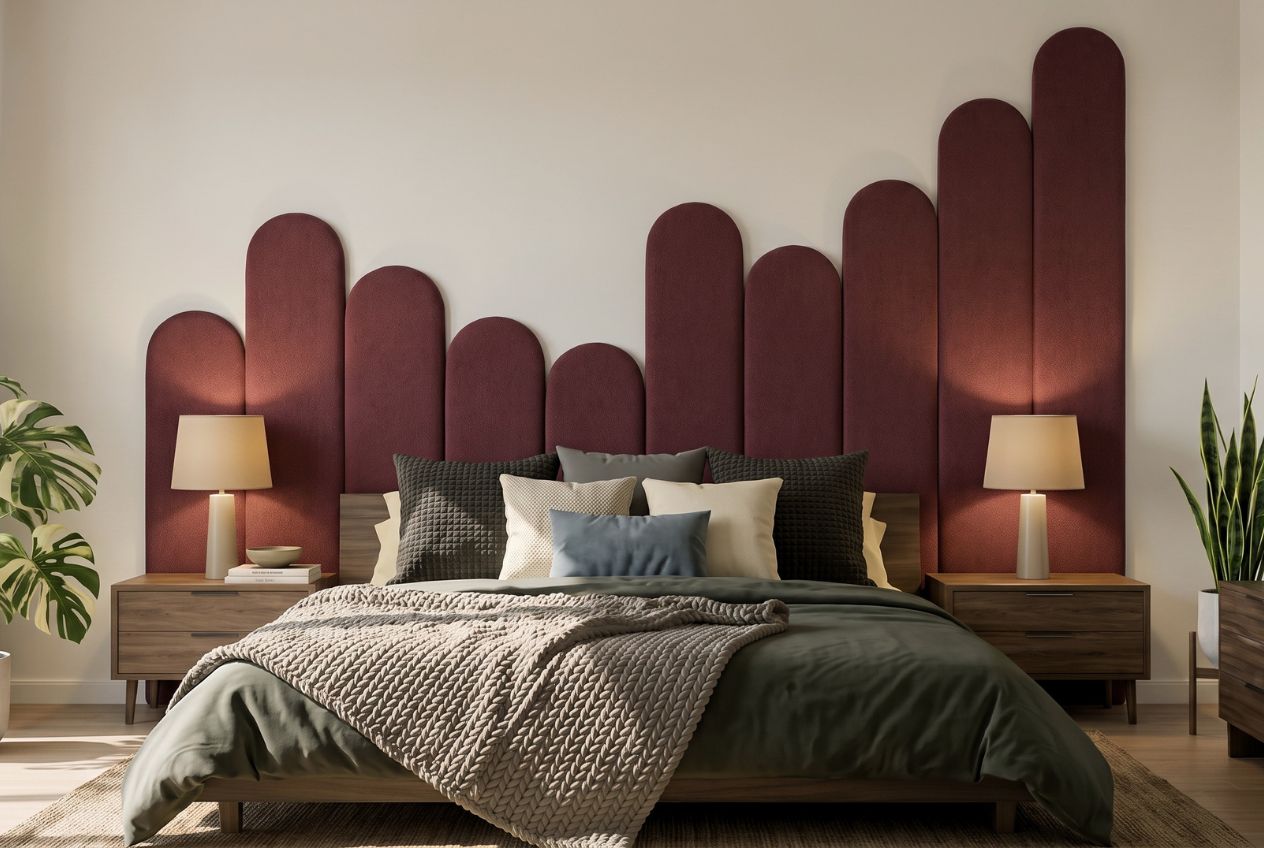
We also believe that knowing how to use a piece matters as much as the piece itself. Our editorial guides and mood library are designed to help you develop that understanding, so you are not just shopping for objects but building a space with genuine spatial intelligence. Explore our curated decor guide to understand how form, colour, and material work together to shape the atmosphere of a home. Great sculptural design does not happen by accident. It happens when every choice is made with both conviction and care.
FAQ
What is sculptural interior design in simple terms?
Sculptural interior design is an approach that treats three-dimensional form, volume, and material as the primary design language of a space, going beyond surface decoration to create environments that feel purposeful, spatial, and emotionally resonant.
What is sculptural furniture and how does it differ from regular furniture?
Sculptural furniture prioritises organic curves, asymmetry, and high-quality materials to create pieces that function as art objects as well as practical items, rather than simply fulfilling a seating or storage purpose with conventional proportions.
What types of sculptural furniture work best in modern interiors?
Pieces with organic silhouettes, hand-finished surfaces, and strong three-dimensional form work best in modern sculptural interiors. Common examples include curved lounge chairs, asymmetric consoles, and statement side tables in materials such as marble, timber, or metal.
Why choose sculptural furniture over conventional pieces?
Sculptural furniture creates a spatial narrative and emotional quality that conventional pieces rarely achieve, making a room feel considered and individual rather than assembled. Each piece tells its own story while contributing to the overall composition of the space.
How do I start applying sculptural design concepts at home?
Begin with one architectural element or statement piece per room, use directional lighting to reveal its form, and allow generous negative space around it. Starting at the structural level during renovation yields the most coherent results.