
TL;DR:
- In interior design, sculptural furniture transforms spaces by creating a sense of presence and spatial harmony. Understanding form as the three-dimensional envelope that influences spatial flow helps designers make intentional, enduring choices. Combining structural form with seasonal palettes and practical considerations ensures furniture enhances comfort, circulation, and aesthetic impact in NZ homes.
There is a persistent misconception in interior design: that the right furniture choice comes down to colour, material, or comfort alone. Yet the moment a sculptural piece enters a room, something shifts. The space reorganises itself around that form. Movement changes, conversation clusters differently, and the room acquires a presence it simply did not have before. For New Zealand homeowners working with seasonal palettes and a genuine love of distinctive design, understanding sculptural form is not an abstract exercise. It is the most direct path to spaces that feel considered, alive, and entirely your own.
Table of Contents
- Understanding form: The three-dimensional envelope
- Form and function: Finding the right balance
- User preferences: Angular versus curved furniture
- Modern methodologies: Creating sculptural form for seasonal palettes
- Applying form: Expert tips for NZ homes
- Why most guides miss the mark: The NZ sculptural form advantage
- Connect your vision with sculptural furniture and inspired decor
- Frequently asked questions
Key Takeaways
| Point | Details |
|---|---|
| Form shapes spatial experience | Furniture form influences how rooms feel and how people move through them. |
| Balance sculptural with function | Sculptural furniture works best when usability and ergonomics are not sacrificed for aesthetics. |
| Preferences aren’t universal | There is no single best furniture form; context and sampling are key to satisfaction. |
| Seasonal colour relies on form | Use furniture form as a stable anchor and change upholstery or finishes to refresh your palette. |
| Evaluate at human scale | Always assess how furniture form affects movement and comfort in real spaces. |
Understanding form: The three-dimensional envelope
Before you can use form purposefully, you need to understand what it actually is. In furniture design, form functions as the three-dimensional envelope of silhouette, volume, and structure that shapes how a space feels and how a piece’s visual weight reads, often influencing circulation and layout as well as aesthetics. It is the architecture of the object itself, existing before any colour is applied, before any upholstery is chosen, before any finish is selected.
This distinction matters enormously. When you walk into a room and feel immediately at ease, or immediately energised, that emotional response is often driven by the forms present rather than the palette on the walls. A low, horizontal sofa carries the room downward, creating calm. A tall, vertical cabinet pulls the eye upward, adding grandeur. These effects happen whether the pieces are dusty rose or deep charcoal.
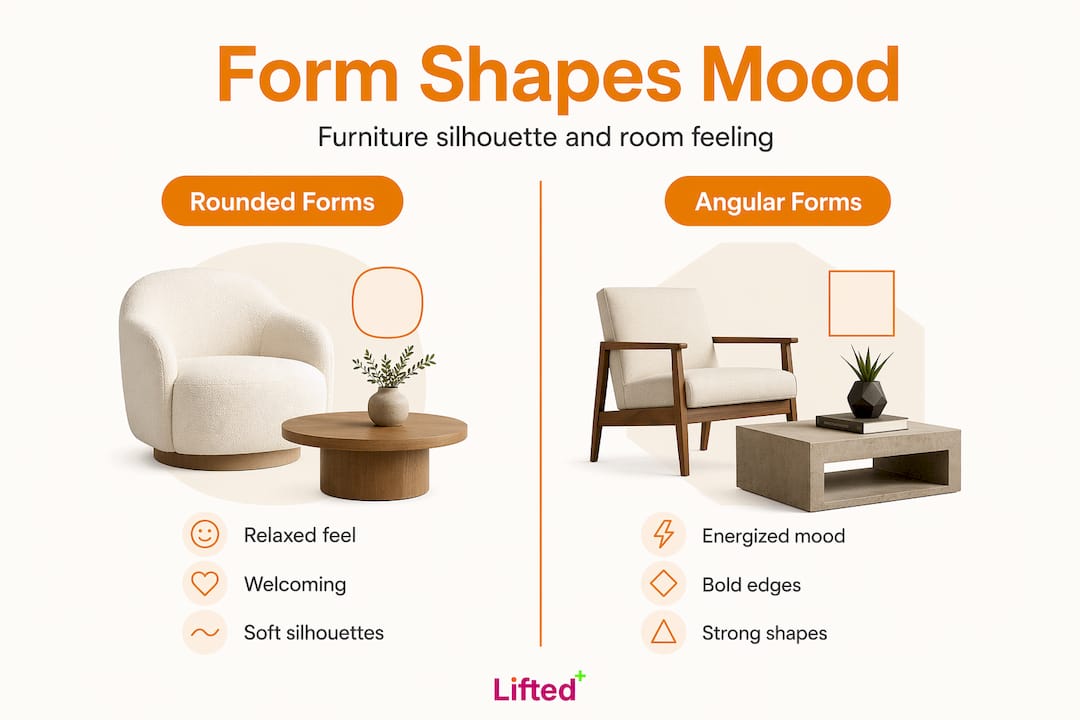
The furniture silhouette and mood relationship is one of the most underestimated forces in interior styling. Rounded silhouettes tend to soften a room, making angular architectural features feel less stark. Sharp, geometric outlines introduce visual tension and energy, which can be precisely what a neutral, open-plan space needs to avoid reading as flat or forgettable. Following strong principles for spatial layout helps you make these decisions with intention rather than instinct alone.
In a practical NZ context, this means considering the relationship between your room’s existing geometry and the forms you introduce. A bungalow with low ceilings and generous floor space reads very differently to a modern townhouse with double-height voids. The form of your furniture should respond to that geometry, not fight against it.
Form and function: Finding the right balance
A common tension in design is the form–function hierarchy: ergonomics and operational requirements constrain form, while form provides identity, emotional tone, and user experience when correctly balanced. This is not a problem to be solved once and forgotten. It is an ongoing negotiation, and the most successful interiors navigate it with great care.
Sculptural furniture can become genuinely frustrating if the demands of daily use are not considered during selection. A dramatically curved lounge chair that looks extraordinary in a showroom may prove uncomfortable after twenty minutes of reading. A statement coffee table with an aggressive angular silhouette may clip shins and disrupt the natural path through a room. The form should command the room, yes, but it should never do so at the cost of liveable use.
Consider these four questions before committing to a sculptural piece:
- Where will bodies actually rest, and does the form support natural posture?
- Does the outline of the piece interrupt or assist the flow through the room?
- Can the piece be used easily by different members of the household, including children and older adults?
- Will the silhouette remain compelling after several years, or is it responding to a very specific trend moment?
The Form Field Disc Lounge Chair is a strong example of a piece that resolves this tension with confidence. Its rounded, disc-like form is visually arresting without sacrificing the ease of use that makes a lounge chair worth owning.
Pro Tip: When you encounter a sculptural piece you love, try to “engineer back” from its silhouette. Ask what functional requirements that shape must accommodate, and assess whether it does so before committing to the purchase.

| Furniture type | Form priority | Function priority | Balance notes |
|---|---|---|---|
| Lounge chair | High visual impact | Ergonomic support | Test seated posture |
| Coffee table | Silhouette presence | Surface usability | Check circulation clearance |
| Side table | Sculptural accent | Reach and stability | Prioritise practical height |
| Shelving unit | Structural form | Storage capacity | Evaluate load-bearing design |
User preferences: Angular versus curved furniture
So which form do people actually prefer? The answer, as with most things in design, is more nuanced than a simple poll might suggest. Empirical research on furniture-form preference conducted in a controlled interactive setting found a small but significant overall preference for angular furniture, with gender-related differences: male participants selected more angular than curved pieces, while females showed no overall form preference.
This finding has real implications for NZ homes where multiple people with different aesthetic instincts share a space. It also challenges the popular assumption that curved, organic furniture is universally more appealing or more contemporary. Angular pieces are not simply harder-edged relatives of rounded forms; they carry their own distinct spatial energy and, for many people, a more immediate sense of presence.
What does this mean practically? A few important things:
It means that NZ interior styling trends should not be followed blindly, because individual preference data does not align neatly with broad trend narratives. The research also found no dominant style preference, classical versus modern, tied to form choice, which suggests that people respond to the specific character of a piece rather than its stylistic category. Finally, and most practically, it reinforces that modern decor in NZ works best when you sample and visualise furniture in context rather than making decisions from a catalogue image alone.
The form of a piece reads completely differently depending on the light, the surrounding palette, and the spatial scale of the room it occupies. A sharply angular side table that feels too stark in a showroom may become the most compelling object in a warmly lit, richly coloured NZ lounge. Trust the in-context experience over any general preference data, including this research.
Modern methodologies: Creating sculptural form for seasonal palettes
The way furniture designers create sculptural form has changed considerably in recent years. Parametric furniture design increasingly uses computational and parametric workflows, where form is generated and iteratively evaluated through adjustable parameters and often validated via simulation, including structural checks. This means that visually bold, expressive shapes that might once have been structurally impractical are now engineered with precision and confidence.
For homeowners and decorators, this matters in a specific way. It means that the sculptural pieces available today are more likely to be both visually resolved and structurally sound, because the design process itself incorporates testing at the form stage. You are not taking a risk on instability when you choose a dramatic, arching form or an asymmetric silhouette from a considered, contemporary maker.
The relationship between sculptural form and seasonal colour palettes is where this gets particularly interesting for NZ homes. Form should be treated as the consistent, enduring element within a room. It is the framework that holds through winter and summer, through the deep autumnal palette of the Form Field autumn palette and the lighter, airier shades of spring. The seasonal colour change happens in the upholstery, the cushions, the throws, and the wall art.
This approach also works beautifully for open-plan living, where colour palettes for open plan spaces need to carry visual coherence across zones. A strong sculptural form anchors each zone with spatial integrity, allowing the colour palette to shift and breathe without the room feeling fragmented.
Pro Tip: Use visualisation tools to preview how a sculptural piece holds the room across different seasonal palettes before purchasing. The form will remain constant; the colour story around it will evolve.
Applying form: Expert tips for NZ homes
Understanding form is one thing. Applying it confidently in a real home is another. Here are the most important practical strategies for homeowners and decorators working with sculptural furniture in NZ spaces.
-
Map your circulation first. Before placing any sculptural piece, walk the room and trace how people naturally move through it. Identify the paths between entry points, seating, and connecting spaces. Your sculptural furniture must live alongside those paths, not across them.
-
Evaluate at the human scale. In constrained rooms, form choices directly affect circulation and comfort; designers choose rounded outlines to ease movement, meaning sculptural form must be evaluated at the human scale, not only as an object concept. Place the piece in the room and live with it for a day before committing.
-
Choose rounded outlines for tight spaces. If your room is compact, rounded forms allow people to move past furniture instinctively without feeling physically confronted. Angular forms can work in compact spaces, but they require more deliberate placement and greater clearance.
-
Introduce one dominant sculptural form per zone. A room with three competing sculptural statements loses the power of each. Let one piece hold the room, and allow supporting pieces to play a quieter role.
-
Let the form do the architectural work. Particularly in NZ homes where built-in architectural detail may be limited, a strong sculptural piece can bring definition to a room in the way that a fireplace or a bay window might. It holds shape in the space rather than simply occupying it.
Pairing sculptural furniture with equally resolved lighting deepens the effect considerably. Sculptural lighting integration creates a layered conversation between forms at different scales, adding visual complexity without clutter. Similarly, displaying sculptural art alongside statement furniture creates a coherent, gallery-quality feel in residential spaces.
Pro Tip: Let the sculptural form anchor your room’s spatial identity, then use finishes and upholstery as seasonal tools. This approach, detailed further through practical interior tips, gives your space longevity without requiring full refurnishing as the seasons change.
Why most guides miss the mark: The NZ sculptural form advantage
Most interior design guides position form as one consideration among many, equal in weight to colour, material, and trend. We think that framing undersells form significantly and leads homeowners toward decisions they later regret.
Here is what we have observed: the rooms that endure, the spaces that still feel compelling three or five years after they were styled, almost always have a strong, considered sculptural form at their centre. The colour has often evolved. The accessories have been refreshed. But the primary piece remains, and it still holds the room because its form was chosen for spatial integrity rather than trend appeal.
This is the specific advantage available to NZ homeowners who are willing to think about form before they think about colour. New Zealand homes, particularly those built in the last thirty years, often have generous, open proportions but relatively neutral architectural character. That neutrality is not a limitation. It is an invitation. A sculptural piece placed with intention into that kind of space does not compete with the architecture; it becomes the architecture, bringing shape and tension to what might otherwise read as simply empty volume.
The seasonality conversation, which is central to how we think about design at Lifted+, reinforces this further. If you invest in a form you genuinely love, one that works at the human scale and within the flow of your room, you can shift its seasonal expression through colour and material without ever losing the spatial power of the original decision. Following NZ interior trends becomes far less stressful when your foundational choices are driven by form rather than palette.
The mistake most guides make is treating form as a stylistic preference rather than a spatial tool. It is both, of course. But the spatial function of form is more enduring and more transformative than any single style moment.
Connect your vision with sculptural furniture and inspired decor
For design-conscious homeowners ready to act, the next step is finding pieces that bring these principles to life in your specific space.
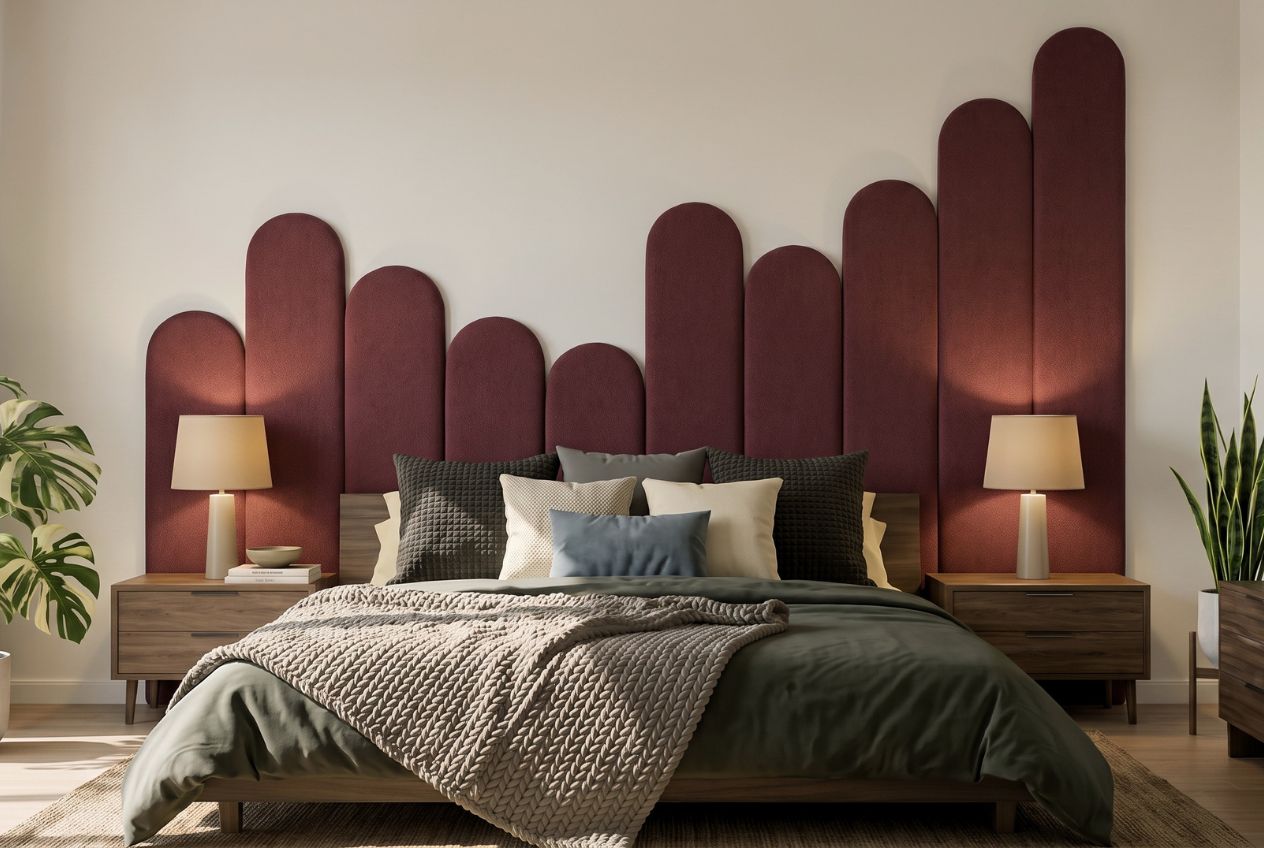
At Lifted+, we curate sculptural and colourful furniture chosen precisely for the way form and palette work together in NZ homes. Each piece is selected for its spatial presence as much as its visual beauty. Our design mood boards let you plan seasonal palette and form combinations before committing, so you can see how a strong silhouette anchors your room across different colour stories throughout the year. For a deeper understanding of how furniture choices shape the overall feeling of a space, our ambiance and mood guide offers practical, seasonally grounded styling insight designed specifically for the way NZ homes live and breathe.
Frequently asked questions
What does ‘form’ mean in furniture design?
Form in furniture design refers to the shape, volume, and outline of a piece, impacting aesthetics, spatial flow, and the way a room feels. As noted by Dakota Design Company, form functions as the three-dimensional envelope of silhouette, volume, and structure that shapes how a space feels and how a piece’s visual weight reads.
How does form affect comfort and usability?
The form determines how easy and comfortable furniture is to use, as ergonomic and operational features must be balanced with its sculptural shape. Ergonomics and operational requirements constrain form, while form provides identity, emotional tone, and user experience when correctly balanced.
Are angular or curved forms better for NZ homes?
There is no universal preference; research on form preference found a small but significant overall preference for angular furniture, with gender-related differences, so context and sampling in your own space matter most.
How can I combine sculptural form and seasonal colour palettes?
Use the furniture’s shape and volume as a consistent anchor, swapping upholstery and finishes to reflect seasonal colours while maintaining spatial impact. The form-led seasonal approach means the piece holds the room year-round while the colour story evolves around it.
How do I avoid problems with sculptural furniture in tight spaces?
Prioritise rounded forms for improved movement and evaluate designs at the human scale, not just visually, to prevent circulation issues. In constrained rooms, rounded outlines ease movement and ensure sculptural form enhances rather than obstructs daily life.