

TL;DR:
- Thoughtful sculpture display requires understanding your space’s proportions, lighting, and decor for maximum impact. Proper elevation, placement at sightlines, and layered lighting enhance the sculpture’s presence and create visual interest. Incorporating local NZ art and experimenting with modern arrangements elevates interior design and celebrates cultural expression.
Sculptural art has a way of commanding attention when it’s placed with intention, yet so many beautiful pieces end up quietly fading into the background of a room, overshadowed by furniture or lost against a busy wall. It’s a common frustration: you invest in a piece that genuinely moves you, bring it home, set it down somewhere that feels reasonable, and somehow the magic you felt in the gallery simply doesn’t translate. The good news is that thoughtful display is a learnable skill. This guide walks you through everything from measuring your space and choosing the right pedestal, to lighting angles, modern layering techniques, and how to honour local New Zealand artistry in your home.
Table of Contents
- Preparing your space: Requirements and essentials
- Step-by-step: Placing sculptural art for maximum impact
- Lighting your sculpture: Methods and common mistakes
- Modern trends: Layering, local art, and unique display solutions
- Our fresh perspective: Art shouldn’t hide, here’s how to make it live
- Enhance your home with modern sculptural decor from Lifted+
- Frequently asked questions
Key Takeaways
| Point | Details |
|---|---|
| Optimal viewing height | Elevate sculptural art so its focal point sits between 1.2–1.6 metres above floor level. |
| Strategic placement | Position sculptures at sightline ends or entryways and allow space for 360-degree viewing. |
| Effective lighting | Use angled, single-source lighting at 45 degrees to highlight form, and match colour temperature to material. |
| Modern display solutions | Mix sculptural art with 2D pieces, use acrylic plinths, and showcase local NZ styles for dynamic room impact. |
| Preparation matters | Measure ceilings and choose proportionate pedestals to ensure both safety and visual harmony. |
Preparing your space: Requirements and essentials
Before a single sculpture finds its place, the room itself needs to be understood. Think of your space as a stage. Its proportions, existing palette, and the way light moves through it at different times of day will all shape how a sculptural piece is received. Understanding how art shapes modern interiors begins with this kind of honest, observational preparation.
Start by measuring your ceiling height and the available floor or surface area where you intend to display the piece. A sculpture that sits too low loses authority; one that towers awkwardly creates visual tension for the wrong reasons. Sculpture scale guidelines recommend factoring in both the sculpture’s height and its base when calculating how it will read within the room’s vertical space.
Choosing the right pedestal or plinth is one of the most consequential decisions in the display process. Pedestals elevate sculptures to eye level for optimal viewing, with the focal point ideally sitting between 1.2 and 1.6 metres from the ground. This range accounts for standing adults and ensures the piece is genuinely engaged with rather than glanced at. The material of the pedestal matters too. Timber pedestals bring warmth and organic texture; stone or concrete bases feel grounded and architectural; white lacquered plinths keep the focus entirely on the sculpture itself.
Proportion is equally important. A pedestal’s width should be roughly two-thirds the width of the sculpture it supports, with a wider base used for tall, narrow pieces to prevent a top-heavy appearance. Getting this ratio right is what separates a display that feels considered from one that feels accidental.
Here’s a quick overview of what you’ll need to gather before you begin placing anything:
| Item | Purpose | Notes |
|---|---|---|
| Tape measure | Measure ceiling, wall, and surface dimensions | Essential for scale decisions |
| Spirit level | Ensure pedestal and art sit evenly | Especially important on timber floors |
| Pedestal or plinth | Elevate sculpture to optimal viewing height | Match material to existing decor |
| Picture hooks or anchors | Wall-mounted sculptures or shelves | Use appropriate fixings for wall type |
| Directional lamp or track light | Test lighting angles before installation | A torch works for initial testing |
| Furniture pads | Protect surfaces beneath sculpture base | Prevents scratching on timber or stone |
Evaluating your existing decor for synergy is the final step in this preparation phase. Consider the dominant materials in the room, whether timber, concrete, ceramic, or glass, and choose a sculpture that either echoes or deliberately contrasts those textures. Keeping an eye on NZ interior styling trends can help you identify which material combinations feel current and cohesive rather than forced.
Pro Tip: Aim for the combined height of your sculpture and its pedestal to sit between 35 and 50 per cent of your ceiling height. In a standard 2.4-metre ceiling room, that means your total display height should fall somewhere between 84 centimetres and 1.2 metres.
Step-by-step: Placing sculptural art for maximum impact
With your space assessed and your materials ready, placement becomes the central act. Where a sculpture lives in a room determines how it is experienced, and that experience changes depending on the viewer’s position, the room’s traffic flow, and the sightlines created by furniture arrangement.
Placement at sightline ends, such as the view from a kitchen window into a living area, or directly opposite a main entryway, gives a sculpture natural authority. It becomes the full stop at the end of a visual sentence. Entryways are particularly powerful locations because they set the tone for everything that follows in the home.
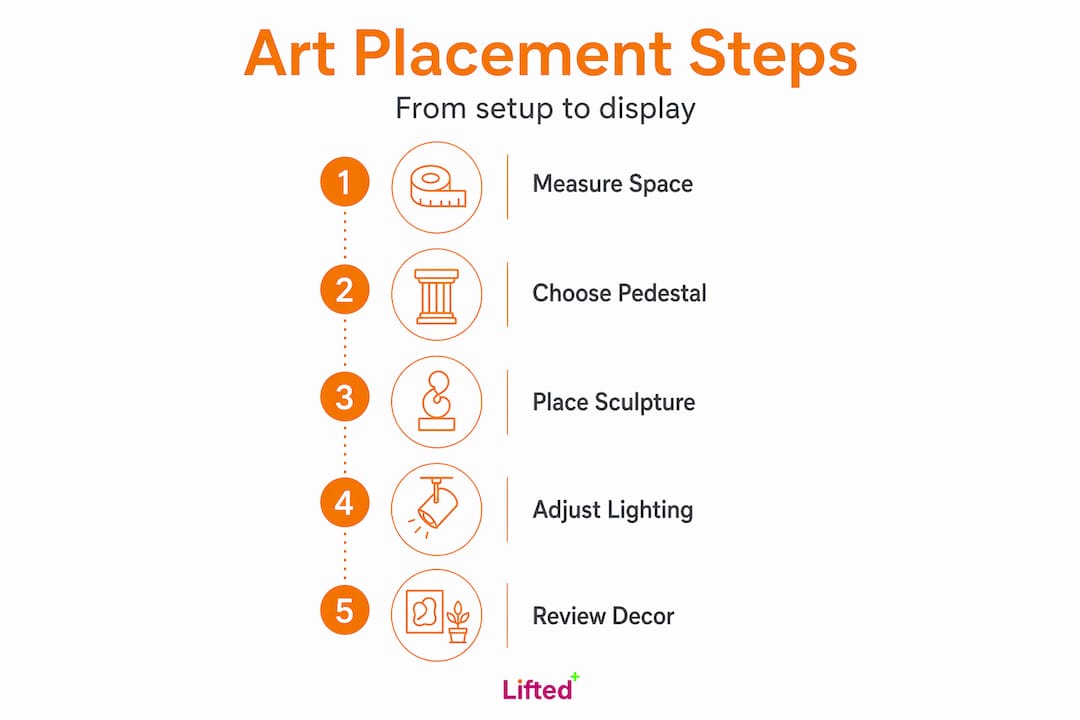
Follow these steps to place your sculptural art with confidence:
- Identify your primary sightlines. Stand at the main entry points of the room and note where your eye naturally travels. These endpoints are your prime display positions.
- Assess traffic flow. Ensure the sculpture won’t interrupt the natural movement path through the space. A piece on a pedestal needs at least 60 centimetres of clearance on all sides for comfortable circulation.
- Consider 360-degree viewing. Freestanding sculptures are designed to be seen from multiple angles. Position them away from walls where possible, or at least ensure one full side is completely unobstructed.
- Create a vignette on consoles or shelves. Smaller pieces work beautifully grouped with books, a candle, or a single stem in a vessel. The key is restraint: one or two supporting elements, not a cluttered arrangement.
- Test before committing. Place the piece temporarily and live with it for a day. Walk past it at different times, in different light conditions, and from different angles before making the placement permanent.
“Ensure space around for 360-degree viewing.” — David Harber, on displaying sculptures at home
The difference between classic and modern placement approaches is worth understanding, particularly as contemporary interiors move away from the formal, symmetrical arrangements of the past.
| Approach | Classic placement | Modern placement |
|---|---|---|
| Position | Centre of room or mantelpiece | Off-centre, sightline endpoints |
| Pedestal style | Ornate, matching timber | Minimal, contrasting material |
| Surrounding decor | Symmetrical, paired objects | Asymmetrical vignettes |
| Viewing angle | Front-facing only | 360-degree access encouraged |
| Scale relationship | Sculpture matches room formality | Deliberate scale contrast for tension |
For pieces displayed on wall art in architectural rooms or against statement walls, the background texture and colour become part of the composition. A pale, matte wall lets a dark bronze sculpture breathe. A richly coloured wall creates drama behind a white ceramic form. You can also explore choosing art for tall walls to understand how vertical scale affects the visual weight of a piece.
Lighting your sculpture: Methods and common mistakes
Lighting is where sculptural art either comes alive or quietly disappears. The right light defines form, creates shadow, and draws the eye with an almost gravitational pull. The wrong light flattens everything, turning a three-dimensional work into something that reads as little more than a silhouette.
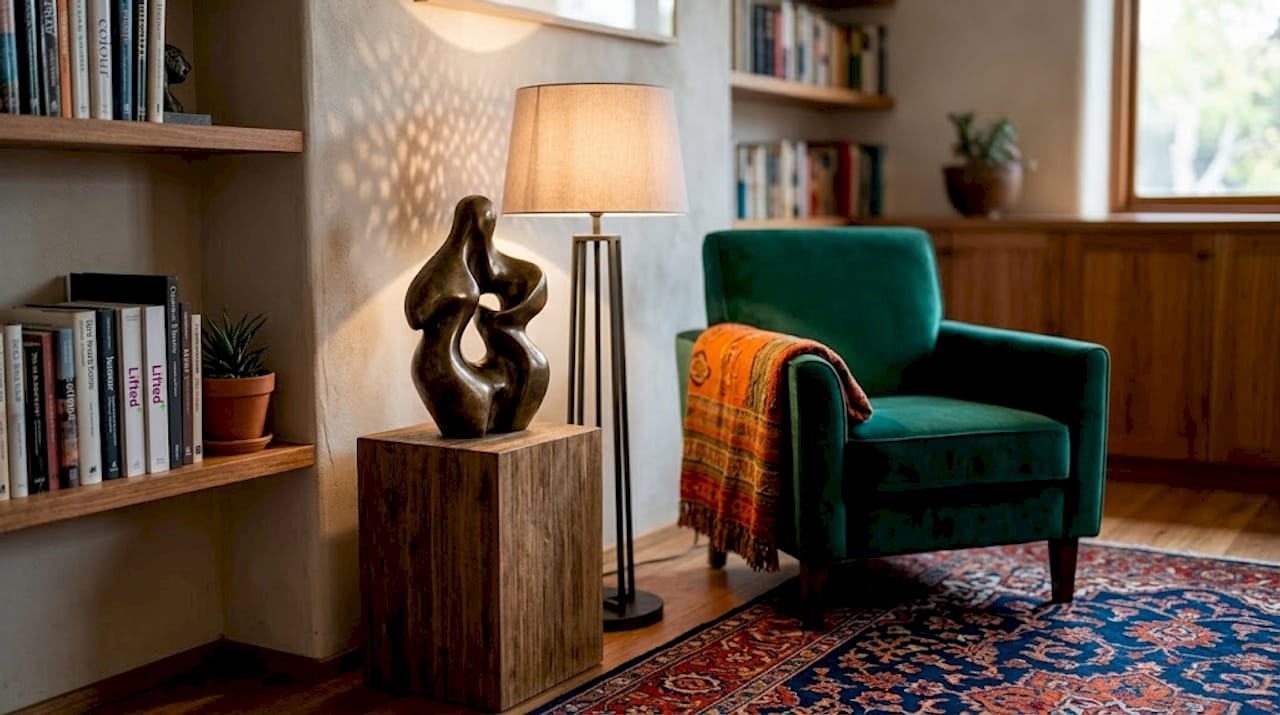
Primary lighting at 45 degrees above and to one side of the sculpture is the most effective approach for defining form. This angle creates natural shadow gradients that reveal texture and depth, the same principle that photographers use to bring dimension to a subject. Avoid placing multiple lights of equal intensity around the piece; this cancels out the shadows and produces a flat, clinical appearance.
Colour temperature is a detail that many people overlook, but it has a significant effect on how a sculpture reads in a room. Warm light at approximately 2700K is ideal for stone, ceramic, and timber sculptures, as it enriches earthy tones and creates an inviting, organic warmth. Cooler light, around 4000K, suits metal and glass pieces, enhancing their reflective quality and bringing out the precision of their surfaces. You can find further lighting insights for sculpture that explore these distinctions in more detail.
Key lighting principles to keep in mind:
Angle matters most. A single well-placed directional light at 45 degrees does more for a sculpture than three poorly positioned ones.
Match temperature to material. Warm tones for organic materials, cooler tones for industrial or reflective surfaces.
Avoid overhead-only lighting. Ceiling downlights directly above a sculpture flatten its form rather than revealing it.
Consider sculptural lighting as part of the display. A beautifully designed lamp or track light becomes part of the overall composition, not just a functional tool.
Layer your room lighting. Statement lighting in the broader room creates a context that makes the sculpture’s dedicated light feel intentional rather than isolated.
Understanding the main types of designer lighting available will help you choose the right fitting for the job, whether that’s an adjustable track head, a directional floor lamp, or a recessed accent light.
Pro Tip: Before committing to any permanent lighting installation, test with a torch. Move it around the sculpture at different heights and angles to see exactly how shadows fall and where the form reads best. It takes five minutes and saves considerable regret.
Modern trends: Layering, local art, and unique display solutions
Contemporary display practice has moved well beyond the single sculpture on a single pedestal. Today’s most compelling interiors layer sculptural pieces with two-dimensional works, mix materials and scales, and use inventive display structures that are themselves part of the aesthetic conversation.
Acrylic pedestals create a floating, modern effect that suits minimalist and contemporary interiors particularly well. Because the base appears almost invisible, the sculpture seems to hover, which amplifies its presence without adding visual weight to the room. For smaller spaces, wall-mounted display brackets or floating shelves achieve a similar effect while freeing up floor space entirely. Lighted pedestals, which illuminate from below, work beautifully with translucent or semi-transparent pieces, casting a soft glow that makes the sculpture feel luminous.
Layering sculptural art with two-dimensional pieces creates a dynamic, gallery-like quality. A large-format print or painting behind a freestanding sculpture adds depth and frames the three-dimensional work without competing with it. The key is to ensure the two pieces share at least one element in common, whether that’s colour, material, or mood, so the combination feels curated rather than coincidental. You can explore curated shelf displays for inspiration on how to build these kinds of layered arrangements with confidence.
Featuring New Zealand artists in your display is both a meaningful and aesthetically rich choice. Ceramic Kina and Māori-inspired pieces work beautifully on open shelves or as centrepieces, bringing an organic, grounded quality that connects the interior to the natural landscape of Aotearoa. These pieces carry cultural resonance alongside their visual presence, which gives a room a sense of story and place that imported objects rarely achieve.
| Display approach | Traditional | Modern trend |
|---|---|---|
| Pedestal material | Timber or stone | Acrylic, powder-coated steel |
| Display structure | Single pedestal, centred | Floating shelf, wall mount, grouped |
| Art combination | Sculpture alone | Sculpture layered with 2D art |
| Local art inclusion | Rare | Actively sought and celebrated |
| Scale approach | Matched to room size | Deliberate contrast for impact |
For a broader look at what modern home decor in NZ looks like right now, the shift toward organic forms, earthy palettes, and locally made pieces is unmistakable. Sculptural art sits at the centre of this movement.
Our fresh perspective: Art shouldn’t hide, here’s how to make it live
Here’s something we’ve observed consistently: the most common reason a sculpture loses its presence in a home isn’t poor quality or wrong scale. It’s timidity. People place pieces in corners, against walls, at heights that feel safe and unobtrusive, and then wonder why the room doesn’t feel transformed.
Sculptural art is not furniture. It doesn’t need to earn its place by being useful or by fitting neatly into a composition. It needs to be seen. That means placing it where it will be encountered, where it will interrupt the eye’s comfortable path through the room and demand a moment of attention. That interruption is not a problem. It’s the entire point.
We’d also challenge the idea that sculptural art belongs only in formal or large spaces. Some of the most powerful displays we’ve seen have been a single ceramic form on a bathroom shelf, or a small bronze on a kitchen windowsill where the light catches it differently every hour of the day. Scale is relative. Presence is not.
The other habit worth breaking is treating a sculpture as a finished decision. Try moving it. Try a different pedestal, a different wall, a different pairing with a textile or a print. The Lifted+ design journal explores exactly this kind of experimental, evolving approach to living with art, because the best interiors are not static arrangements. They’re ongoing conversations between the objects you love and the life you live around them.
Don’t limit yourself to one style or one display solution. Layer, experiment, and trust that the discomfort of trying something unexpected is usually where the most interesting results live.
Enhance your home with modern sculptural decor from Lifted+
Translating these ideas into your own space is easier when you have access to pieces and resources that are genuinely designed with display in mind.

At Lifted+, we curate modern home decor that prioritises form, presence, and the kind of quiet confidence that makes a room feel complete. Whether you’re looking for sculptural lighting that doubles as a display object in its own right, or wall art to layer behind a three-dimensional centrepiece, our collection is built around the belief that every element in a room should earn its place. Explore our seasonal collections and find the pieces that will bring your sculptural display to life.
Frequently asked questions
What height should my sculpture sit at for best viewing?
Aim for the focal point of the sculpture to be between 1.2 and 1.6 metres from the ground, using a pedestal to achieve this height for standing adults.
Can I place sculptural art on a shelf?
Yes, small sculptures work well on shelves, but ensure enough space around each piece for viewing from multiple angles, as 360-degree access is important even for compact works.
How should I light a metal sculpture?
Use cool lighting angled at 45 degrees above and to one side of the piece to highlight the texture and reflective quality of metal surfaces.
Are acrylic pedestals suitable for modern homes?
Acrylic pedestals create a floating, modern effect and are ideal for contemporary or minimalist interiors where visual lightness is a priority.
How do I feature NZ sculptural art in my home?
Display ceramic Kina or Māori-inspired pieces as centrepieces or on open shelves to bring a modern, organic aesthetic that connects your interior to New Zealand’s cultural and natural landscape.