
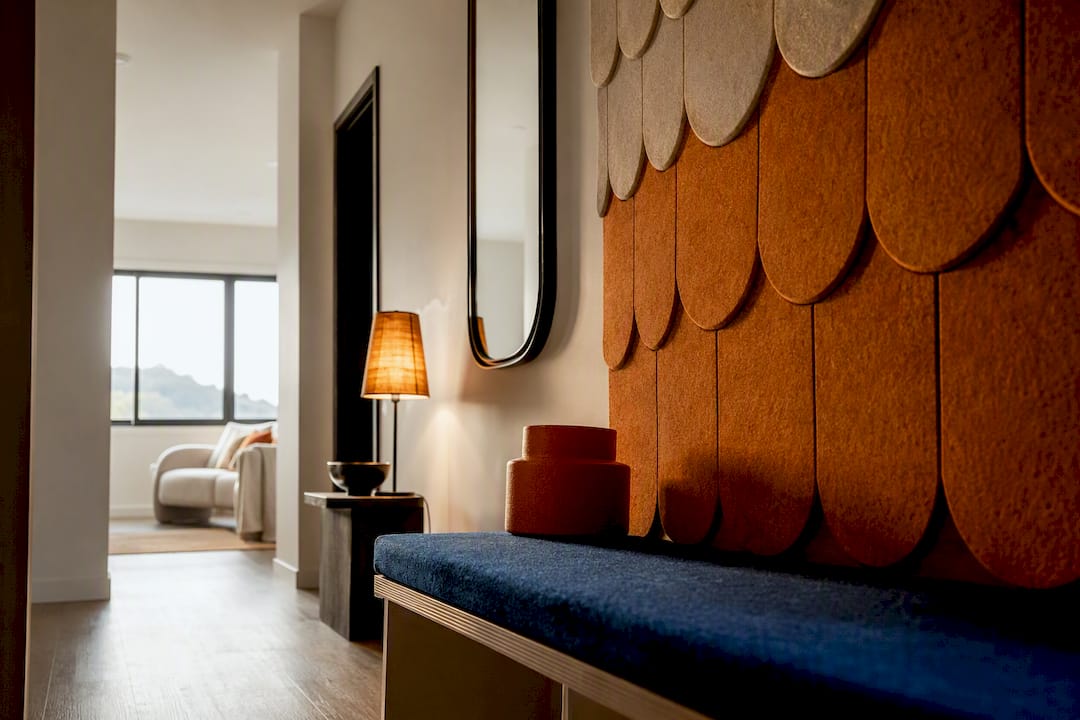
Edit your belongings down to what earns its place, then layer texture, add one scale anchor, warm the lighting, and finish with a renter-safe feature wall. That sequence, in that order, is the fastest way to turn a flat white box apartment into somewhere that feels considered. None of it requires paint, drilling, or a landlord’s blessing, and the colour-led options further down, including removable wall panels, are built for exactly that constraint.
TL;DR:
- Using textured fabrics and finishes such as linen, boucle, or wool adds depth and warmth, making a white apartment feel more inviting without paint or new furniture.
- Selecting one large statement art piece or a grid of smaller works with wide matting creates a strong focal point that anchors the space without overwhelming it.
- Opting for light, legged furniture and repeated finishes enhances perceived space and maintains an airy, purposeful layout in small white apartments.
- Layering warm lighting with bulbs between 2700 to 3000K and adding mirrors or raised furniture increases the room’s warmth and perceived size after dark.
- Renter-safe feature walls, like modular panels or lean-to frames, can be installed in a weekend using tested adhesive pads, allowing customization without damaging walls.
Table of Contents
- 1. Edit and curate: make every object count
- 2. Texture first: fabrics, finishes and tactile layers
- 3. Art and scale: anchor walls without overwhelming the space
- 4. Furniture choices that keep the space airy and purposeful
- 5. Lighting: layer warm sources to stop white from reading clinical
- 6. Choosing the right white: undertones, light direction and finishes
- 7. Renter-safe feature walls and no-drill options
- 8. Colour without commitment: how DwellForms™ removable wall panels work
- 9. A renter-safe step-by-step: create a feature wall in a weekend
- 10. Quick takeaways and next steps
- Why colour matters more than people admit
- How DwellForms™ helps: a gentle product link and next step
- Sources
- FAQ
1. Edit and curate: make every object count
A white apartment behaves like a gallery. Every object you place against those blank walls carries more visual weight than it would in a busier room, which means clutter reads as clutter twice as fast, and a well-chosen piece reads as intentional twice as fast too, according to Housebeautiful’s styling guidance. That’s the upside of the blank canvas everyone complains about. Use it.
Run a quick function-and-beauty audit before you buy anything new. If an object does neither, box it up.
- Keep pieces that do a job (a lamp, a bowl for keys) or genuinely delight you to look at.
- Store or donate duplicates, especially tabletop clutter that competes for the eye.
- Give each zone one anchor object rather than five small ones.
- Choose a single statement piece per room instead of a scattered collection.
Editing this way creates breathing room on white walls that busier interiors don’t need. A console table with one ceramic vase and a stack of books reads calmer, and more expensive, than the same table crowded with six small trinkets. Designers lean on this constantly: fewer, better, more deliberately placed, according to Housebeautiful. Once the surfaces are cleared, you’ll actually notice which walls need help, which is the whole point of the next few moves.
2. Texture first: fabrics, finishes and tactile layers
Texture, not colour, is usually the single most effective lever for making a white room feel lived in. Mixing four or five distinct surfaces adds richness that a coat of paint never will, according to Sunday Abode’s interior research, and it’s the reason a plain apartment styled with linen and boucle looks intentional while an identical one styled with smooth synthetics looks unfinished.
Build a shortlist of materials and use them across more than one surface so the eye reads a pattern, not a mismatch:
- Linen for cushions, throws, or a loose slipover
- Boucle on an armchair or ottoman
- Wool in a chunky rug or knit throw
- Jute or rattan in baskets and a woven rug underlay
- Matt ceramics on shelves and tabletops
- Light oak or ash in furniture legs and shelving
Layering diverse textures like these creates depth in all-white schemes without needing strong colour, according to Space of Muse’s small-apartment research. Think in layers from the floor up: jute or wool rug, then a linen sofa, then boucle cushions, then a ceramic bowl or timber tray on the coffee table. Each layer should feel slightly different to touch than the one beneath it.
Pro Tip: Swap any cool daylight bulbs in your lamps for warm-white ones before you buy a single cushion. A 2700K bulb makes white walls feel like backdrop, not hospital lighting, and it costs less than a throw pillow.
3. Art and scale: anchor walls without overwhelming the space
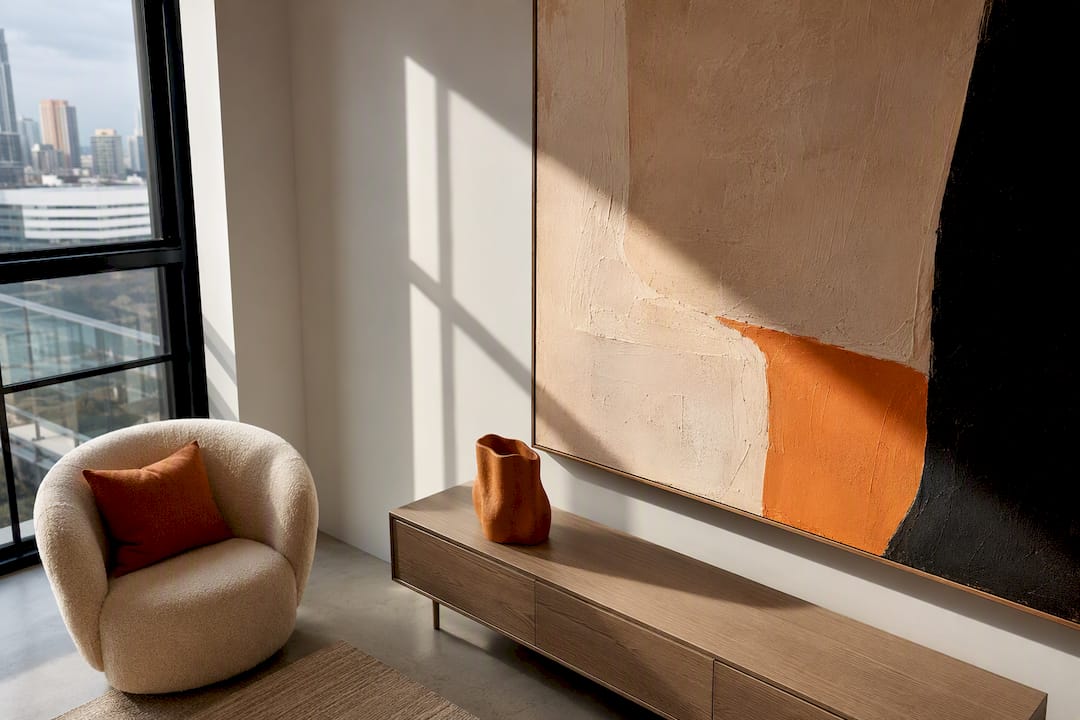
Designers recommend one strong focal piece over a scatter of small competing items, and that rule matters more in a white box than anywhere else, according to Housebeautiful. A single oversized print above the sofa does the job that six postcard-sized frames can’t.
Oversized art works best when the piece is roughly two-thirds the width of the furniture below it. Gallery groupings work when you commit to a grid or a tight cluster rather than a loose scatter, since a loose hang on a white wall just looks unfinished.
- Go big on one wall, then leave the rest of the room quieter.
- If you group smaller works, use wide matting (at least 5 to 8 centimetres) to make each piece feel gallery-worthy rather than budget.
- Try a picture ledge so you can lean and layer frames without a single hole.
- Adhesive hooks rated for the weight of your frame work for lighter pieces.
- A large leaning frame propped against the wall skips hanging altogether.
Wide matting is doing more work than people expect. It gives a modest $40 print the kind of breathing room a $400 piece gets in a gallery, which is exactly why smaller works can still anchor a wall convincingly.
4. Furniture choices that keep the space airy and purposeful
Furniture with exposed legs and measured scale preserves visual flow, and can noticeably increase how big a small apartment feels compared with bulky, floor-touching pieces, according to Homes & Gardens. In a white box, where there’s no colour to break up mass, a heavy sofa that sits flush to the floor reads as a wall of upholstery rather than a piece of furniture.
- Choose legged furniture over skirted or floor-touching pieces so light and sightlines pass underneath.
- Match sofa depth and coffee-table height to the room rather than to the showroom floor. A shallow sofa (85 to 90 centimetres deep) keeps a small living room walkable.
- Repeat one timber tone or metal finish across two or three pieces so the room reads as a set, not a collection of separate purchases.
Open silhouettes and repeated finishes do more for perceived space than a smaller footprint alone.
5. Lighting: layer warm sources to stop white from reading clinical
Layered lighting, ambient, task, and accent together, with warm-white bulbs throughout, is what stops a white interior from feeling like an empty gallery after dark, according to The Spruce’s minimalist apartment guidance.
- Use 2700 to 3000K bulbs in every lamp; anything cooler pushes white walls back toward clinical.
- Add at least one floor lamp and one table lamp per living zone so light pools at different heights instead of coming from a single overhead source.
- Position a lamp near a reading chair or sofa end for task light, then a smaller accent light (a plug-in wall sconce or a small uplight) somewhere the eye rests, like beside a plant or artwork.
- Mirrors placed opposite a window bounce daylight further into the room and visually double a wall’s depth.
Mirrors and raised furniture legs both increase perceived space by reflecting light and revealing more floor area, a combination worth prioritising over heavy, floor-touching pieces in any small white apartment, according to Space of Muse.
6. Choosing the right white: undertones, light direction and finishes
Undertone matters more than most renters realise, and it’s worth checking even if you’re not repainting, since it explains why your existing white walls might already be working against you. North-facing rooms often read cooler than expected, so warm off-whites paired with pale timber tend to avoid that flat, clinical look, according to At Home With The Barkers.
- South or east-facing rooms with plenty of warm daylight can handle a crisper, cooler white without feeling sterile.
- North or west-facing rooms usually benefit from a warmer off-white with a hint of cream or beige.
- Use eggshell or satin finishes on high-traffic walls, hallways, and skirting for durability and easy wiping.
- Reserve matt finishes for feature surfaces or ceilings, where the lack of sheen reads as intentional rather than flat.
If you’re testing paint or simply auditing what you’ve got, tape a few swatches to the wall and watch them across a full day. The same white can look blue-grey at 8am and warm ivory at 4pm, which is exactly the undertone shift that catches people out.
7. Renter-safe feature walls and no-drill options
Lightweight, removable feature treatments give renters real visual impact without the risk of permanent change, and tested adhesive systems have made this far more reliable than they were even a few years ago, according to Homes & Gardens.
Weigh up the main renter-safe categories on their own terms rather than assuming one fits every wall:
- Peel-and-stick art or wallpaper panels suit small accent areas but can be tricky to reposition once committed.
- Picture rails and ledges let you lean and swap frames with zero wall damage.
- Lightweight leaning frames skip hardware altogether, ideal for a first apartment or a short lease.
- Modular removable wall panels add colour, shape, and texture across a whole feature wall, and can be reordered into new layouts later.
Before committing to any adhesive-based option, test it. Mark a small hidden patch, apply the adhesive, and leave it for 48 to 72 hours to check for paint lift before you commit to a full wall, a method detailed in Liftedplus’s guide to decorating without painting. If your lease has strict clauses about wall alterations, a temporary ledge or a simply leaned frame sidesteps the question entirely, since nothing touches the wall at all.
8. Colour without commitment: how DwellForms™ removable wall panels work
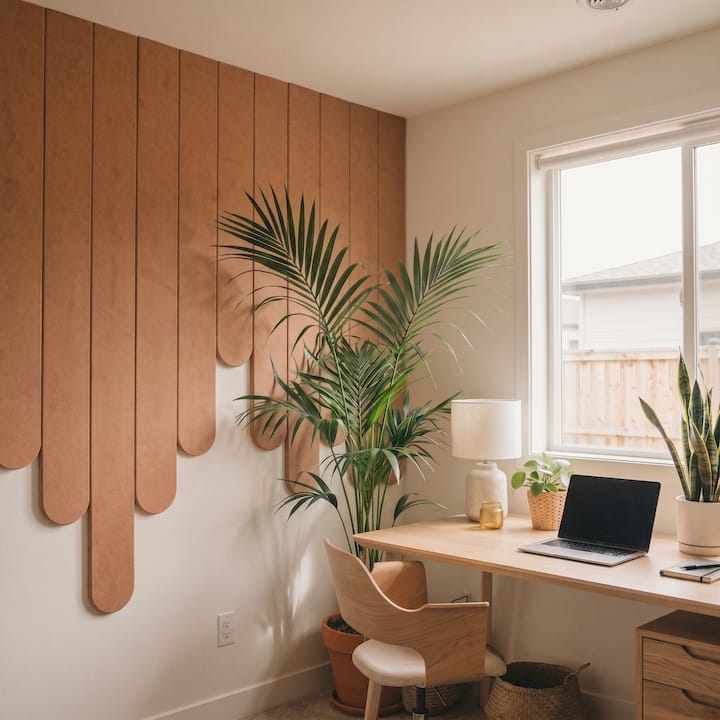
DwellForms™ by Liftedplus takes the renter-safe feature wall idea further than a print or a ledge can. The panels are precision-cut PET felt, made from recycled plastic, arranged into modular kits that click together into a sculptural, colourful composition, and they go up with tested adhesive pads rather than screws, nails, or construction adhesive.
That construction solves three problems renters actually have:
- No drilling, so there’s nothing to fill or explain when you move out.
- Modular layout, so you can rearrange or extend the design without buying a whole new kit.
- Takes to a new home, since the panels lift off and can be reinstalled somewhere else.
Before you order a full wall’s worth, order a sample kit. Lay pieces out on the floor or trace paper templates onto the wall to confirm colour, scale, and composition before a single pad touches paint, a step Liftedplus recommends for every Skyline kit order. Sample kit purchases are credited toward a full kit if you decide to go ahead.
A few things to check before you commit: always follow the specific install guide for your kit, test the adhesive on a hidden section of your actual wall first, and check your lease or landlord agreement for any restrictions on wall attachments, however light.
| Consideration | What it means for you |
|---|---|
| Installation | Tested adhesive pads, no drilling or painting required |
| Flexibility | Modular panels can be rearranged or extended over time |
| Portability | Panels can be removed and reinstalled in a new home |
| Before buying | Order a sample kit to confirm colour and scale first |
9. A renter-safe step-by-step: create a feature wall in a weekend
You don’t need a free week to make a visible change. This sequence fits comfortably into a Saturday and Sunday.
- Plan (30 minutes): pick the wall, measure it, and decide on a rough colour direction.
- Order samples: get a small sample kit or a few paint swatches sent out; wait for daylight to check them properly.
- Mock it up with paper: cut paper templates to scale and tape them to the wall to test composition before buying anything else.
- Install with no-drill fixings: apply adhesive pads or hooks following the manufacturer’s guide, working from the centre outward.
- Style and tweak: add a lamp, a plant, or a leaning frame nearby to finish the zone.
Budget shapes how far you go. A sample kit costs the least and answers the “will this work” question. A small kit covers one accent zone. A full kit transforms an entire wall. If funds are tight this month, a secondhand frame or a swapped cushion cover can hold the space until you’re ready.
Pro Tip: Do the paper mock-up even if you’re confident. It takes fifteen minutes and it’s the single step that prevents the most common renter regret: a composition that looked right on a screen and wrong on the wall.
10. Quick takeaways and next steps
Three moves will get you further than any single big purchase: edit one room down to what earns its place, swap in one genuine texture (a boucle throw, a jute rug), and try one renter-safe feature, whether that’s a leaning frame or a small panel kit.
- Block out 2 to 3 hours this weekend for one room, not the whole apartment.
- Start with editing. It costs nothing and makes every later choice easier to see.
- Pick one texture swap and one wall feature to trial before spending on anything bigger.
Why colour matters more than people admit
There’s a quiet assumption in a lot of rental advice that neutral equals safe, and safe equals smart. I’d push back on that. A white box apartment isn’t a limitation to work around, it’s a head start: every colour, texture, or shape you add to it reads clearly, because there’s nothing competing with it. The renters who get this right aren’t the ones who buy the most. They’re the ones who trust a bold cushion, a warm bulb, or a coloured panel to do real work in a room that has nothing else going on.
The emotional payoff is bigger than the decorating advice usually admits, too. A home that still looks like the display suite you inspected six months ago doesn’t feel like yours, no matter how tidy it is. Colour, texture, and a wall that’s actually been touched by your hand fix that faster than a new sofa ever will.
— Michelle
How DwellForms™ helps: a gentle product link and next step
Liftedplus is the practical route to a coloured, textured feature wall when your lease says no to drilling and no to paint. Where peel-and-stick art fades or lifts and a leaning frame only ever covers a corner, DwellForms™ panels click into full modular compositions using tested adhesive pads, and they come apart just as easily when your lease ends or your taste shifts.
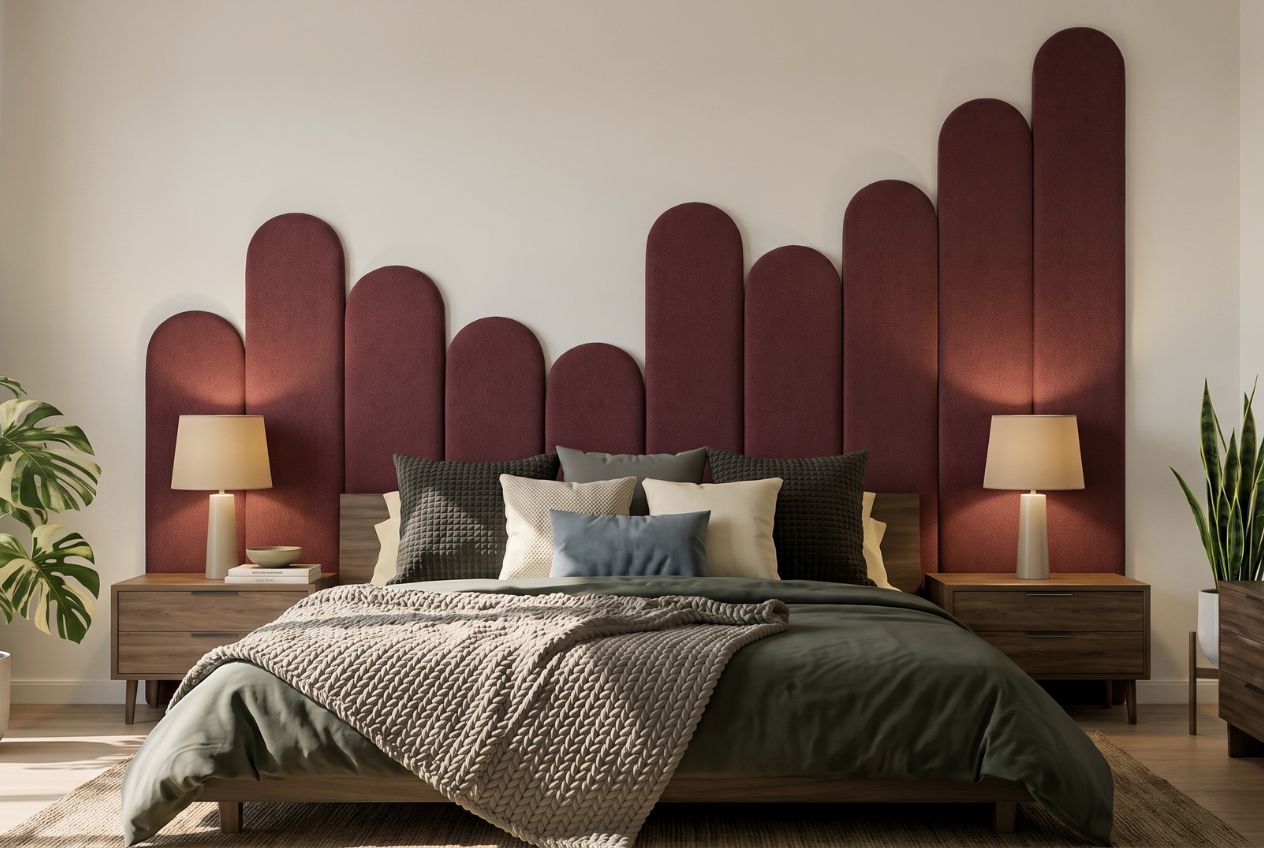
Start with a Skyline modular wall panel kit if you want a defined starter layout, or browse the full range of colourways and configurations if you’re still deciding on a direction. Either way, order a sample kit first. It’s credited toward your full order if you go ahead, so testing colour and scale on your actual wall costs nothing extra. Once you’re happy with the mock-up, the install itself takes an afternoon, not a weekend.
Sources
For more on hanging art and leaning frames without holes, read Liftedplus’s guide to no-drill wall transformations. To compare panels against framed art directly, see wall panels versus art prints. For a broader styling framework beyond feature walls, Living on the Côte d’Azur’s home styling guide is a solid general reference.
- Think Your White Box Apartment Is Boring? Think Again
- 8 Bright and Airy White Decor Ideas for Small Apartments
- White paint undertones guidance
- Homes & Gardens interior design guidance
FAQ
How can I decorate a plain white apartment creatively?
Edit your belongings first, then add texture through rugs, cushions and throws, anchor one wall with large art or a plant, warm up the lighting with 2700 to 3000K bulbs, and finish with a renter-safe feature wall such as a modular panel kit.
What is the 3-5-7 rule of decorating?
It’s a styling guideline for grouping objects: arrange items in odd-numbered clusters of three, five or seven, since odd numbers tend to look more natural and less rigid than even pairs on a shelf or tabletop.
What is the 3 colour rule in interior design?
It recommends limiting a room’s palette to three main colours, typically a dominant neutral, a secondary tone, and an accent, which keeps a scheme cohesive even when you’re introducing colour into an all-white apartment for the first time.
Are removable wall panels actually safe for rental walls?
Modular panels like DwellForms™ use tested adhesive pads rather than drilling, but you should still test the adhesive on a hidden patch for 48 to 72 hours and check your lease terms before installing a full wall.