
TL;DR:
- Many New Zealand art enthusiasts struggle to arrange their collection cohesively in their homes, despite having good taste.
- Expert-backed principles suggest starting with one anchor piece, layering local and international art, and balancing statement and subtle elements.
- Effective arrangement, textured surfaces, restraint, and thoughtful editing transform a home into a vibrant, personalized artful space.
You have a genuinely discerning eye, a small collection of pieces you love, and a living room that still feels like it belongs to someone else. That tension is real for many New Zealand art enthusiasts who understand beauty but struggle to translate it into a space that feels cohesive, personal, and alive. The challenge is not a lack of taste. It is the gap between selecting individual works and knowing how to arrange, layer, and commit to a space with confidence. This guide gives you the practical framework to close that gap, drawing on expert-backed ideas designed for modern Kiwi homes.
Table of Contents
- How to choose decor as an art lover
- Dynamic gallery walls and sculptural arrangements
- Using statement walls and tactile textures
- Comparison: Minimalist versus maximalist art decor
- Curating your own artful space: A practical checklist
- Our perspective: What most art lovers miss about vibrant decor
- Ready to bring vibrant artful decor into your home?
- Frequently asked questions
Key Takeaways
| Point | Details |
|---|---|
| Balance vibrancy and restraint | Let one key artwork shine while supporting pieces fill the space without clutter. |
| Blend cultures and textures | Mix local New Zealand-inspired works with bold international pieces for unique impact. |
| Experiment with layers | Combine gallery walls, sculptures, and tactile materials to add depth and interest. |
| Choose your approach | Decide between minimalist or maximalist styling based on your taste, space, and emotional goals. |
| Regularly curate your collection | Edit and refresh your displays so your home always inspires and feels intentional. |
How to choose decor as an art lover
Before you hang a single piece or move a shelf, the most important thing you can do is let your existing art lead. Every colour, material, and form in your room should be in conversation with the works that matter most to you. This is not about matching your sofa to your painting. It is about creating a visual dialogue where every element earns its place.
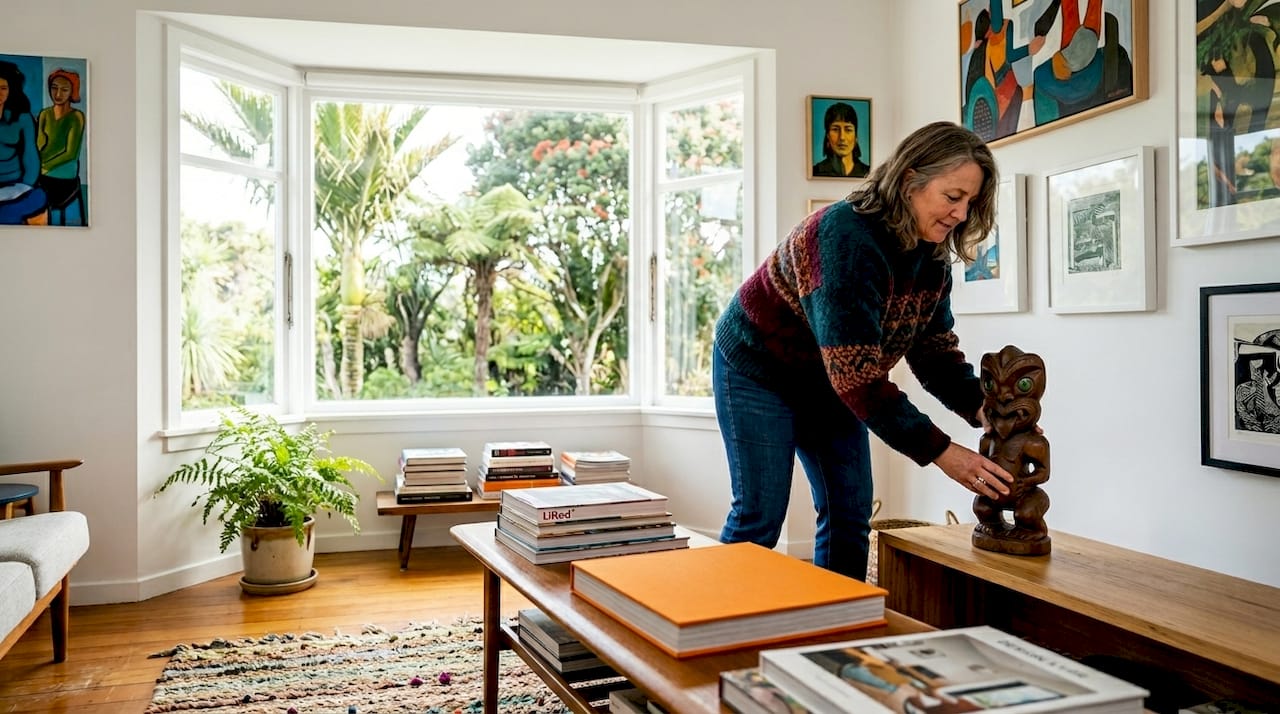
Start by identifying the emotional quality of your favourite artwork. Is it bold and confrontational? Quiet and contemplative? Once you name that quality, you have a brief for the entire room. Mixing modern sculptures with paintings and gallery walls creates dynamic, personality-filled living spaces that feel genuinely curated rather than assembled.
Balance is the skill most people underestimate. You do not need fewer pieces. You need the right proportion of statement and subtle. A large, vibrant canvas commands attention. Around it, quieter objects, a stone vessel, a linen cushion in a pulled colour, give the eye somewhere to rest. Without those pauses, the room shouts rather than speaks.
New Zealand homes have a particular opportunity here. Incorporating local Māori-inspired or native timber sculptures alongside international pieces delivers a cultural depth that no amount of imported styling can replicate. That layering of local identity with global influence is what gives an NZ interior its distinct authority.
If you are looking for fresh home decor ideas that translate well into artistic NZ interiors, the principle is always the same. Begin with one signature artwork that anchors the room, then build outward from there.
Pro Tip: Choose your anchor piece first, before purchasing any supporting decor. Everything else should respond to it, not compete with it.
Dynamic gallery walls and sculptural arrangements
Once you have your guiding criteria in place, the question becomes spatial. How do you arrange what you own in a way that generates energy rather than confusion? The answer lies in thinking dimensionally, not just decoratively.
A gallery wall that only uses framed prints feels flat. When you introduce sculptural decor alongside paintings, the entire composition gains depth and presence. Think of it as building a visual landscape. Some elements sit at the front, some recede. Some command attention, others support.
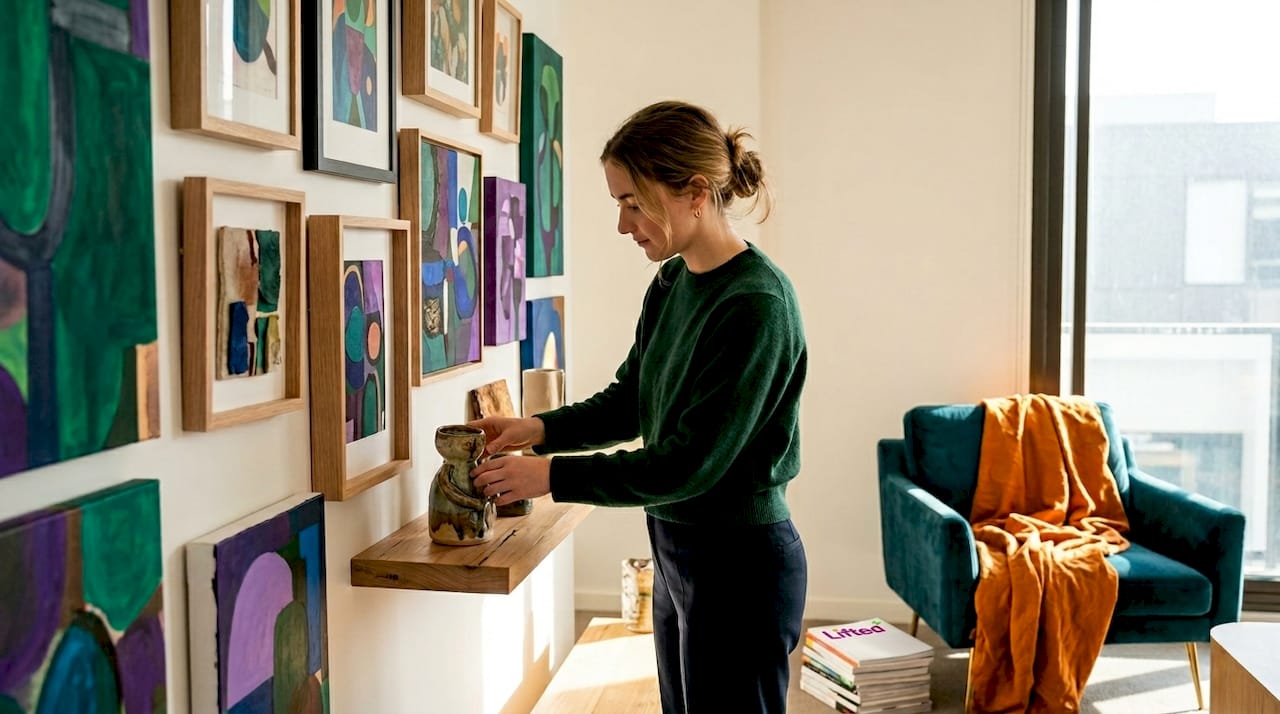
There are three arrangement methods worth understanding in detail. The salon hang places works close together across a large wall, mixing sizes, frames, and mediums. It rewards the eye with constant discovery and suits collectors who have accumulated many pieces of varying scale. The mantle arrangement uses the fireplace or architectural ledge as a natural anchor, layering pieces at varying heights with objects tucked between them for tactile contrast. Floating shelves offer a third approach, allowing you to rotate pieces seasonally and introduce three-dimensional objects like ceramics, small carvings, or hand-formed vessels.
Variety in frame style matters more than people realise. A mix of raw timber, dark metal, and unframed canvas creates a layered, collected-over-time quality that feels genuine rather than designed. That quality is the difference between a home that looks styled and one that feels lived in by someone with taste.
New Zealand collectors display sculptures alongside paintings in salon hangs and on mantles to create personal, diverse home galleries that feel both intimate and surprising. This approach rewards the visitor who takes time to look closely.
For those exploring gallery wall alternatives or wanting a step-by-step gallery wall approach, the core advice holds: the mix creates energy without chaos when you give each piece enough breathing room to be seen. You can also explore artistic wall art that brings an immediate sense of sculptural presence to a blank surface.
“The mix creates energy without chaos. What matters is intention, not uniformity.”
Using statement walls and tactile textures
Arrangement is only half the story. The surfaces themselves carry meaning. A flat, painted wall behind a striking sculpture is a missed opportunity. Introducing texture to your walls, whether through material, relief, or layered treatment, gives art a richer context and makes the entire room feel more considered.
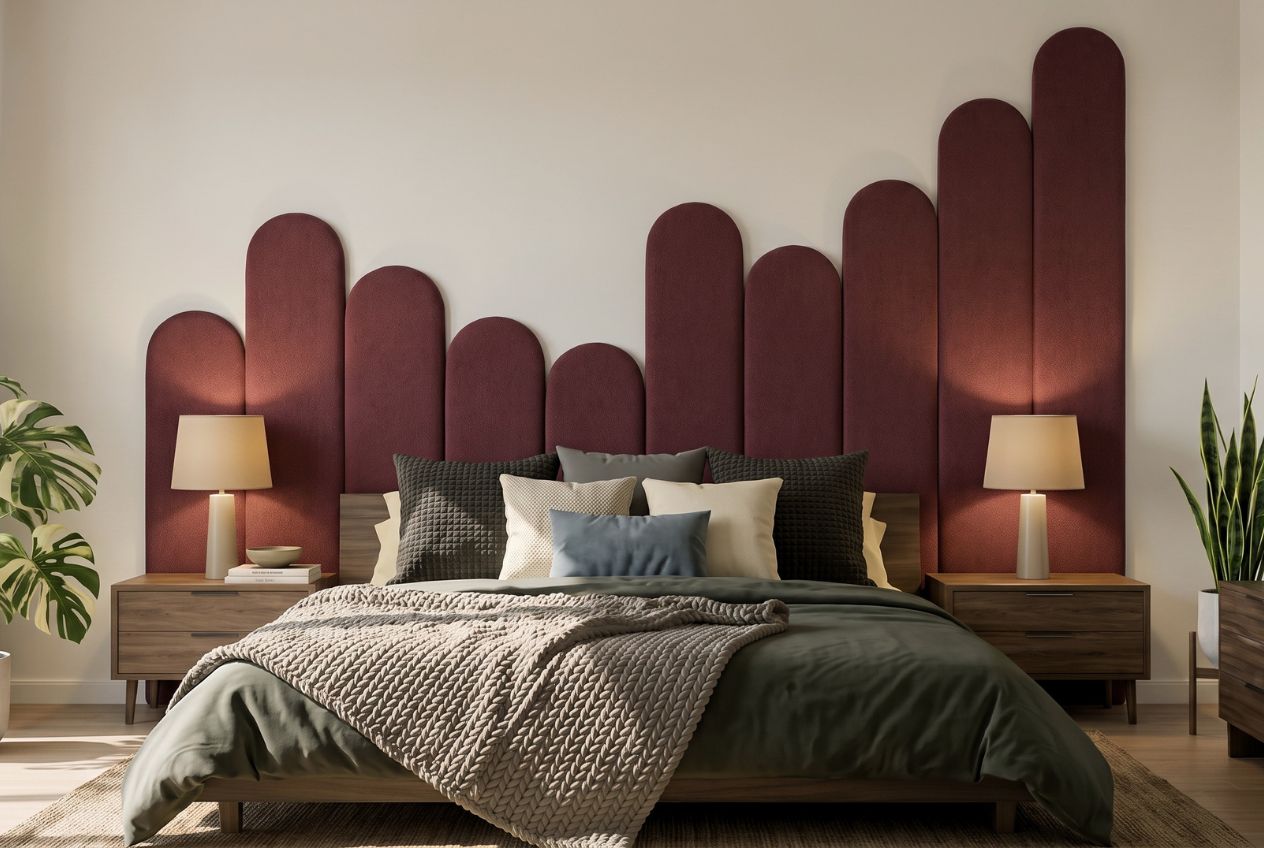
Wall sculptures, textiles, and three-dimensional treatments like sculptural plaster create tactile, modern living room walls that do far more than fill space. A woven textile hung without a frame adds warmth and softness. A plaster relief panel introduces shadow and depth that shift with the natural light through the day. A grid of small ceramic tiles or hand-cast forms creates rhythm and repetition that feels almost architectural.
The contrast between materials is what creates real tension and interest. Pair a lush, heavy-weave textile with a smooth limewash wall finish. Set a raw timber shelf against a bare concrete surface. Allow a ceramic form to sit against a deeply saturated paint colour. Each of these pairings generates a visual conversation that a single material never could.
Here is the key insight that many decorators overlook: one bold piece delivers more impact than multiple competing elements layered over each other. Restraint is not minimalism. It is confidence. When you trust a single textural statement to hold the room, it usually does.
Pro Tip: Unify different textures across a room by repeating either a shared colour or a consistent material. One tone, appearing in the plaster, a vessel, and a framing detail, ties disparate elements into a coherent whole without making them feel matchy.
Explore apartment wall art ideas for compact spaces, or consider how a minimalist approach with colour can let a single textural wall feature do all the work it needs to.
Comparison: Minimalist versus maximalist art decor
Both minimalism and maximalism are legitimate, powerful approaches. Neither is inherently better. What matters is which one aligns with how you live, what you own, and what you want the room to feel like on an ordinary Tuesday.
| Feature | Minimalist | Maximalist |
|---|---|---|
| Core philosophy | Less is more; each piece earns its place | More is more; abundance creates richness |
| Best for | Smaller spaces; strong individual works | Large collections; eclectic personal taste |
| Risk | Feeling cold or underdeveloped | Visual overload; pieces competing |
| Colour approach | Neutral base with one or two key tones | Layered, saturated, varied palette |
| Arrangement style | Singular statements; generous spacing | Salon hangs; dense, layered groupings |
| Editing requirement | High: every piece must justify its presence | Very high: curation prevents chaos |
| NZ suitability | Strong in open-plan contemporary homes | Ideal for character villas or collector homes |
Maximalist vibrant approaches contrast minimalist displays, and the experts’ consistent advice is to treat bold individual pieces as anchors rather than accumulating without intention.
To decide which direction is right for your home, work through these four considerations:
- How many significant works do you currently own? If fewer than five, a minimalist approach will honour them more. If you have a genuine collection, maximalism gives it the room to tell its own story.
- What is the scale of your primary space? Maximalism needs volume to breathe. In a small room, it compresses and overwhelms.
- Is your preference for calm energy or dramatic energy when you enter a room? Neither is wrong. Be honest.
- Are you prepared to edit regularly? Maximalism only works when you are willing to rotate and remove pieces as new ones arrive.
Find minimalist styling advice that still carries colour and personality, or explore the full range of home decor styles that work particularly well in New Zealand interiors.
Curating your own artful space: A practical checklist
All of the principles above mean very little without a repeatable process you can actually follow. This checklist is designed to be used each time you refresh a space, whether that is a full room overhaul or a seasonal edit.
Thoughtfully mixing modern sculptures with paintings in your living room creates dynamic, personality-filled spaces, and the checklist below gives you the structure to do that with confidence and intention.
- Identify one hero artwork for each main space. This is the piece that holds the room. Everything else supports it.
- Audit what you currently have. Remove anything that no longer inspires you, even temporarily. Edit before you add.
- Place sculptures and tactile decor at varying heights. Eye level, shelf height, and floor level all contribute differently to the room’s spatial energy.
- Layer at least one local NZ piece alongside any international works. This grounds the space in where you actually live and builds genuine identity.
- Step back and assess negative space. Are your walls and surfaces breathing? If not, remove one element and reassess.
- Introduce lighting that serves the art. Directed light on a sculpture, a warm ambient source near a gallery wall, these choices activate the work and change how the room feels after dark.
- Edit again in three months. The best artful spaces are never static. They evolve as your eye sharpens and your collection grows.
Understanding how art transforms interiors at a deeper level will sharpen your instinct for what each space needs, and what it can live without.
Our perspective: What most art lovers miss about vibrant decor
Here is what we see again and again. Someone has extraordinary taste, a real collection, genuine sensitivity to colour and form, and yet their home feels either too quiet or too dense. The pieces are right. The instinct is sound. But the editing is where it breaks down.
Most art lovers err on the side of showing too much. Every piece feels important, because it is. And so nothing gets put away, nothing gets rotated, and the room becomes a storage solution dressed as an interior. The works stop being seen because there is too much competition for attention.
The uncomfortable truth is that restraint is not the opposite of passion. It is the expression of it. When you trust a single work to transform a room through art, it does exactly that. The room holds it. The eye finds it. The work finally breathes.
The other thing people miss is the power of negative space as a material in itself. A bare wall next to a saturated, complex canvas is not emptiness. It is punctuation. It gives the canvas room to speak at full volume. Without it, the piece whispers inside the noise.
Editing is the overlooked skill of artful styling, and it is genuinely hard. It means accepting that your storage room is not a failure. It is where the next season’s display waits.
Ready to bring vibrant artful decor into your home?
You now have the criteria, the techniques, and the framework to build a home that genuinely reflects your aesthetic intelligence. The next step is finding pieces that are worthy of the space you are creating.
At Lifted+, we curate art-forward decor specifically for modern New Zealand interiors, selected for form, presence, and lasting impact rather than passing trends. Browse our range of wall art for art lovers that brings immediate sculptural weight to any surface. Explore sculptural furniture that holds the room as confidently as any painting. Discover modern sculptural lighting that activates your entire collection after dark. Every piece in our collection is chosen because it earns its place.
Frequently asked questions
How do I mix paintings and sculptures without cluttering my living space?
Anchor your space with one standout piece, then mix in others with varied heights and considered spacing to maintain focus. One bold piece consistently outperforms a crowded arrangement for genuine visual impact.
What’s the most impactful decor for New Zealand art lovers?
Combining locally-inspired sculpture or artworks with bold international pieces delivers the most unique and meaningful spaces. Blending Māori-inspired or native timber sculptures with international works creates a cultural richness that is distinctly and powerfully New Zealand.
How can I add sculpture to walls without renovations?
Opt for lightweight wall sculptures, shelf-sitters, or three-dimensional textiles to add sculptural presence without invasive changes. Wall sculptures and textiles create tactile depth and are surprisingly easy to install and reposition as your taste evolves.
Should I go minimalist or maximalist with my art displays?
If you want calm, focused impact, embrace a minimalist approach with generous spacing around each work. For drama and collected richness, a maximalist gallery wall works beautifully when you prioritise editing to keep the energy purposeful rather than overwhelming.