

TL;DR:
- Transformative decor changes a room’s mood and character through deliberate selection, not just adding objects.
- Key principles include anchoring with statement pieces, creating cohesion, and practicing restraint to avoid visual noise.
There is a widespread assumption that refreshing your home means simply adding more to it. A new cushion here, another vase there, another framed print on an already crowded wall. But adding more stuff alone can backfire, creating visual noise rather than the atmosphere you were hoping for. True transformation is something quieter and more deliberate. It lives in the tension between what you choose and what you leave out, in the way a single sculptural form can hold a room and shift its entire mood. This guide is for New Zealand homeowners who want to move beyond surface-level updates and understand what genuinely transformative decor looks like in practice.
Table of Contents
- Defining transformative decor: Beyond surface change
- The impact of transformative decor on mood and style
- Intentional selection and placement: Avoiding visual noise
- Artistic and local influences in New Zealand transformative decor
- The uncomfortable truth most people miss about transformative decor
- Take your space further with curated transformative decor
- Frequently asked questions
Key Takeaways
| Point | Details |
|---|---|
| Purposeful selection | Choose decor with intention for mood and cohesion rather than filling space. |
| Avoid visual noise | Too many random items can diminish artistic impact and create clutter. |
| Anchor pieces matter | One striking item can transform a room more effectively than several lesser pieces. |
| Local artistry enhances impact | Incorporating NZ art and design themes personalises and elevates your home. |
Defining transformative decor: Beyond surface change
Now that we have established why adding items alone is not enough, let us unpack what transformative decor actually means.
Transformative decor does not simply update a room’s appearance. It changes the way the room feels, the story it tells, and the emotional register it inhabits. A fresh coat of paint or a new rug might refresh a surface. But a thoughtfully selected anchor piece, something with genuine sculptural presence, shape, and weight, can pull a space out of the safe, polite middle and give it a distinct artistic character.
“Intentional selection, anchoring, purpose, and cohesion are core to effective transformative decor.” The moment you treat each piece as a deliberate act rather than a casual purchase, the whole room responds differently.
The distinction between basic decorating and true transformation comes down to four principles:
- Anchor pieces: Every transformed space has at least one element that commands attention and sets the visual hierarchy for everything else in the room.
- Purpose: Each object earns its place by contributing to mood, materiality, or composition. Nothing is there just to fill a gap.
- Cohesion: Individual pieces speak to each other through a shared language of colour, texture, or form, creating a layered whole rather than a collection of unrelated objects.
- Restraint: Knowing when to stop is as important as knowing what to add. Transformation is not accumulation.
If you want to see how these principles translate into a layered, expressive interior, understanding layering home decor like a professional stylist is one of the most practical places to begin. For those working with shelves and display surfaces specifically, learning styling shelves without clutter brings these principles into a very concrete, manageable context.
The impact of transformative decor on mood and style
With these foundational principles in mind, let us look at how transformative decor actually influences mood and style in your home.
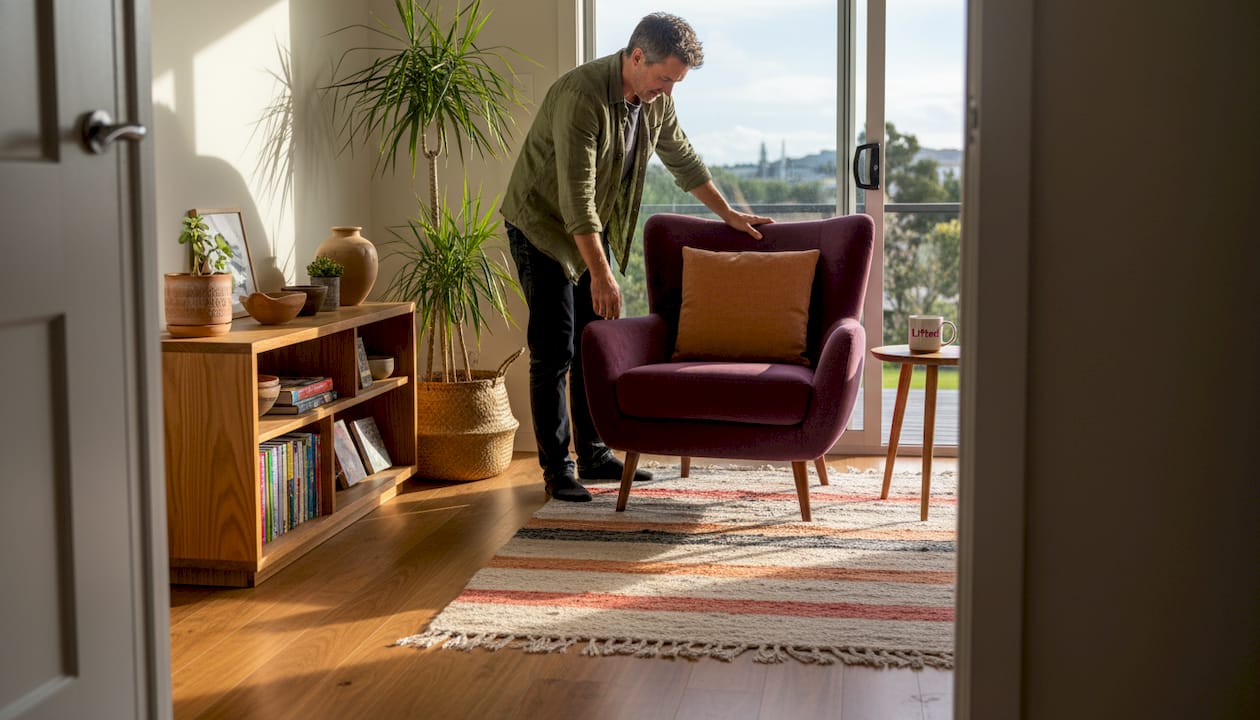
The emotional quality of a room is not an accident. It is an accumulation of decisions: the warmth of a terracotta vessel catching afternoon light, the grounding weight of a dark timber console, the energy created when a bold, colour-led artwork faces your sofa at eye level. Transformative decor alters mood through these purposeful choices, which is why the same furniture layout can feel entirely different depending on the decor surrounding it.
Colour is perhaps the most immediate lever. Autumnal shades, deep ochres, warm rust, and rich umber, bring a sense of intimacy and groundedness that cooler palettes simply cannot replicate. Materials matter equally: raw ceramics feel different to polished brass, and linen reads differently to velvet. The interplay between these elements is where personalising decor for mood becomes an art form rather than a shopping exercise.
Pro Tip: Identify one striking, sculptural piece and let it serve as your anchor before you add anything else. Every subsequent choice should respond to that anchor rather than compete with it. This single discipline prevents accumulation from overtaking intention.
Consider how furniture shapes home ambiance even before accessories enter the picture. The scale, silhouette, and material of your furniture set the emotional baseline. Decor then either reinforces that baseline or introduces productive contrast. Understanding both layers gives you genuine control over the room’s atmosphere.
| Decor strategy | Emotional effect | Risk if misapplied |
|---|---|---|
| Single bold anchor piece | Creates focus, confidence, and visual hierarchy | Can feel isolated without supporting elements |
| Layered colour palette | Adds warmth, depth, and a sense of curated richness | Can become visually heavy without breathing space |
| Mixed materiality (ceramic, timber, metal) | Introduces texture and tactile interest | Can feel chaotic if materials conflict in tone |
| Seasonal rotation of objects | Keeps mood fresh and connected to natural rhythms | Can disrupt cohesion if rotation lacks a through-line |
| Artwork as a statement layer | Elevates artistic character and personalises atmosphere | Can overwhelm if scale or colour is mismatched |
Intentional selection and placement: Avoiding visual noise
Understanding the effects on mood, it is crucial to avoid common pitfalls. Here is how to stay purposeful and avoid visual noise.
Visual noise is one of the most common and least discussed problems in interior design. It happens when spaces are filled without intent, and the result is a room that feels busy, exhausting, or strangely empty even when full of objects. As the research confirms, visual noise undermines transformation when spaces are filled without purpose or cohesion.
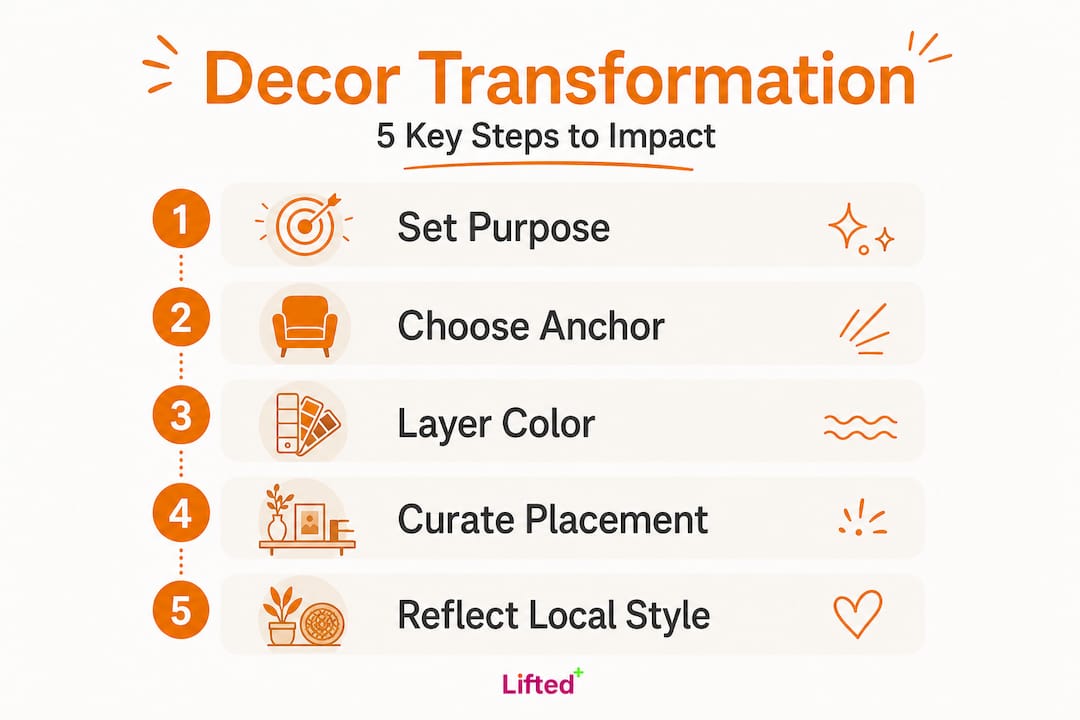
The antidote is not minimalism for its own sake. It is intentionality. You can have a rich, layered, even maximalist space that feels fully transformed rather than cluttered, but only if every element was placed with a clear reason. Follow these steps to build that kind of intentional interior:
- Start with a space audit. Remove everything from a surface or zone and look at it empty. This resets your eye and removes the bias of familiarity that makes us stop questioning what is already there.
- Identify your anchor. Choose one piece that will define the mood and scale for that area. This might be a large-format artwork, a statement vase, or a sculptural light fitting.
- Add by conversation, not by category. Rather than filling a shelf with “books and plants,” ask what each addition says in relation to your anchor. Does it echo a colour? Does it contrast interestingly in material?
- Leave deliberate negative space. Empty areas are not failures of styling. They give the eye somewhere to rest and make the pieces you have chosen feel more considered and more significant.
- Reassess with fresh eyes. Step away for twenty minutes, then return. What you notice first tells you what is working and what is competing unnecessarily for attention.
| Add more strategy | Place with purpose strategy |
|---|---|
| Fills gaps as they appear | Plans composition before adding anything |
| Buys by trend or impulse | Selects by relationship to existing anchor |
| Values quantity and variety | Values resonance and visual harmony |
| Creates rooms that feel full | Creates rooms that feel complete |
| Requires frequent reinvention | Evolves gradually and intentionally |
Pro Tip: Reassess and rotate your objects seasonally rather than buying new things. A piece that felt out of place in summer can anchor an autumn vignette beautifully. Seasonal rotation also gives you a natural rhythm for curating a home edit without the cost or disruption of starting over.
For those working with bolder colour choices and stronger silhouettes, styling bold interiors offers a practical framework for keeping energy high without tipping into visual confusion. The same principles apply whether you are working with a restrained palette or a more expressive one: avoiding clutter in decor is always about intention, not about the quantity of what you own.
Artistic and local influences in New Zealand transformative decor
Once you have mastered intentional placement, explore New Zealand’s artistic influences for a uniquely personal, transformative approach.
New Zealand offers a remarkably rich and specific context for interior design. The country’s light is distinctive: softer and more diffuse in the south, more vivid and golden through the north. The natural landscape, from volcanic stone to native timber to Pacific coastal colour, provides a grounded, local palette that no imported trend can replicate. Local artistry and contemporary trends offer genuinely unique opportunities for transformative impact when you know how to draw on them.
Incorporating these influences does not mean filling your home with koru prints or driftwood. It means thinking more carefully about the qualities that feel distinctly here. That might mean choosing ceramics made by a New Zealand artist whose glaze reflects the ochre tones of Hawke’s Bay soil. It might mean selecting a wall work that engages with Māori pattern-making in a contemporary and respectful way. Or it might simply mean prioritising materials that age well in New Zealand’s climate and carry a tactile honesty.
Consider these local themes and motifs as starting points for transformation:
- Earthy, autumnal colour palettes drawn from NZ’s volcanic landscapes, copper ferns, and late-season pohutukawa foliage.
- Pacific materiality: natural stone, raw ceramics, rattan, and woven textiles that connect interiors to the coastal and Polynesian cultural context.
- Native flora as form: the silhouette of a nikau palm or harakeke fronds translated into sculptural objects or printed works.
- Craft and hand-making: supporting NZ makers brings an authenticity and presence to a room that imported mass-produced pieces rarely achieve.
- Light and space: designing for New Zealand’s quality of natural light, warm in summer, sharp and low in winter, to ensure your decor works across the full seasonal range.
Guides like styling vibrant NZ homes bring these ideas into direct practical application, with a focus on how contemporary New Zealand homes can achieve a confident, colour-led identity. For those drawn to a quieter but still expressive approach, colourful minimalism shows how restraint and vibrancy can coexist beautifully in the same space.
The uncomfortable truth most people miss about transformative decor
Most people approach their interiors like a problem that more objects will eventually solve. They move through stores, scroll through feeds, and accumulate beautiful things in the hope that enough of them in the same room will eventually produce the atmosphere they are after. It rarely works. And the reason it rarely works is not that the individual pieces are wrong. It is that intention and restraint are what actually drive artistic impact, not volume.
The uncomfortable truth is that trend-chasing actively works against transformation. A room assembled from successive waves of what felt current rarely settles into a coherent identity. It becomes a record of passing enthusiasms rather than a space that tells a singular, sustained story. We see this regularly: rooms where every piece is individually interesting but collectively inert, because nothing was chosen in relationship to anything else.
What genuinely transforms a space is alignment between the objects you choose and the story your home is trying to tell. That story is personal, specific, and does not need to follow any external trend cycle. It asks different questions: What do you want to feel in this room? What does this space mean to you and the people who share it? What one object, if removed, would make the whole room feel less itself?
Real transformation comes from answering those questions honestly, then selecting with discipline. Not buying less for the sake of minimalism, but buying better for the sake of meaning. Curating rather than collecting. Knowing when a room is finished. The cohesive home edit guide we have developed speaks directly to this philosophy, offering a structured approach for homeowners who want a clear methodology rather than another wishlist.
If you want support taking your space further, our professional decor services exist precisely for this kind of considered, purposeful transformation.
Take your space further with curated transformative decor
Knowing the principles is one thing. Putting them into practice in your own home, with your actual rooms, light conditions, and existing furniture, is where the real work begins. That is where curated guidance makes all the difference.
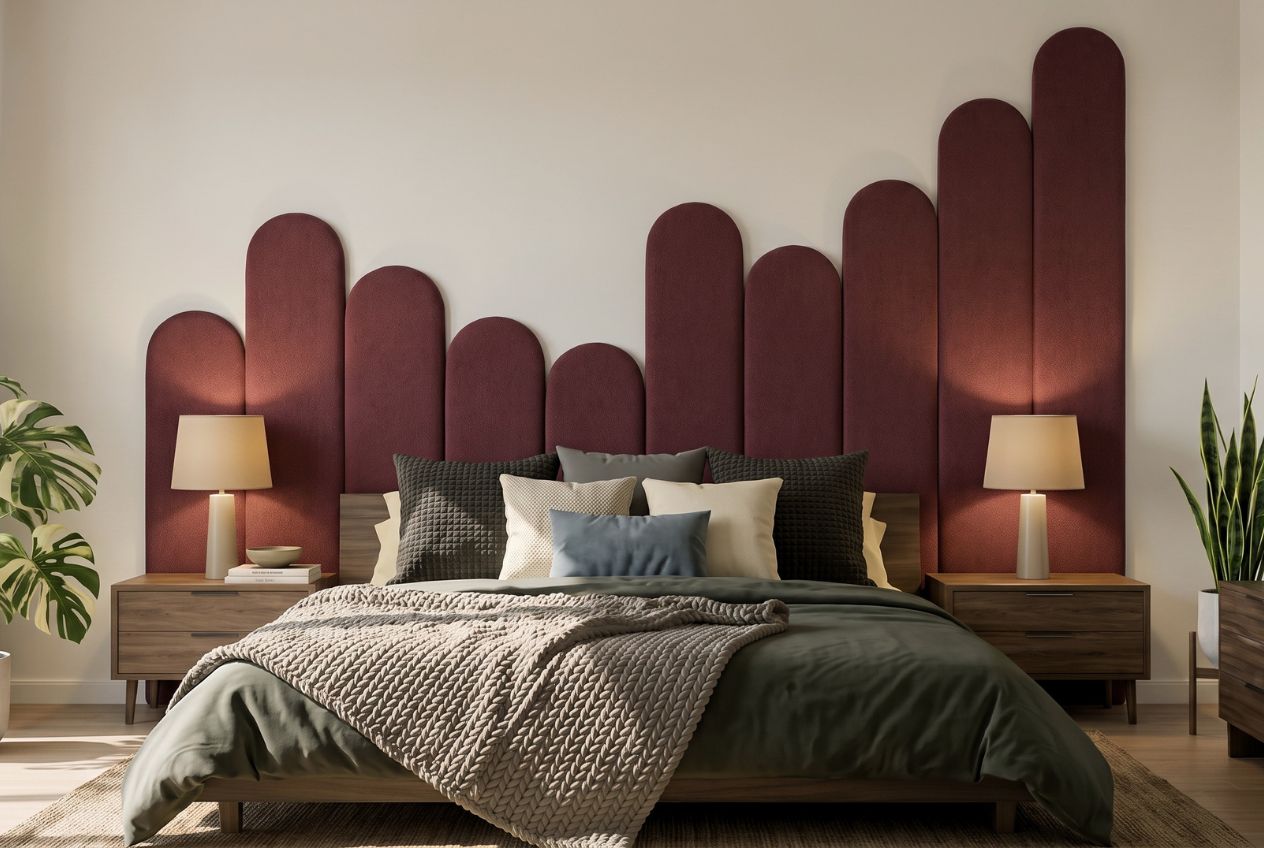
Lifted+ has developed a range of resources specifically for New Zealand homeowners who want to move beyond generic styling advice. Whether you are working out how to personalise your space for mood or want to explore full seasonal arrangements through our Lifted+ mood library, the tools are designed to support intentional, artistic choices at every stage. Our curated collections prioritise form, presence, and colour in ways that translate beautifully into real New Zealand interiors. Start with one anchor piece, explore what resonates, and let the room build from there.
Frequently asked questions
How do I start with transformative decor in my home?
Begin by identifying a clear purpose for each space, then select an anchor piece that reflects that intention. Intentional selection and anchoring are the core disciplines that separate true transformation from simply adding more objects to a room.
What is the difference between regular and transformative decor?
Regular decor focuses on surface-level change such as updating colours or swapping accessories, while transformative decor aims for mood, cohesion, and artistic impact. Transformative decor involves intentional placement, anchoring, purpose, and cohesion working together as a system rather than as isolated decisions.
Can maximalist decor be transformative without becoming cluttered?
Yes, provided each item is curated and placed in conscious relationship to the others. Visual noise occurs when spaces are filled without intent, but a richly layered room built on clear principles can feel complete rather than overwhelming.
Are there unique NZ influences for transformative decor?
New Zealand homeowners can draw on local art, native materials, Māori and Pacific motifs, and the country’s distinctive natural light and landscape palette. Local artistry and contemporary trends offer genuinely unique opportunities to create spaces with a mood and artistic character that no imported trend can replicate.