
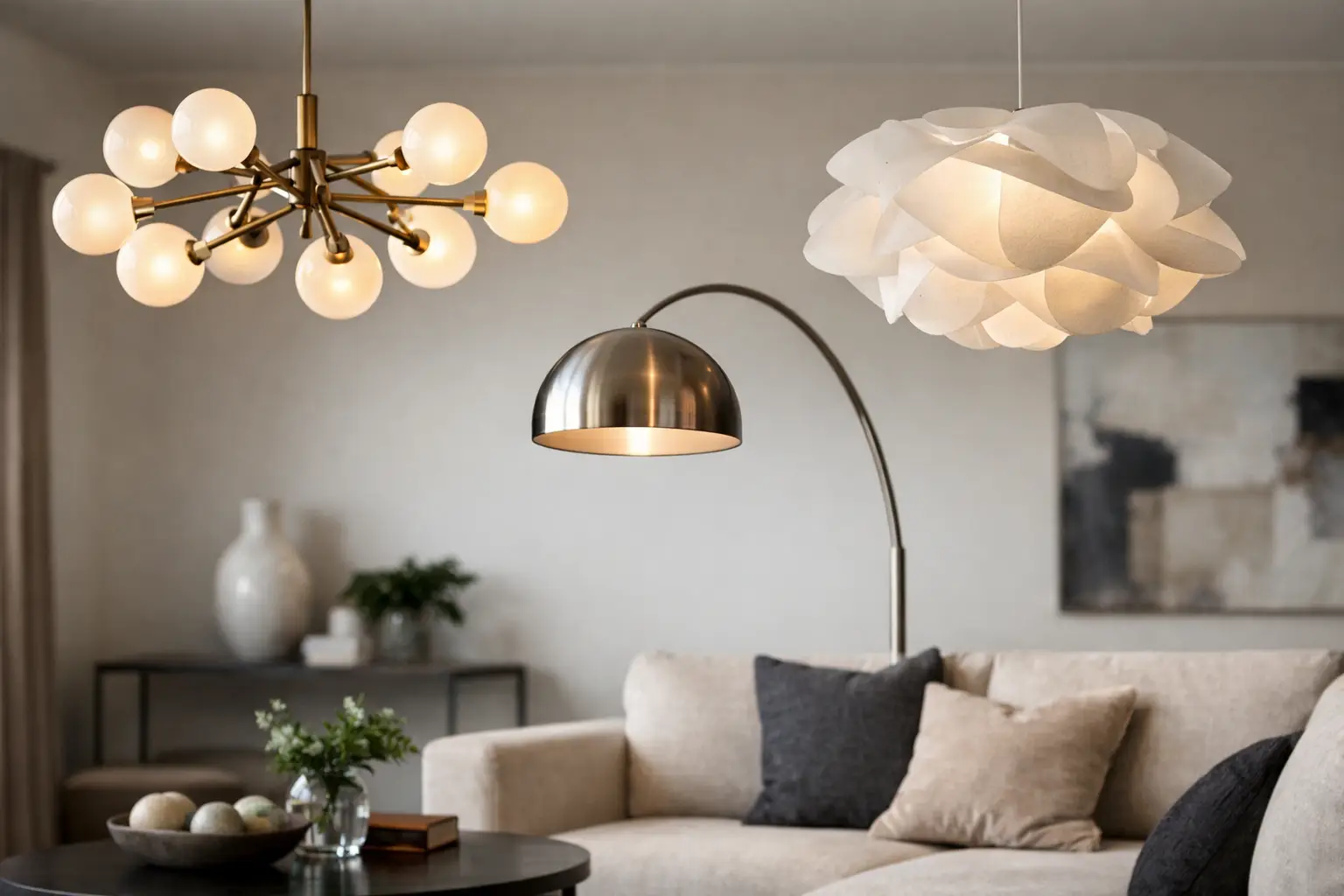
A room can have the right sofa, the right rug, even the right art, and still feel oddly unfinished. Usually, the problem is overhead. Statement lighting is often the element that pulls a space out of the safe, polite middle and gives it a point of view. Not just light, but presence. Not just function, but form with enough confidence to hold the room.
That matters because lighting sits in a powerful position. It cuts through the centre of a space, affects how colour reads, and changes the mood at every hour of the day. A sculptural pendant or dramatic floor lamp does more than fill a practical need. It becomes architecture, energy and atmosphere in one move.
Table of Contents
What statement lighting actually does
The phrase gets used loosely, but not every oversized shade or trendy pendant qualifies. Statement lighting should shift the room around it. It becomes a focal point, yes, but the stronger role is structural. It creates hierarchy. It tells the eye where to land first, then how to move.
That is why the best pieces often feel composed rather than merely bold. Scale matters, but so do silhouette, material, finish and how the light disperses. A glossy red mushroom lamp can energise a shelf or console. A sweeping pendant with sculptural curves can soften a room full of straight architectural lines. A smoked glass cluster can bring depth and edge to a dining area that otherwise feels too clean.
This is where many interiors stall. They rely on neutral layers and expect texture to do all the heavy lifting. Sometimes that works. Often it just reads careful. Statement lighting is the antidote to careful. It introduces tension, shape and mood with intent.
How to choose statement lighting without getting it wrong
The first question is not, what do I like? It is, what does the room need more of? More softness. More contrast. More height. More warmth. More play. Good lighting choices come from reading the gaps in a space, not just reacting to a beautiful object in isolation.
If your room is full of low, boxy furniture, look up. A pendant with vertical reach or an elongated floor lamp can lift the whole composition. If the space already has strong hard lines – think stone, steel, sharp joinery – introduce a light with a rounded or organic form. If everything feels tonally flat, a coloured base or tinted shade can inject energy without requiring a full redesign.
The trade-off is that stronger pieces ask for restraint elsewhere. A room can absolutely handle a sculptural light and oversized artwork and a punchy rug, but they need to be in conversation. One leads, the others support. If every element is shouting, none of them lands.
Start with scale, not style
People usually play too small with lighting. A pendant that looks generous in a showroom can disappear once it is hanging above a large dining table or floating in an open-plan living area. Statement lighting needs enough mass to register from across the room.
That does not always mean enormous. In a smaller flat or townhouse, a compact but visually distinct piece can still do the work if the shape is clear and the placement is smart. A bold lamp on a sideboard, for example, can anchor an entire wall. The real mistake is choosing something timid because it feels safer. Safe rarely reads memorable.
Ceiling height also matters. In homes with standard stud heights, you want impact without creating visual clutter or practical annoyance. Flush mounts with sculptural form, semi-flush fixtures, or pendants with strong horizontal presence can be more effective than a long drop that feels cramped.
Match the mood before the finish
Brass, chrome, glass, lacquer, linen, resin – the finish is not the story. The mood is. Start there.
If you want a space to feel calm but not bland, choose lighting with gentle curves, diffused glow and enough shape to add interest without aggression. If you want a room to feel electric, look for sharper geometry, saturated colour or a reflective finish that bounces light and movement around the space. If you are after a more gallery-like feel, blackened metal or smoked glass can bring focus and tension.
This is especially important in New Zealand homes where natural light changes fast across the day and across seasons. A piece that feels crisp and graphic at noon can become moody and intimate by evening. That shift is part of the appeal. Statement lighting should work in both modes.
Where statement lighting has the most impact
Some rooms benefit more than others. Dining spaces are the obvious one because a pendant naturally occupies the centre line above the table. It frames the ritual of the room. Even a simple table starts to feel deliberate under the right fitting.
Living rooms are more layered. Here, statement lighting often works best as part of a mix: a ceiling light for overall presence, then a floor or table lamp to build atmosphere at eye level. This is how a room avoids that flat, all-from-above feeling that kills warmth.
Bedrooms are underrated. A sculptural bedside lamp or pair of wall lights can make the room feel considered without needing much else. If the bed is visually quiet, lighting can become the point of expression.
Entry spaces are where bold choices earn their keep. A striking pendant in a hall or stairwell sets the tone immediately. It tells people this house has a pulse.
Open-plan spaces need zoning
In open-plan homes, statement lighting is not just decorative. It helps organise the room. One pendant can define the dining zone, while a floor lamp or low-hung fixture marks the living area. The result is a space that feels intentional rather than vaguely spread out.
This is one reason curated interiors feel stronger than pieced-together ones. Every object has a role. Lighting is often the clearest way to establish those roles without building walls or adding unnecessary furniture.
How to pair statement lighting with art and furniture
A strong light should not fight with the rest of the room. It should create rhythm. If you already have large-scale wall art, think about whether the lighting needs to echo it or counterbalance it. Echoing can happen through colour, line or mood. Counterbalancing works when the art is graphic and the lighting is softer, or vice versa.
Furniture matters too. A sculptural chair and a sculptural lamp can look incredible together if one is visually heavier and the other gives a little breathing room. What you want to avoid is a cluster of similarly shaped pieces all competing in the same visual register.
This is where curation beats endless browsing. Strong interiors are rarely built from isolated good taste. They come from editing. If a light is dramatic, let some surrounding pieces be quieter. If the room already has a lot of material texture – timber grain, boucle, stone – a cleaner, glossier light can bring needed contrast.
At Lifted+, this is exactly why pieces are shown through Edits rather than as random singles on a page. You see how colour, form and scale work together, which makes it much easier to choose boldly without tipping into chaos.
The most common mistakes
The first is treating statement lighting as a last-minute add-on. Once the big furniture is in, people panic-buy something overhead. That usually leads to a piece that is either too small, too bland or stylistically disconnected from the room.
The second is confusing novelty with impact. A quirky lamp can be fun, but if it does not relate to the room’s palette, proportions or mood, it can feel like a one-liner with no follow-through.
The third is relying on one light source. Even the most beautiful statement fitting cannot do every job. You still need layered light for evenings, corners and softer moments. Think of the hero piece as the lead voice, not the whole choir.
Why this shift matters now
After years of beige restraint, many homes are ready for more conviction. Not clutter. Not trend-chasing. Just stronger choices that make a space feel lived in, expressive and awake. Statement lighting does that quickly because it combines utility with emotion. It changes what you see, and it changes how the room feels.
That is the real appeal. A well-chosen piece does not simply decorate the ceiling or fill an empty corner. It brings shape to the air, colour to the mood and confidence to the whole room.
If your space still feels like it is waiting for something, it probably is. Start above eye level and choose the piece with enough presence to change the conversation.