

TL;DR:
- Lighter wall decor options like adhesive strips and picture ledges enable damage-free arrangement without drilling, especially on smooth surfaces. Proper preparation, careful application, and gentle removal techniques are essential to preserving wall integrity over time. Magnetic decals and floating shelves expand creative possibilities while maintaining a non-invasive, stylish aesthetic.
There is something quietly frustrating about loving a space you cannot fully make your own. Whether you are renting or simply cautious about your walls, the idea of picking up a drill can feel like a commitment you are not ready to make. No drill wall decor has come a long way from sticky putty and crossed fingers. Today’s options are genuinely stylish, surprisingly strong, and designed to come down as cleanly as they went up. This guide walks you through every major method, what to look for, and how to get it right the first time.
Table of Contents
- Key takeaways
- 1. What to look for in no drill wall decor
- 2. Adhesive strips and hooks: the everyday workhorse
- 3. Removable vinyl wall decals
- 4. Magnetic wall decals and interactive surfaces
- 5. Picture ledges and floating shelves
- 6. Tension rods and freestanding options
- 7. How to compare no-drill methods at a glance
- 8. Installation, maintenance, and removal done properly
- My honest take on no-drill decor
- How Liftedplus can help you dress your walls beautifully
- FAQ
Key takeaways
| Point | Details |
|---|---|
| Weight matters above all | Adhesive strips range from 4 lbs to 20 lbs, so match your product to your artwork before committing. |
| Surface condition is everything | Even the best removable products can pull paint from walls that are freshly painted or poorly primed. |
| Picture ledges offer zero wall contact | Layering ledges lets you build a gallery wall that never touches the plaster beyond two small screws per shelf. |
| Repositioning has limits | Peel-and-stick decals should only be repositioned two or three times before adhesive strength drops noticeably. |
| Style and function can coexist | With the right product for your wall type, damage-free hanging does not mean compromising on visual impact. |
1. What to look for in no drill wall decor
Not all no-drill solutions are equal, and the gap between a good outcome and a stripped paint patch often comes down to choosing the right product for your specific situation. Before you buy anything, consider four things: weight, surface type, repositionability, and style fit.
Weight is the most technical factor. Adhesive strips vary from 4 lbs for small pairs up to 20 lbs for extra-large sets of four pairs. If your artwork is heavier than that, adhesive strips are not the right tool for the job. A bathroom scale will tell you what you are working with in seconds.
Surface type is the second gatekeeper. Most adhesive products perform well on smooth, sealed surfaces like painted drywall, glass, and tile. Textured plaster, brick, and chalky finishes are a different matter. The adhesive simply cannot bond properly to an irregular surface, and the result is eventual failure, sometimes at the worst possible moment.
Repositionability separates temporary wall decorations from permanent ones. If you like to refresh your walls seasonally or you are building toward a final arrangement, look for products specifically labelled as repositionable. They use a lighter-tack adhesive that releases without pulling the surface beneath it.
Finally, think about style compatibility. A sculptural print or a large canvas deserves a hanging method that does not distract from it. Clean, low-profile adhesive strips disappear behind a frame. Visible ledge brackets, on the other hand, become part of the aesthetic, so they should be chosen deliberately.
Pro Tip: Always check the weight of your frame, not just the artwork inside it. A heavy timber frame can easily double the load you are putting on the wall.
2. Adhesive strips and hooks: the everyday workhorse
Command strips and their equivalents are the most widely used form of damage-free wall hanging, and for good reason. They are affordable, widely available, and genuinely capable of holding substantial weight when used correctly.
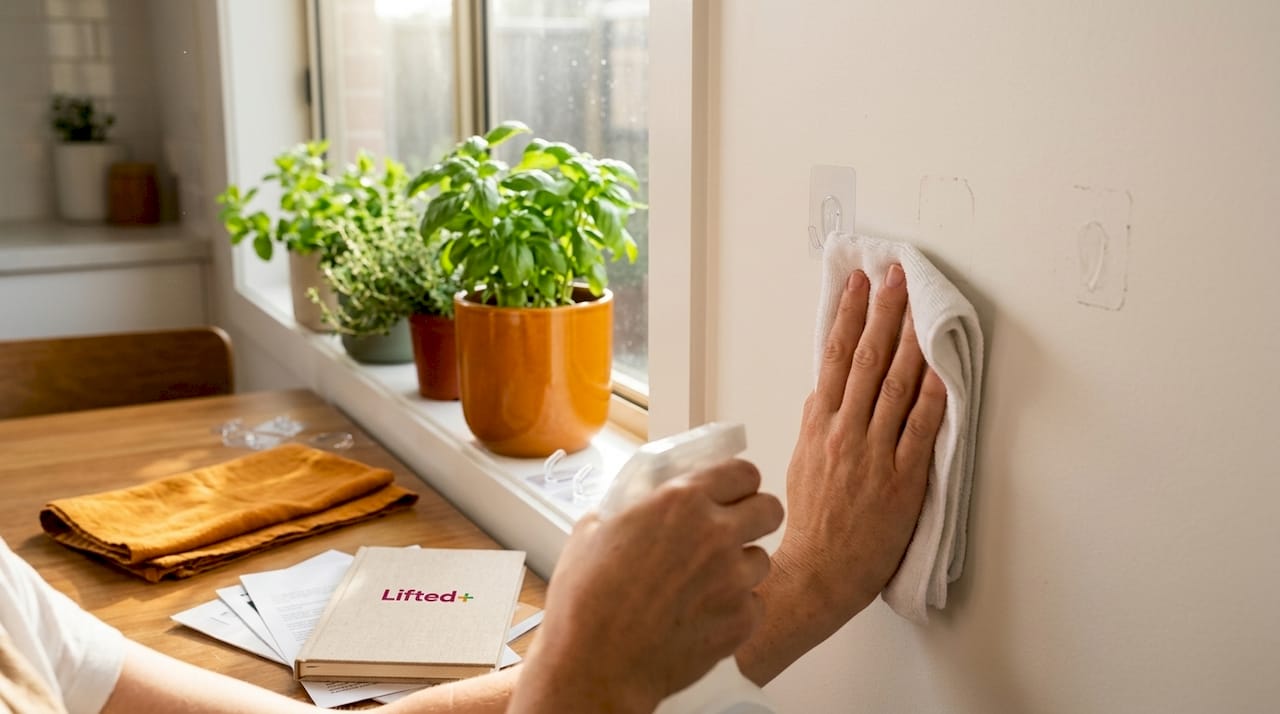
The product range has matured considerably. Command X-Large strips hold up to 20 lbs using four pairs, making them suitable for frames up to 60 cm x 90 cm. That covers a significant portion of standard wall art. Smaller sets handle lighter prints, floating shelves, and decorative hooks with ease.
The key to getting adhesive strips right is surface preparation. Clean the wall with isopropyl alcohol before application, press the strip firmly for 30 seconds, and resist the temptation to hang anything for at least one hour. The adhesive needs time to cure against the surface. On a freshly painted wall, that wait time extends considerably, as latex paint continues to off-gas for weeks after application.
Adhesive hooks serve a slightly different purpose. They are ideal for hanging individual pieces, keys, lightweight plants, and decorative items like woven baskets. The hook mechanism distributes weight more evenly than a flat strip in some configurations, and many products now come in brushed brass or matte black finishes that contribute to the overall aesthetic rather than hiding from it.
Pro Tip: If your wall has any sheen to it, that is usually a sign of a smooth, sealable surface, which means adhesive products will perform at their best.
3. Removable vinyl wall decals
Vinyl wall decals occupy a unique space in the world of adhesive wall art. They are not purely functional like a strip or hook. They are the decor itself, offering pattern, colour, and graphic presence without a single nail or screw.
Removable peel-and-stick products are designed to release cleanly, though wall paint condition plays a real role in how cleanly that happens. A well-primed, fully cured wall will let a decal lift without resistance. A wall with ageing or water-damaged paint may surrender some of its surface along with the decal.
The design range available today is extraordinary. From large-scale botanical prints to geometric line work and typographic statements, decals can transform a blank wall into something with genuine character. For renters building an apartment wall art arrangement, decals offer a degree of creative freedom that strips and hooks simply cannot match.
One important limitation: repositioning is best kept to two or three times at most. Every time you peel and re-apply, the adhesive loses a little of its grip. Plan your placement carefully before committing, and use a spirit level to avoid the very human tendency to hang things slightly crooked.
4. Magnetic wall decals and interactive surfaces
Magnetic solutions are one of the most underused categories in no damage wall decor, and they deserve significantly more attention than they typically receive.
A magnetic wall decal like the Magnetic PlayWall applies directly to a wall surface, peels off cleanly without damage, and transforms the space beneath it into a fully interactive magnetic surface. This is particularly useful in family homes, home offices, and creative studios where the ability to pin, rearrange, and refresh a wall display without committing to a single arrangement has obvious appeal.
The aesthetic possibilities extend well beyond the functional. Magnetic surfaces can hold artwork, notes, botanical specimens, or small framed photographs in floating arrangements that shift with your mood and the season. For those who approach their walls as evolving compositions rather than fixed installations, magnetic decals offer a form of creative control that no other no-drill method quite replicates.
5. Picture ledges and floating shelves
For those dealing with heavier artwork or wanting to build a true gallery wall without drilling dozens of holes, layered picture ledges are the method that experts consistently reach for. The concept is simple: a shallow ledge, secured with two small screws or even strong adhesive anchors depending on the load, sits flush against the wall and holds frames upright through gravity rather than direct attachment.
The creative payoff is significant. You can lean multiple frames at varying depths, swap pieces in and out without touching the wall, and build gallery wall alternatives that evolve with your taste. A single 90 cm ledge might hold three or four pieces. Layer two or three ledges at different heights and you have a full wall installation with tremendous visual weight and near-zero permanent impact.
For truly heavy items above 4.5 kg, brick clips hold up to 25 lbs mechanically without any adhesive at all. They grip the mortar joint between bricks and hold with surprising confidence. For masonry walls in older homes or warehouse conversions, this is often the most reliable no-damage solution available.
Pro Tip: Paint your ledge the same colour as your wall and it disappears entirely, making the artwork appear to float with no visible support.
6. Tension rods and freestanding options
Not every wall decor challenge requires something that touches the wall at all. Tension rods spring into place inside window frames, doorways, and alcoves, providing a horizontal suspension point for hanging textiles, macramé, lightweight frames, and fabric panels. They require no adhesive and leave absolutely no trace when removed.
Freestanding shelves and leaning ladders lean against the wall or baseboard, using their own weight and friction for stability. These are particularly well-suited to spaces where you want the presence of a styled shelf without any commitment to the wall behind it. A leaning ladder styled with small plants, prints, and candles can read as a deliberate design choice rather than a workaround, which is precisely the kind of thinking that turns a constraint into an aesthetic.
7. How to compare no-drill methods at a glance
Choosing between methods is easier when you can see them side by side. The table below covers the most commonly used no-drill wall decor solutions across the criteria that matter most.
| Method | Max weight | Surface limits | Residue risk | Repositionable |
|---|---|---|---|---|
| Adhesive strips (small) | 1.8 kg | Smooth only | Low if removed correctly | No |
| Adhesive strips (XL) | 9 kg | Smooth only | Low if removed correctly | No |
| Removable vinyl decals | Decorative only | Smooth, cured paint | Low to moderate | Yes, 2 to 3 times |
| Magnetic decals | Decorative only | Smooth only | Very low | Yes |
| Picture ledges | 10 kg+ per shelf | Any | None | Yes |
| Brick clips | 11 kg | Masonry only | None | Yes |
| Tension rods | 4 to 7 kg | Framed openings | None | Yes |
The picture that emerges from this comparison is useful. Adhesive strips handle framed artwork reliably up to a point. Ledges take over where strips reach their limit. Decals and magnetic solutions handle the creative surface work. And tension rods plus freestanding pieces eliminate the wall question entirely for specific scenarios.
8. Installation, maintenance, and removal done properly
Getting no-drill decor right is as much about process as product. A few consistent habits will keep your walls looking exactly as they did before you moved in.
Start with a clean, dry surface. Wipe the area with isopropyl alcohol and allow it to dry fully before applying any adhesive product. Avoid recently painted surfaces. Paint needs to cure for at least two weeks, sometimes four, before it will accept an adhesive product without risk of pulling when removed.
Apply even pressure across the entire strip or decal surface. Uneven application creates weak spots where failure begins. Hold firm pressure for at least 30 seconds per strip, and allow the full curing period before adding weight. Rushing this step is the most common reason adhesive products fail.
When it is time to remove, work slowly and deliberately. Pull adhesive strips down along the wall surface at a low angle rather than pulling straight out. This stretching motion is what breaks the bond cleanly. For decals, warm the surface gently with a hairdryer on a low setting, which softens the adhesive and allows the decal to peel without resistance.
Understanding that removable does not equal indestructible is the mindset that protects your walls long term. Wall condition matters as much as product quality. A beautifully made removable product on a poorly maintained wall can still cause damage. Inspect your surfaces honestly before you start, and choose your method accordingly.
My honest take on no-drill decor
In my experience, the biggest mistake people make with no-drill wall decor is underestimating the power of ledges and overestimating the limitations of adhesive strips. I have watched renters fill their walls beautifully using nothing more than two ledges, a handful of carefully chosen frames, and a good eye for composition. The result holds the room with as much confidence as anything drilled into a stud.
What I find genuinely overlooked is the magnetic wall category. Most people associate it with children’s rooms, but a well-placed magnetic surface in a study or kitchen becomes something far more interesting: a wall that thinks with you, that holds your current obsessions and lets them go when they have run their course.
I have also learned to challenge the idea that damage-free means visually timid. The constraint of no drilling forces a certain discipline. You edit more carefully. You choose pieces with genuine presence because you have fewer of them. You find that a single strong piece of wall art without drilling anything does more for a room than a wall crowded with small frames held up by a dozen nails. The wall art that holds a room is rarely the one that needed the most hardware to get there.
For anyone still hesitant: begin with a ledge. It is the most honest starting point, and it will change how you think about walls entirely.
— Michelle
How Liftedplus can help you dress your walls beautifully
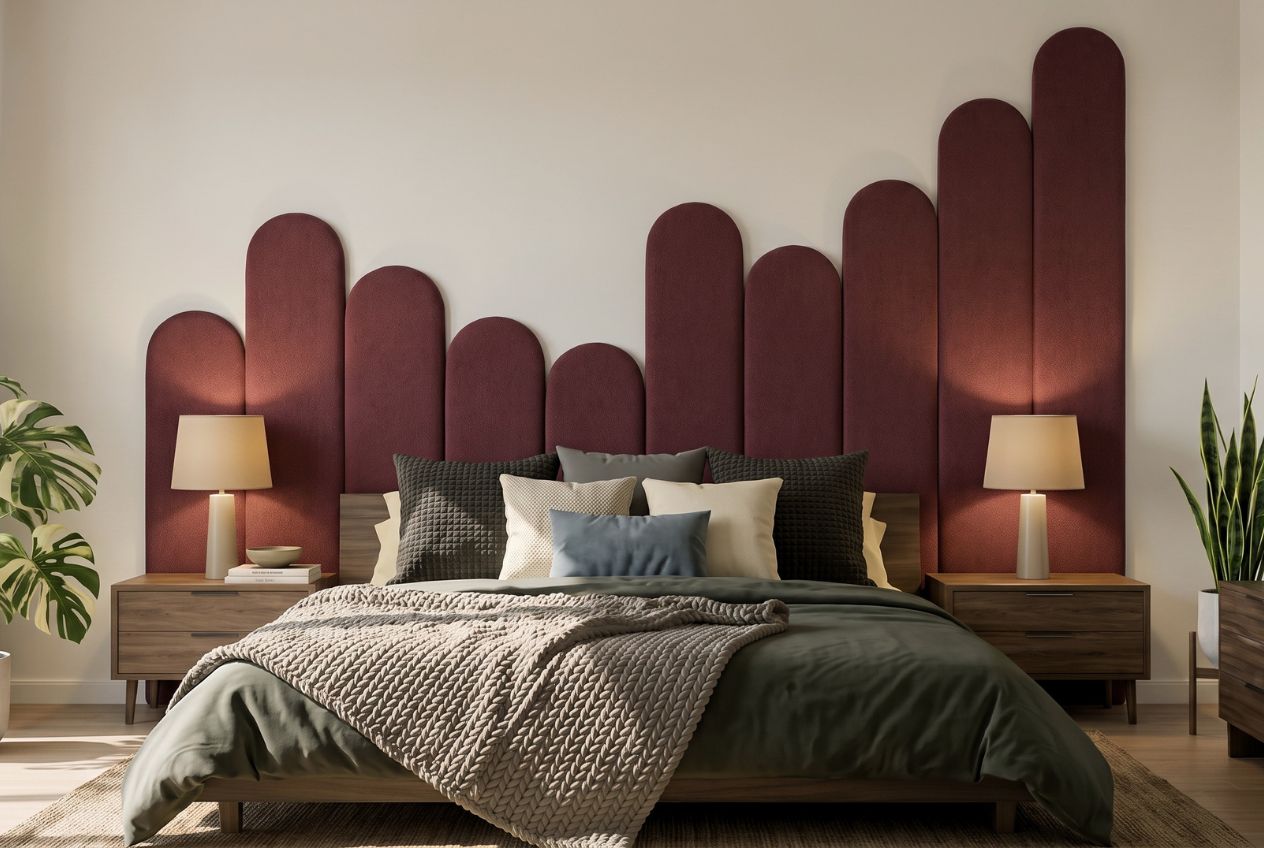
At Liftedplus, the curation begins with how a piece will actually live in your space. Every item in the collection has been selected for presence, colour, and the kind of considered weight that makes a wall feel resolved rather than decorated. For renters and careful homeowners, the modern home decor NZ range includes wall art that works brilliantly on ledges, with adhesive strips, or simply leaned against a surface with intention.
The Liftedplus mood library offers styled references for every kind of interior, making it easier to find the right piece before you commit to placement. Whether you are building a seasonal display or looking for one artwork that holds an entire wall, the Liftedplus shop is a strong place to start. Beautiful walls do not require damage. They require the right choices.
FAQ
What surfaces work best with no-drill wall decor?
Smooth, fully cured painted surfaces provide the best results for adhesive-based no-drill products. Textured, chalky, or freshly painted walls significantly increase the risk of adhesive failure or surface damage on removal.
How much weight can adhesive strips actually hold?
Adhesive strips range from 1.8 kg for small pairs to 9 kg for extra-large sets of four pairs. For anything heavier, picture ledges or brick clips are the more reliable no-damage alternatives.
Can I create a gallery wall without drilling?
Yes. Layered picture ledges are the most effective method for a full gallery wall without drilling multiple holes. You can swap, add, and rearrange pieces freely without touching the wall surface beyond the ledge anchors.
How do I remove adhesive wall decor without damaging paint?
Pull adhesive strips at a low angle along the wall surface rather than straight out from the wall. For decals, apply gentle heat with a hairdryer to soften the adhesive before peeling slowly. Always follow the manufacturer’s removal instructions.
Are removable wall decals truly damage free?
Residue-free and repositionable products are designed to lift cleanly, but wall paint condition plays a significant role. Freshly painted, poorly primed, or ageing surfaces carry a higher risk of damage regardless of product quality.
Recommended
- 11 Apartment Wall Art Ideas For NZ Homes – Lifted+ | More Colour. More Mood. More Life.
- How To Create An Art Wall: Step-by-step Guide
- 11 Statement Wall Art Ideas For Modern Homes – Lifted+ | More Colour. More Mood. More Life.
- 9 Fresh Alternatives To A Gallery Wall – Lifted+ | More Colour. More Mood. More Life.