
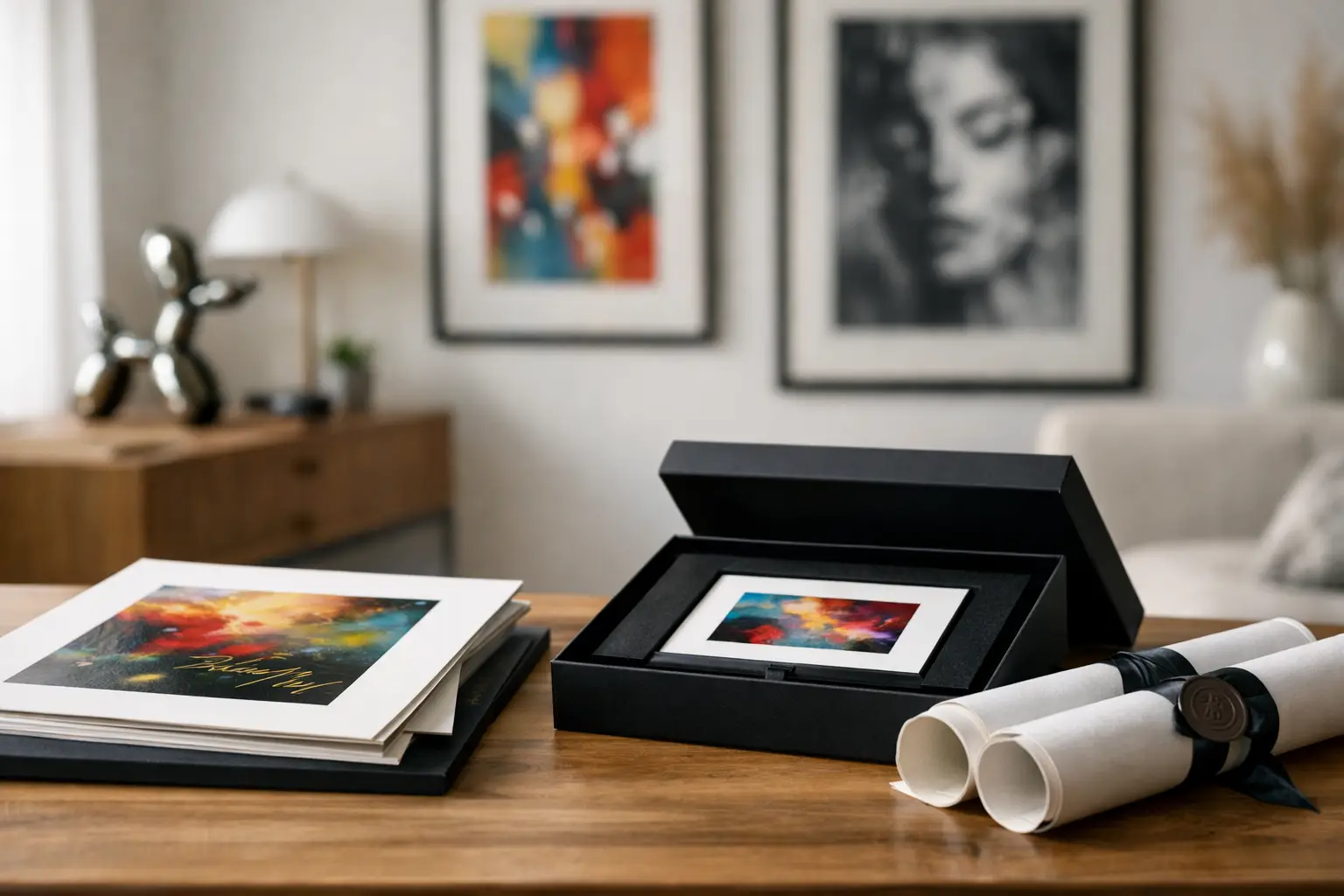
A room changes the moment the right artwork lands on the wall. Not because it fills space, but because it sets the emotional temperature. That is exactly why limited edition art drops for home collectors have become so compelling. They offer something a mass-market print never can – a stronger point of view, a tighter release, and the sense that your space has been shaped, not just decorated.
For design-aware homeowners, that difference matters. A limited release does more than look good above the sofa or in the dining area. It creates focus. It introduces tension, colour, rhythm or calm. It gives the room a centre of gravity.
Table of Contents
Why limited edition art drops suit the modern home
Not every collector wants to build a temperature-controlled archive or spend weekends at auctions. Most people simply want to live with work that feels distinctive and has presence. That is where limited drops make sense.
They sit in a sweet spot between exclusivity and accessibility. You are not buying a one-off piece with all the complexity that can come with the fine art market, but you are also not choosing from an endless wall of generic prints that appear in every second renovated townhouse. The edition size gives the work scarcity. The drop format gives it momentum.
There is also a practical appeal. Limited edition releases are usually presented with more clarity than open-edition art. You know the size of the run, the available formats, and often the framing options or production details. For home collectors, that makes the decision more grounded. You can judge the work as both an aesthetic choice and a spatial one.
Most importantly, limited drops tend to come with intent. They are often created to make an impact in a room, not disappear into it. That matters if you are moving away from safe, neutral interiors and want your home to feel sharper, more expressive and more alive.
What makes a limited edition drop worth buying
Scarcity alone is not enough. A piece being hard to get does not automatically make it strong. The real question is whether the artwork can hold a room.
Scale is part of that. A small print can be beautiful, but if you are working with high studs, long walls or open-plan living spaces, scale becomes non-negotiable. Architectural interiors need art with enough visual weight to anchor them. That does not always mean oversized, but it does mean intentional.
Colour matters too. Not in a decorative sense, but in a structural one. The right colour in a work can warm up a cool interior, sharpen a muted scheme, or inject energy into a room that feels too restrained. This is where many buyers hesitate. They fear bold work will dominate the space. Sometimes it will – and that can be exactly the point. A focal piece should shift the room. If it does nothing, it is probably too polite.
Then there is the edition itself. Smaller editions usually feel more considered, but it depends on the artist, the production quality and the context. A release of 20 large-format works can feel more special than a release of 5 mediocre ones. Look at the print method, materials, finish and framing options. If the work is designed for interiors, those details are not secondary. They shape how the piece lives in the space every day.
How to buy limited edition art drops for home collectors
The best approach is not to shop for art as a final styling layer. Start earlier. Think of the piece as one of the room’s main architectural gestures.
First, look at the wall honestly. Is it a true feature wall, or are you hoping art will rescue an unresolved layout? Great art improves a room, but it cannot fix bad proportions, awkward furniture placement or clutter. If the wall is interrupted by switches, vents, shelving or door swings, factor that in before falling for a piece online.
Next, consider viewing distance. Large works often read better in open-plan spaces because they have room to breathe. In tighter rooms, strong composition can matter more than sheer size. A bold artwork in a compact study or entry can be brilliant, but only if it has enough negative space around it to register.
Then think about the mood you want. Calm is valid. So is tension. So is joy. The mistake is treating art as a colour-matching exercise. If your cushions are rust, your artwork does not need rust in it. In fact, the room often becomes more sophisticated when the art introduces a new note rather than repeating the same one. Contrast creates life.
Timing also matters with drops. If you wait until a release has sold through, the decision gets made for you. That does not mean buying impulsively. It means knowing your dimensions, your budget and your appetite for risk before the drop goes live.
The trade-off: urgency versus considered buying
Art drops are designed to create immediacy. That can be exciting, but it can also push people into rushed decisions.
Sometimes the urgency is useful. It stops you over-analysing and helps you back your taste. Sometimes it is a trap. If you have not measured the wall, checked the framing depth, or thought about how the piece will sit with your lighting, you are not collecting. You are reacting.
The smartest home collectors sit somewhere between instinct and discipline. They know what kind of work they are drawn to. They understand their home’s architecture. And when the right release appears, they move.
That balance is especially relevant in New Zealand homes, where light shifts dramatically through the day and many spaces need art that can stand up to strong natural brightness. A piece that feels rich and dimensional online might read flat in person if the finish is wrong or the palette is too delicate for the room. It pays to think beyond the screen.
Styling a limited drop without flattening its impact
Once the work arrives, resist the urge to over-style around it. Strong art does not need a chorus line of accessories fighting for attention.
If the piece is graphic and large-scale, let it lead. Keep surrounding objects sculptural but restrained. That might mean a low console with one or two forms that echo the artwork’s geometry, or lighting that adds atmosphere without visually cluttering the wall.
If the artwork is colour-forward, pull one tone lightly into the room rather than copying the whole palette. A chair, object or rug can create a conversation with the piece. Too much repetition makes the room feel literal. Too little connection can make the art feel stranded.
Placement matters more than many people realise. Hanging work too high is still one of the fastest ways to drain its presence. The piece should relate to the furniture and the body, not float somewhere near the ceiling like an afterthought. In rooms with long sightlines, test how the artwork reads from adjoining spaces. The best focal pieces work on approach and at rest.
Where curated drops have an edge
One of the biggest advantages of a well-curated retailer is not simply access to limited work. It is context.
When a drop is presented within a clear aesthetic world, you can judge far more than the artwork alone. You can see how it interacts with lighting, furniture, colour and materiality. That makes it easier to imagine the piece in a real home rather than as an isolated product shot on a white page.
This is where strong curation earns its keep. A tightly edited collection saves you from scrolling through filler and helps you buy with more conviction. If the brand’s point of view aligns with yours, the process becomes less about endless comparison and more about choosing the piece that creates the mood you want. Lifted+ approaches this well by framing art as something that shifts a room, not something that politely matches it.
The collector mindset that actually works at home
The best home collectors are not chasing status. They are building atmosphere.
That means choosing pieces that do something every time you walk past them. They sharpen the entry. They warm the dining room. They give the living space edge. They create a moment of pause in a hallway that was previously just a corridor.
A limited edition drop can absolutely carry investment value over time, but for most people the more immediate value is spatial. It changes how the home feels to live in. That is not a soft benefit. It is the whole point.
If you are going to buy one bold piece this year, buy the one that makes the room feel more intentional, more distinctive and more like you finally stopped decorating defensively. Safe art fills a wall. The right limited drop gives the space a pulse.