
TL;DR:
- Renters can transform their space affordably by focusing on reversible decor such as lighting, textiles, and wall art. Understanding lease restrictions and using damage-free tools like Command strips and peel-and-stick wallpaper allows for personalized decoration without risking damage or deposits. Prioritizing impactful changes like lighting, rugs, and artwork creates a cohesive, inviting home that reflects individual style within rental limits.
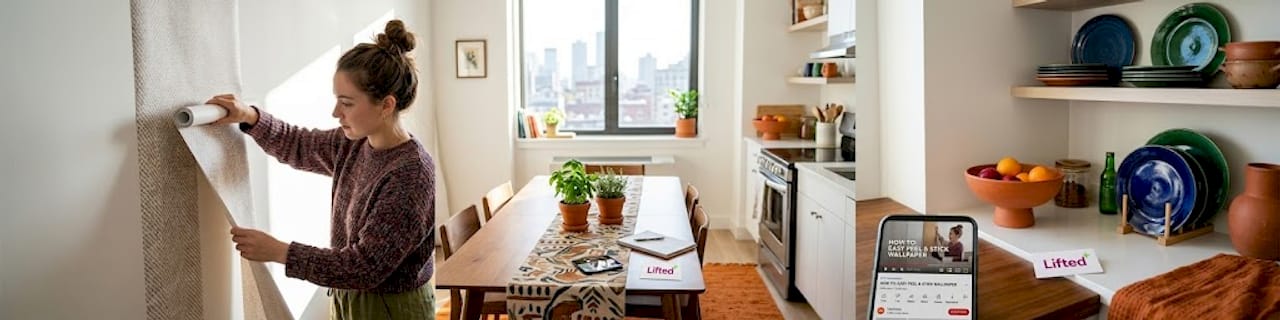
Renting doesn’t mean resigning yourself to blank walls and builder-beige interiors. Learning how to decorate a rental is really about working within limits without letting those limits define what your space feels like. The good news? The most powerful decorating moves available to renters cost very little and leave zero trace. This guide covers everything from renter-friendly tools and room-by-room techniques to wall art, lighting, and layout strategies that transform a rental from a temporary address into a place that genuinely feels like yours.
Table of Contents
- Key takeaways
- How to decorate a rental: getting started right
- Room-by-room rental decorating steps
- Damage-free wall decor for renters
- Textiles, lighting, and layout for a premium feel
- Michelle’s perspective: what I’ve learned about decorating rentals
- Style your rental with Liftedplus
- FAQ
Key takeaways
| Point | Details |
|---|---|
| Start with the rules | Read your lease and speak with your landlord before making any decorating changes. |
| Prioritise big-impact items | Spend first on lighting, curtains, and a large rug for the greatest visual return. |
| Use removable products | Command strips, peel-and-stick wallpaper, and contact paper are your best tools. |
| Layer textiles generously | Rugs, cushions, throws, and curtains refresh a rental fully and leave no damage. |
| Test before you commit | Always patch-test adhesives in a hidden spot before applying them across a wall. |
How to decorate a rental: getting started right
Before you rearrange a single piece of furniture or reach for a roll of peel-and-stick wallpaper, there is one step that protects everything else: understanding what your lease actually permits.
Read the tenancy agreement carefully. Most leases restrict nails, screws, and painting, but say nothing explicit about removable adhesive products, peel-and-stick wallpaper, or furniture arrangement. If anything feels unclear, a quick, friendly conversation with your landlord can open more doors than you expect. Many landlords are comfortable with reversible changes when approached with transparency.
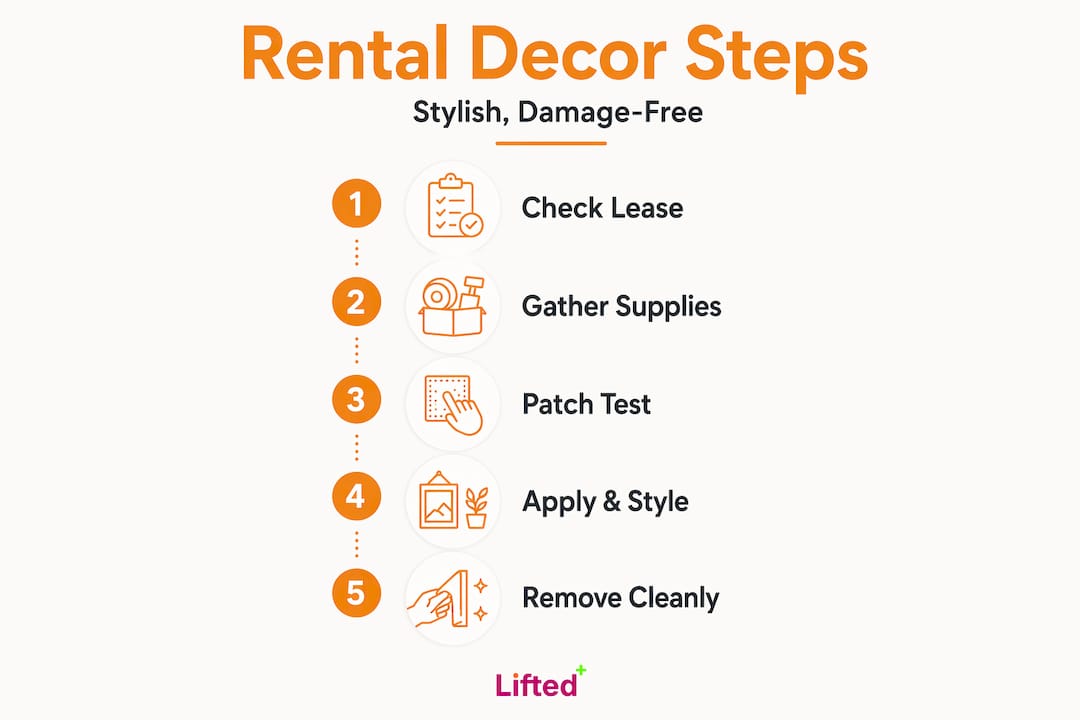
Once you know the boundaries, gather the right supplies. Renter-friendly decorating has never been better supported by the market. The table below covers the core tools, what they do, and their risk level.
| Tool or product | Best use | Weight or capacity | Damage risk |
|---|---|---|---|
| Command picture strips | Hanging framed art and mirrors | Up to 16 lbs per four pairs | Low (if removed correctly) |
| Peel-and-stick wallpaper | Accent walls, feature panels | Full wall coverage | Low on cured paint |
| Contact paper | Benchtops, shelving, splashbacks | Surface coverage | Very low |
| Removable hooks (small) | Light items, bags, lightweight frames | Up to 3–4 lbs each | Very low |
| Furniture risers | Lifting beds and sofas for storage | Varies by product | None |
Two materials deserve particular mention. Command strips are genuinely transformative for renters, provided you follow the weight limits and removal instructions precisely. Peel-and-stick wallpaper, when applied to clean, fully cured walls at least 30 days after painting, can remain in place for years without causing damage.
Pro Tip: Before applying any adhesive product, wipe the wall surface with a damp cloth and allow it to dry completely. Dust and grease prevent adhesion and dramatically increase the chance of something falling or the surface peeling when you remove it.
Room-by-room rental decorating steps
Transforming a rental works best when you approach it one room at a time. Trying to do everything at once scatters your budget and your focus. Instead, begin with the room where you spend the most time and build outward from there.
Prioritise your budget in this order: lighting first, then curtains, then a large rug, then textiles, then plants, and finally art and accessories. This sequence is based on visual return per dollar spent, and it changes the feel of a room more reliably than scattering money across many small decorative objects.
Here is a practical sequence for decorating a living room from scratch:
- Replace all existing bulbs with warm white options in the 2700K to 3000K range. This single change costs under $20 and immediately shifts the mood of the entire space.
- Hang floor-length curtains well above the window frame, ideally 15 to 20 centimetres above, and wider than the window itself. This makes the room feel taller and more deliberate.
- Lay down a large rug that anchors the main seating area, with at least the front legs of the sofa sitting on it.
- Float the furniture away from walls to create definition and flow rather than lining everything around the perimeter.
- Layer in textiles: cushions, a throw across the sofa, a woven stool or footrest.
- Add a floor lamp in a corner and a table lamp on a side table to create multiple light sources at different heights.
- Place two or three plants of varying heights to bring organic texture into the space.
- Finish with a single piece of statement wall art or a leaned mirror.
The comparison below helps you weigh the options as you decide where to spend.
| Decorating technique | Visual impact | Approximate cost | Reversible? |
|---|---|---|---|
| Warm bulb swap | High | Under $20 | Yes |
| Large area rug | Very high | $80 to $400+ | Yes |
| Peel-and-stick wallpaper | Very high | $60 to $200 per roll | Yes |
| Floor-length curtains | High | $60 to $250 | Yes |
| Contact paper on benchtop | Medium | $20 to $60 | Yes |
| Statement plants | Medium | $15 to $80 | Yes |
Pro Tip: In a kitchen or bathroom, peel-and-stick contact paper on benchtops and splashback tiles can be genuinely dramatic. Choose a pattern with depth, such as a stone-look or a fine geometric, and the result reads as deliberate rather than cosmetic.
Damage-free wall decor for renters
The wall is the surface most renters feel nervous about, and with good reason. It is also the surface with the most transformative potential. Getting this part right means understanding both the products and the techniques.
Command picture-hanging strips are the most reliable renter tool for art and mirrors. Four pairs of strips can hold a frame up to 16 lbs with a maximum recommended size of 24 by 36 inches. That covers the majority of framed prints and medium-weight mirrors. For anything heavier, the answer is not more strips. It is a different approach entirely.
Leaning large framed art or mirrors against the wall creates an atelier-style aesthetic that reads as intentional and considered rather than a workaround. A large leaned mirror in a bedroom or hallway adds light, depth, and a sense of scale without a single nail. Pair it with a smaller framed print leaned in front and the effect is layered, gallery-quality, and entirely removable.
For peel-and-stick wallpaper, the single most common mistake is applying it too soon after the walls have been painted. Wait at least 30 days after painting for the paint to fully cure before application. Premature application increases the likelihood of paint lifting when you eventually remove it.
The table below outlines safe hanging methods alongside their weight limits and key conditions.
| Method | Max weight | Key condition | Removal tip |
|---|---|---|---|
| Command picture strips (4 pairs) | 16 lbs | Clean, dry wall surface | Pull tab slowly and parallel to wall |
| Peel-and-stick wallpaper | Full panels | Paint cured 30+ days | Peel slowly at low angle, warm with hairdryer if needed |
| Leaning (no fixing) | Any | Stable base required | Simply move it |
| Adhesive hooks (small) | 3 to 5 lbs | Smooth surface only | Follow tab direction precisely |
Always patch test adhesives in an inconspicuous area before committing to full application. A small test in the corner behind a door or inside a wardrobe tells you whether the surface will hold the adhesive safely, and whether removal will affect the paint. This one step protects your deposit more reliably than any other precaution.
You can explore more about hanging wall art safely to find configurations and product pairings that work specifically in apartment-scale rooms.
Pro Tip: Gallery wall alternatives work particularly well in rentals. A single large-format piece leaned against the wall carries more visual authority than twelve small frames, and it asks nothing of the wall at all.
Textiles, lighting, and layout for a premium feel
The finishing layer of any well-decorated rental comes down to three things: how the light falls, how the fabrics feel, and how the furniture sits in relation to everything else.
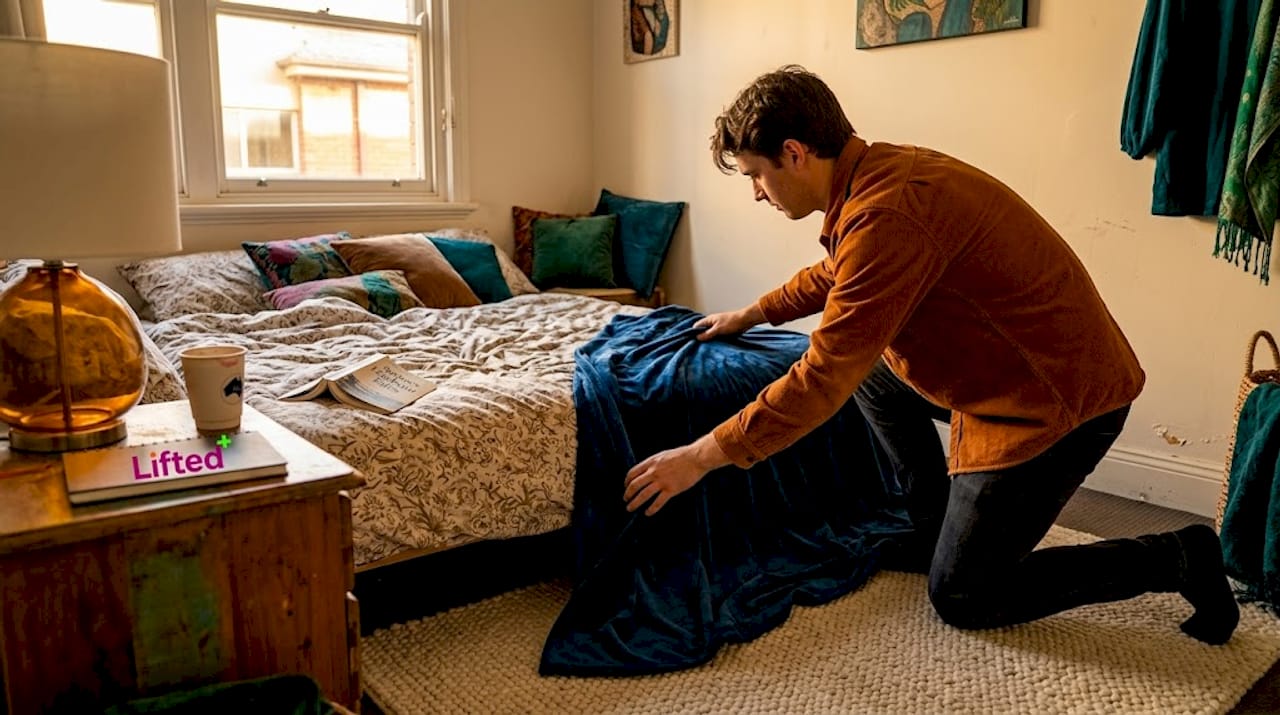
Layered textiles are, without question, the single most effective and reversible way to refresh any rental room. A rug grounds the space. Curtains frame it. Cushions and throws soften the hard surfaces and inject personality through colour and texture. None of these require a single hole in the wall, and all of them travel with you when you leave.
Lighting is where most renters leave significant atmosphere on the table. Overhead lights in rentals are almost universally harsh and unflattering. The solution is not to ask your landlord to rewire anything. It is to layer warm light sources at different heights: a floor lamp in the corner, a table lamp by the reading chair, pendant-style bulbs in clip-on fixtures if the lease allows. Warm bulbs between 2700K and 3000K do the work of making a flat, indifferent rental room feel like a considered, inhabited home.
Furniture layout carries more weight than most people realise. Pushing every piece against the wall is the single most common mistake in small rental spaces, and it makes the room feel smaller and more institutional. Float your sofa and chairs inward. Use a rug to define the zone. Leave breathing room between pieces. The result is a room that feels curated and intentional rather than furnished by default.
A restrained colour palette across your textiles and decor accessories pulls everything together. Choose two or three colours that work across all the rooms you can see at once, and let texture do the variation within that palette. A terracotta throw, a rust-toned rug, and a deep ochre cushion are three separate colours that read as one considered decision.
You can explore how apartment-scale colour works across different room types to find a palette that holds together even in an open-plan or compact space.
Michelle’s perspective: what I’ve learned about decorating rentals
I’ve worked alongside renters who have transformed genuinely grim spaces into something that felt quietly extraordinary, and others who have spent the same amount of money and ended up with rooms that felt busier but no better. The difference was never budget. It was intention.
What I’ve come to believe is that restraint is the most underrated skill in rental apartment decor. The impulse to fill a space, to add the next thing, to cover the neutrality with as many objects as possible, works against you almost every time. The rooms I’ve seen succeed are the ones that chose one lighting piece that held the room, one rug that anchored it, one piece of art that had something to say. Everything else served those three decisions.
The mistake I see most often is buying many small, cheap items hoping they will add up to something. They rarely do. Three $20 cushions from a discount store will not do what one $60 cushion with genuine texture and weight does. A collection of small framed prints at eye level will not do what a single oversized piece leaned against the wall does. Affordable rental decorating is not about buying less. It is about buying fewer things that are worth more to the room.
My honest advice? Spend real money on the rug, the curtains, and at least one light source that you love. Then let the rest follow slowly, intentionally, only when something earns its place in the space.
— Michelle
Style your rental with Liftedplus
The right decor does not have to mean permanent changes or a significant budget outlay. At Liftedplus, we curate pieces with exactly this kind of renter in mind: lighting that adds warmth without rewiring, wall art scaled for apartment rooms, and textiles in grounded colour palettes that work across seasons.
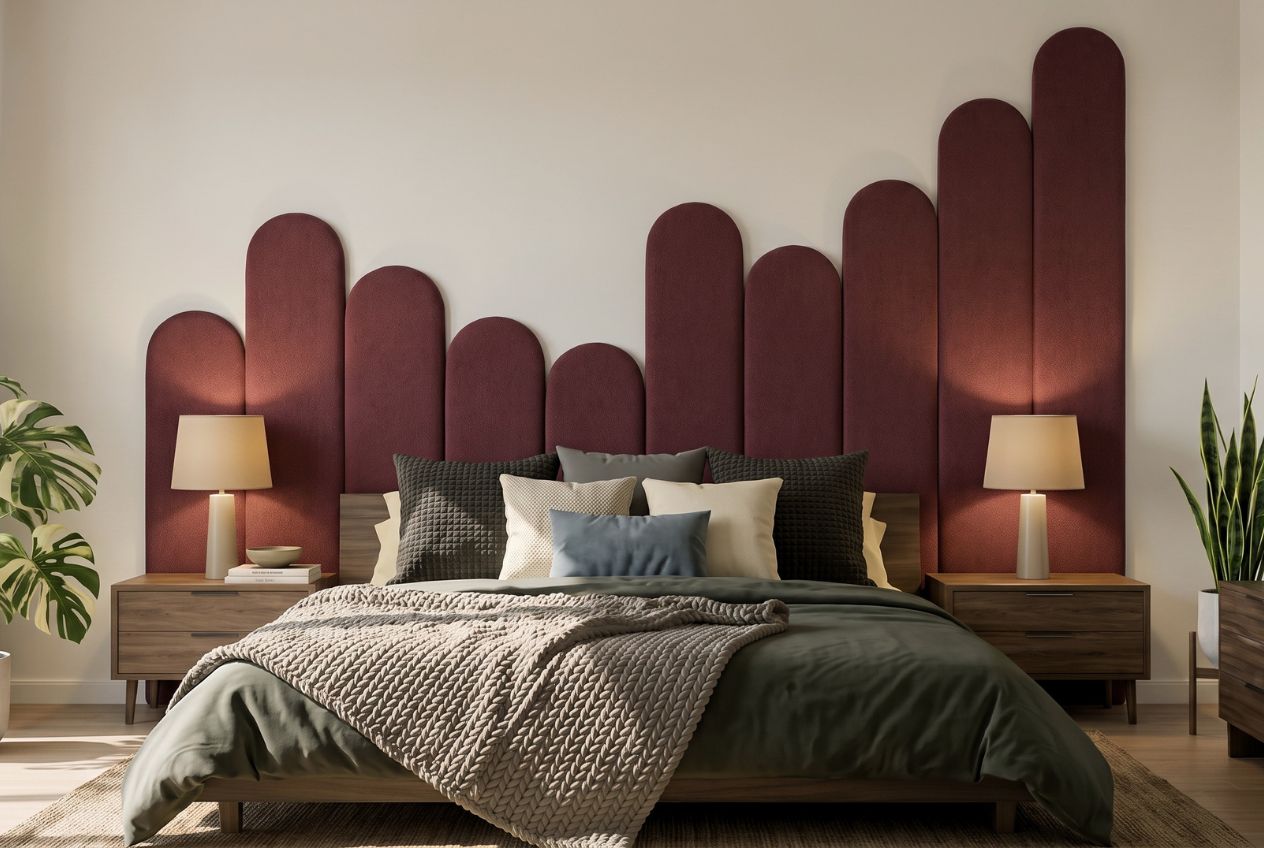
Whether you are decorating a new rental or refreshing a space you have lived in for a while, the Liftedplus mood library is a genuinely useful place to start. It lets you explore how colour, form, and light work together before you spend a cent. For pieces that bring immediate presence to a room, browse our modern home decor collection and see what holds your attention. The things that hold your attention in a mood board are usually the things that will hold your room.
FAQ
Can I use peel-and-stick wallpaper in a rental?
Yes, provided the walls are smooth and the paint has fully cured for at least 30 days. Applied correctly, peel-and-stick wallpaper removes cleanly and leaves walls undamaged.
What is the easiest rental decoration tip for instant impact?
Swap all existing light bulbs for warm white options in the 2700K to 3000K range. The change costs under $20 and immediately makes a rental feel warmer and more considered.
How do I hang art in a rental without damaging walls?
Use Command picture-hanging strips for frames up to 16 lbs, and lean larger or heavier pieces against the wall for a stylish, damage-free alternative to drilling.
What should I spend my decorating budget on first?
Prioritise lighting, curtains, and a large area rug in that order. These three elements deliver the greatest visual return and are all fully reversible when you move out.
How do I make a rental feel personal without permanent changes?
Layer textiles in a restrained colour palette, use warm lighting at multiple heights, float your furniture away from the walls, and choose one or two statement pieces that genuinely reflect your taste.