
TL;DR:
- Contemporary decor is dynamic, expressive, and responsive to current tastes, not a fixed style.
- It emphasizes bold color, sculptural forms, layered textures, and curated object choices.
- Personal, daring decisions and individual flair are key to achieving authentic contemporary interiors.
Contemporary decor has a reputation it doesn’t deserve. Ask most people to picture it and they’ll conjure up a room drained of warmth, all bare concrete and cautious neutrals, a space that looks impressive in photographs but feels uncomfortable to actually live in. That misreading has kept many New Zealand homeowners from exploring a style that is, in truth, one of the most expressive and adaptable approaches to interior design available today. Contemporary decor isn’t cold. It isn’t spare for the sake of it. Done well, it’s alive with colour, layered with texture, and shaped by the individual personality of whoever calls the space home.
Table of Contents
- Defining contemporary decor in today’s New Zealand homes
- Core features of contemporary decor: beyond the basics
- Styling your space: practical steps to contemporary transformation
- Contemporary decor in action: real-world New Zealand inspiration
- Why contemporary shouldn’t mean ‘safe’: a designer’s take
- Elevate your space: discover bold contemporary decor for NZ homes
- Frequently asked questions
Key Takeaways
| Point | Details |
|---|---|
| Active, evolving style | Contemporary decor changes with the times and reflects your personality. |
| Vibrancy matters | Bold colours and artistic accessories are central to current NZ interpretations. |
| Layer for impact | Layering decor objects and artwork creates depth, mood, and character. |
| Personalisation is key | Use contemporary design as a canvas for individuality, not just trends. |
Defining contemporary decor in today’s New Zealand homes
With misconceptions about contemporary decor addressed, it’s crucial to nail down its true definition and how Kiwi homeowners can interpret it for modern living.
The first thing to understand is that contemporary decor is not a fixed style. Unlike mid-century modern, which anchors itself in a specific era, or traditional design, which draws on inherited conventions, contemporary decor evolves continually, reflecting current tastes rather than fixed design rules. It is responsive to the present moment. What counts as contemporary today incorporates different references, materials, and palettes than it did ten years ago, and it will shift again in the decade ahead.
This fluidity is what makes it so well suited to modern home decor in NZ. Kiwi homes span a remarkable range of architectural contexts, from heritage villas in Ponsonby to coastal new builds in the Coromandel, and contemporary decor has the flexibility to work across all of them. It doesn’t demand a particular building type or layout. It asks instead for a commitment to quality, a willingness to make considered choices, and an openness to colour and form as genuine design tools.
“Contemporary decor is a living thing. It moves with you, reflects who you are right now, and leaves room for who you’re still becoming.” This is what separates it from styles that feel like they belong to someone else’s era.
How does it differ from styles often confused with it? Modern design refers specifically to the modernist movement of the early-to-mid twentieth century, defined by functionality and the rejection of ornament. Minimalism takes that further, prioritising emptiness and restraint almost as an aesthetic philosophy. Contemporary decor borrows from both but refuses to be constrained by either. You can pair a minimalist home with colour and clean architectural lines, then layer in bold artwork and sculptural accessories without violating a single contemporary principle.
| Style | Time period | Colour approach | Key characteristics |
|---|---|---|---|
| Contemporary | Ongoing, evolving | Bold, current, often unexpected | Flexible, artistic, responsive to now |
| Modern | Early-to-mid 1900s | Neutral, functional | Functional form, minimal ornament |
| Minimalist | 1960s to present | Monochrome or restrained | Emptiness as intention, strict editing |
| Traditional | Pre-20th century | Rich, layered | Symmetry, pattern, historical reference |
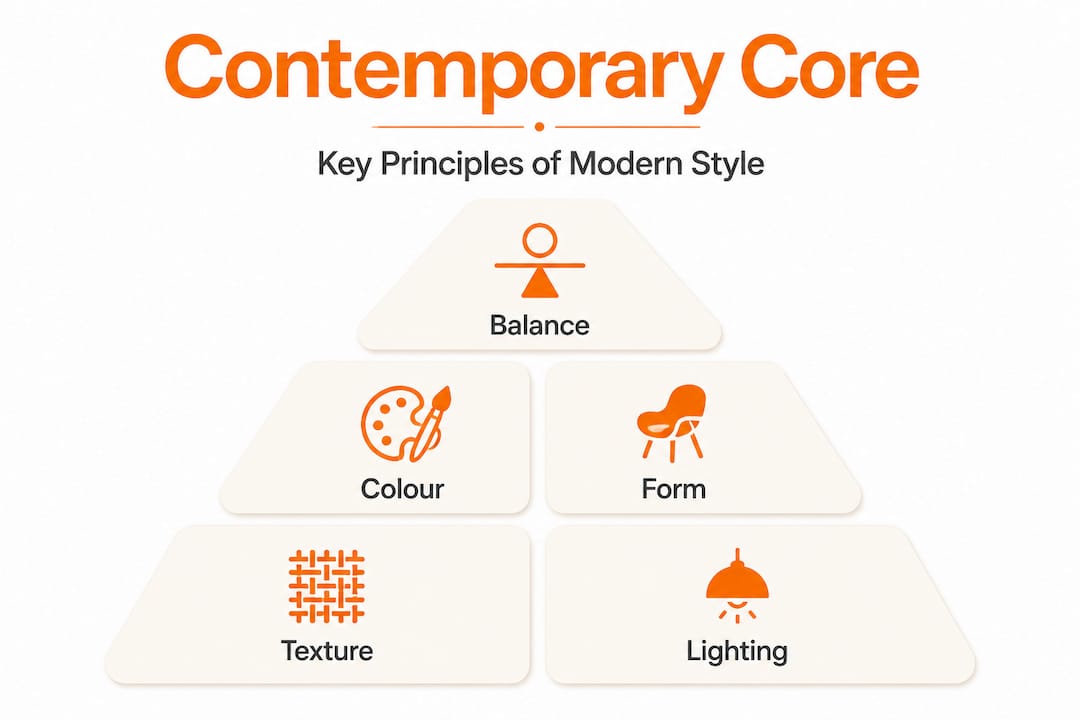
Key principles that define contemporary decor include a preference for clean architectural lines, an embrace of bold or unconventional colour, the use of sculptural and artisan-made objects, a balance between open space and layered texture, and an emphasis on timeless and vibrant interiors that resist disposable trend-chasing.
Core features of contemporary decor: beyond the basics
With the definition and boundaries of contemporary decor set, let’s look closely at the defining features that separate it from other interior styles.
Colour is perhaps the most misunderstood element. Contemporary spaces do not default to white. They use colour with intention and confidence, often choosing palettes that surprise. Deep terracotta alongside warm ochre. Dusty sage paired with a saturated cobalt accent. The key is that colour palettes for contemporary living are chosen with purpose, not applied as an afterthought. Colour becomes a structural tool, defining zones, directing the eye, and setting the emotional register of a room.
Form is the other major pillar. Contemporary decor champions unconventional materials and sculptural furniture, moving beyond the standard rectangular sofa and boxy coffee table. A chair with an organically curved silhouette. A side table cast from resin in a translucent amber. These pieces don’t just fill a room; they hold it. They give the eye somewhere to rest and the mind something to appreciate.
| Element | Contemporary application |
|---|---|
| Colour | Bold, layered palettes; unexpected combinations; seasonal accent shifts |
| Materials | Natural stone, resin, matte metals, warm timber, handmade ceramics |
| Form | Sculptural silhouettes, organic shapes, clean architectural lines |
| Lighting | Statement pendants, layered light sources, warm ambient tones |
| Artwork | Large-scale prints, abstract works, three-dimensional wall pieces |
Balance is critical. Contemporary interiors avoid visual clutter but equally avoid sterile emptiness. The artistic interior design tips that characterise the best contemporary spaces all return to this idea of edited abundance: enough to feel layered and alive, curated tightly enough that nothing feels accidental.
Pro Tip: If you’re nervous about committing to a bold wall colour, start with a single saturated accent object, a sculptural vase, a textured cushion, or a statement pendant in a deep shade. Live with it for two weeks before making any larger decisions. Colour reads differently across the day and across seasons, and that adjustment period will tell you far more than any paint swatch.
Texture is the feature most often overlooked. Layering materials, such as a linen throw over a velvet seat, a jute rug beneath a lacquered coffee table, is what gives a contemporary room its tactile warmth. Without textural contrast, even the most beautifully coloured space can feel one-dimensional.
Styling your space: practical steps to contemporary transformation
Understanding what makes a space contemporary is powerful, but knowing how to actually apply these ideas will help you see real results.
The most effective approach is sequential rather than wholesale. Trying to transform an entire home at once is overwhelming and often leads to decisions you’ll want to reverse within months. Instead, work through the following steps, one zone at a time.
-
Declutter with intention. Before adding anything, edit what’s already there. Contemporary spaces breathe. Remove anything that doesn’t earn its place through function, beauty, or emotional meaning.
-
Anchor with key furniture. Choose one or two statement furniture pieces that set the tone for the room. These should have genuine sculptural presence, not just fill square metres. A curved sofa in a warm burnt sienna. A dining table in raw, oiled oak. These become the room’s spine.
-
Introduce colour strategically. This is where many people hesitate, but small living room colour updates can shift the entire feeling of a compact space without requiring a renovation. A painted interior wall, a large rug in an unexpected hue, or a grouping of ceramics in tonal shades all achieve this with relatively low commitment.
-
Layer accessories deliberately. Strategically layering decor objects creates depth and vibrancy in contemporary spaces. Think in groups of three, vary heights and scales, and mix materials within each vignette.
-
Finish with art and lighting. These two elements are the final layer but arguably the most transformative. A large-scale artwork above a sofa changes the hierarchy of the entire room. A sculptural pendant over a dining table makes it a destination rather than just a surface. If you want to experiment with a more saturated approach, a colour-drenched lounge style can serve as both inspiration and a practical guide.
Pro Tip: Resist the urge to style every room simultaneously. Choose the room where you spend the most waking hours, usually the living room or kitchen, and make it genuinely contemporary before moving on. One room done with real conviction is more persuasive than five rooms done halfway. For uplifting colour palette ideas that work across multiple rooms, look for palettes that share a tonal family so spaces connect visually as you move through the home.
When sourcing pieces in New Zealand, prioritise makers and brands that work with considered materials and limited runs. Handmade ceramics, locally woven textiles, and sculptural objects produced in small batches carry a quality of presence that mass-produced alternatives simply cannot replicate. That presence is what makes a room feel genuinely contemporary rather than merely styled.
Contemporary decor in action: real-world New Zealand inspiration
Once you’ve got the building blocks in place, it’s time to see how contemporary decor transforms everyday New Zealand spaces.
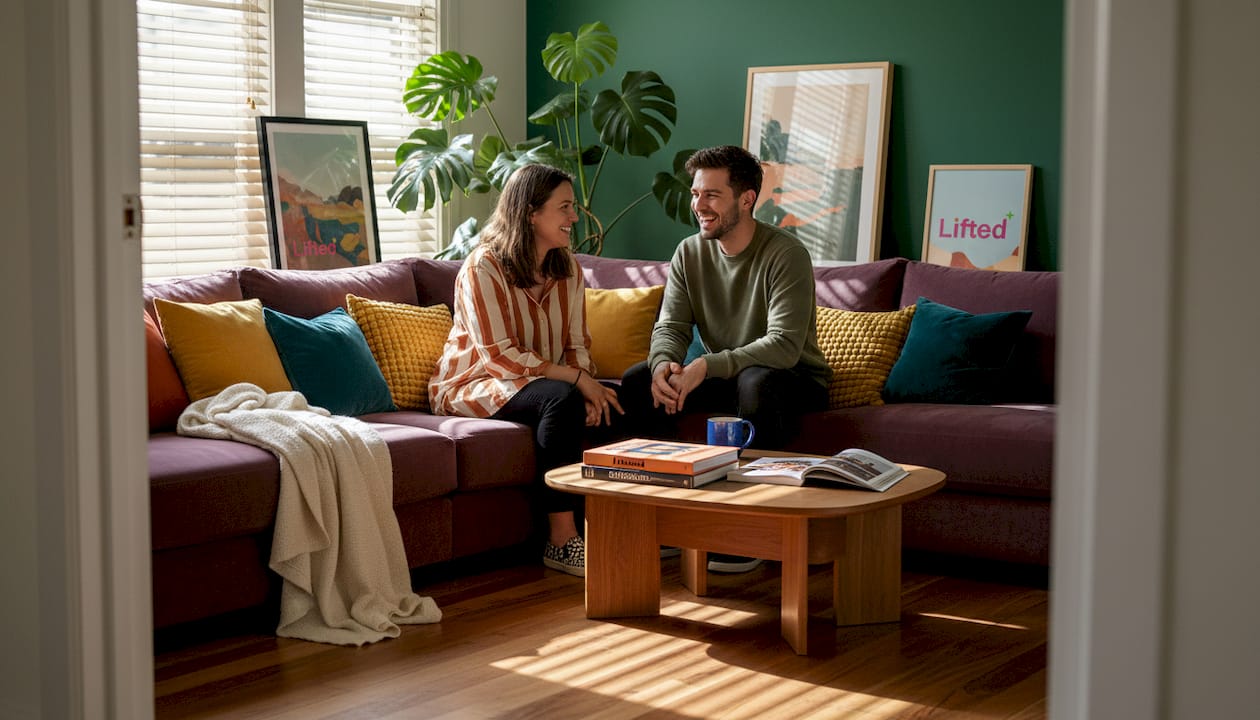
Consider a classic Auckland villa. The inherited bones, high ceilings, ornate cornices, polished timber floors, are assets rather than obstacles. In a contemporary interpretation, those period details become foils for bold, modern choices. A deep forest green on the walls of the front room. A curved velvet sofa in burnt amber. Abstract artworks in oversized frames that draw the eye upward into those generous ceiling heights. The result isn’t a conflict between old and new; it’s a conversation, and it’s more interesting than either pure period restoration or full-scale modern renovation.
In a compact Wellington apartment, the contemporary approach reads differently but with equal impact. Incorporating art and sculptural design objects is essential for contemporary interiors, particularly in smaller spaces where every element must justify its presence. A single large artwork can do the work of many smaller decorative pieces, giving the room a visual anchor without adding physical bulk. A sculptural floor lamp with an organic silhouette brings shape to the air without claiming floor space the way a second armchair would.
“Art doesn’t decorate a room. It decides it. The right piece determines the mood, the scale, and the character of everything around it.”
For a new build in Christchurch or Queenstown, the contemporary approach might lean into the connection between interior and landscape. Warm earth tones that echo the surrounding terrain. Natural stone surfaces. Oversized glazing framed by heavy linen curtains in a deep, grounded palette. The current NZ style trends consistently reflect this desire to bring the outside in, and contemporary decor accommodates that instinct beautifully.
Fast switches that shift any space toward a more contemporary feeling include:
- Replacing generic picture frames with a single large-format artwork in a bold, grounded palette.
- Swapping out a matching ceramic lamp set for one sculptural statement light.
- Adding a textured, oversized rug in an unexpected colour to anchor the main seating area.
- Grouping three ceramics of varying heights on a shelf or sideboard, chosen for material and tone rather than matching form.
- Introducing one deeply coloured cushion or throw that contradicts the room’s existing palette in a way that feels deliberate rather than accidental.
Each of these changes is reversible, relatively low cost, and instantly legible. They signal the shift from a room that is merely furnished to one that is genuinely considered.
Why contemporary shouldn’t mean ‘safe’: a designer’s take
Seeing how others interpret contemporary decor highlights the importance of adding your own flair. Let’s dig deeper into why that matters.
Here is the honest truth about contemporary decor in New Zealand: most people who attempt it play it too safe. They choose the warm white walls, the natural timber shelf, the linen cushions in shades that won’t offend anyone, and then wonder why the room still feels like a showroom. The surfaces are correct but the room has no character. It lacks the quality that makes a space feel inhabited by a specific person with specific tastes. It’s contemporary in the most cautious, polite sense, which is to say it isn’t really contemporary at all.
Contemporary design in NZ is an act of individuality. The freedom it offers is genuine, not theoretical. But freedom only produces something interesting when you actually use it. That means making choices that reflect your specific sensibility rather than a generalised idea of good taste.
The rooms that genuinely move us, the ones that stay with us long after we’ve left, are never the safe ones. They’re the ones where someone made a decision that felt slightly risky at the time and committed to it fully. A library wall painted in a rich inky blue when everyone else was reaching for pale sage. A sculptural pendant chosen for beauty and presence rather than budget efficiency. A piece of abstract art hung where a mirror “should” have gone.
Contemporary decor gives you permission to make those decisions. But permission only becomes bold minimalism or bold vibrancy when you actually act on it. Mix an unexpected colour into a palette that’s working just fine without it. Place a sculptural object somewhere it has no conventional precedent. Choose the piece that makes you slightly nervous and see how the room responds.
Pro Tip: The most memorable interiors we’ve seen all share one quality: something that doesn’t quite follow the expected logic of the room. One object, one colour decision, or one furniture choice that pulls a space out of the safe, polite middle and gives it a point of view. That’s your target.
Elevate your space: discover bold contemporary decor for NZ homes
With fresh ideas in mind and your interest sparked, here’s where to find that next bold addition for your home.
At Lifted+, we’ve built our collections specifically for New Zealand homeowners who want their spaces to feel genuinely alive. Not trend-chasing, not generic, but considered and vibrant and unmistakably theirs. Every piece is chosen for the presence it brings to a room, its sculptural quality, its colour, and its capacity to shift the feeling of a space simply by being in it.

Whether you’re personalising your decor for the first time or refining a space that’s already well on its way, our curated range offers the kind of pieces that make the difference between a room that’s finished and a room that’s felt. From statement lighting to tactile ceramics and bold textiles, you’ll find what you’re looking for when you shop contemporary decor at Lifted+. If you’re ready to start with art, our collection of unique wall art offers both large-format originals and curated prints that bring an immediate shift to any wall.
Frequently asked questions
Can contemporary decor be colourful, or does it have to be neutral?
Contemporary decor can absolutely be colourful; in New Zealand, it often features vibrant colours alongside artistic accessories and bold palettes are a defining strength of the style rather than an exception.
How do I choose the right art for contemporary spaces?
Select pieces that reflect your specific sensibility and serve as genuine visual focal points, such as abstract or sculptural works, since art and sculptural objects are foundational to strong contemporary interiors.
Is contemporary decor suitable for small New Zealand homes and apartments?
Yes, it works especially well in compact spaces because strategic layering, bold but controlled colour, and multi-purpose sculptural pieces allow small living rooms to feel considered and visually dynamic without requiring more square metres.
How do I balance minimalism with contemporary vibrancy?
Keep a clean architectural base and introduce colour and texture through carefully selected objects and textiles, as minimalist spaces with bold colour applications are among the most celebrated expressions of contemporary styling right now.