

TL;DR:
- Acoustic wall decor effectively reduces echo and enhances room visuals without appearing overly technical. Selecting panels with high NRC ratings and strategic placement maximizes sound absorption and overall room comfort. Sustainable and customizable options allow homeowners to achieve functional and aesthetic harmony tailored to their interior design.
Noise has a texture. It builds in hard-walled rooms, bounces off bare floors, and leaves you feeling vaguely unsettled without knowing why. Acoustic wall decor addresses that problem directly, but the best options do something far more interesting: they hold the room visually while pulling unwanted echo out of the air. The challenge most homeowners face is finding pieces that perform without looking like they belong in a recording studio. This guide covers the criteria that matter, ten standout options, and exactly how to choose the right fit for your space.
Table of Contents
- Key takeaways
- What to look for in acoustic wall decor
- Top 10 acoustic wall decor options
- Comparing acoustic wall decor options
- Choosing the right option for your room
- My honest take on acoustic decor after years in this space
- How Liftedplus can help you find the right fit
- FAQ
Key takeaways
| Point | Details |
|---|---|
| Absorption vs. soundproofing | Acoustic panels reduce echo and reverberation; they do not block sound from travelling between rooms. |
| NRC ratings guide performance | Look for panels with an NRC of 0.85 or higher for meaningful noise reduction in living spaces. |
| Placement matters as much as product | Positioning panels at primary reflection points delivers far better results than covering walls at random. |
| Design and function can coexist | Custom-printed, fabric-wrapped, and sculptural panels offer genuine acoustic performance with strong visual presence. |
| Eco-friendly options are viable | Sustainable panels made from recycled materials now match the acoustic performance of synthetic alternatives. |
What to look for in acoustic wall decor
Before you buy anything, it pays to understand what separates a panel that actually works from one that merely looks the part.
Sound absorption versus soundproofing
Acoustic panels reduce echo but do not block sound from passing through walls. These are fundamentally different functions. If you want to stop noise from a neighbour’s flat travelling into your bedroom, that requires mass and isolation. If you want to stop your open-plan living room from sounding like a gymnasium, acoustic decor is exactly the right tool.
NRC and sound absorption class
The Noise Reduction Coefficient (NRC) tells you what fraction of sound energy a panel absorbs. A rating of 0.90 means 90% of sound hitting the surface is absorbed rather than reflected. Certified absorption classes help you compare products honestly. Class A is the highest rating available, and it is what you should look for in rooms with significant echo problems.
Material types
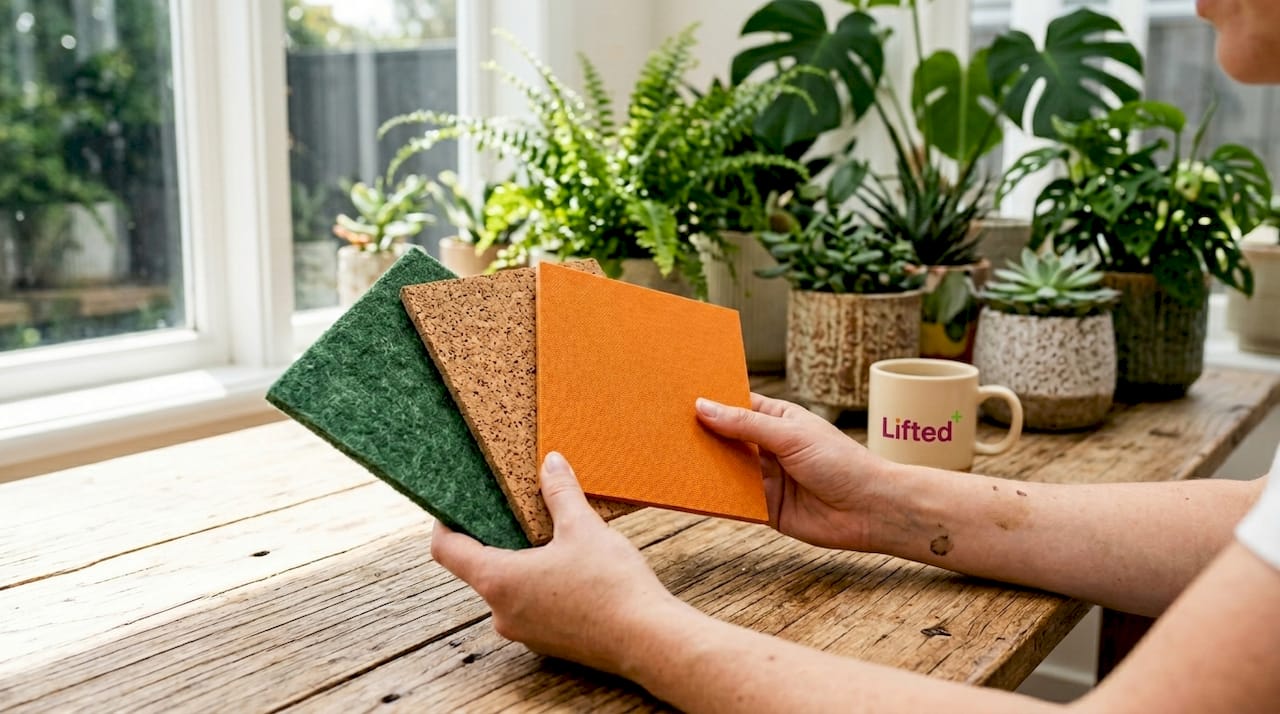
Common core materials include PET felt (often made from recycled plastic bottles), fibreglass, rock wool, and wood wool. Fabric-wrapped versions use the same high-performance cores with a textile finish. Each material has a slightly different absorption profile across frequencies, though all effective options convert sound energy into heat, reducing reverberation rather than reflecting it back into the room.
Design flexibility and sustainability
Size, shape, colour, and print quality all affect how a panel sits within your interior scheme. Sustainable panels made from recycled pulp now offer biodegradable construction without sacrificing performance. For homes conscious of environmental impact, this is a genuinely meaningful distinction, not just marketing language.
Pro Tip: Calculate your room’s surface coverage requirement before purchasing. Divide the room’s volume in cubic metres by the panel’s NRC rating to get a rough guide on how much coverage you need. Relying on aesthetics alone consistently leads to undertreatment.
Top 10 acoustic wall decor options
## 1. High-performance acoustic art panels
These are the gold standard for combining visual impact with serious acoustic credentials. The best examples achieve NRC 0.90 and Class A absorption when mounted flush against the wall. They are typically made from compressed fibreglass or rock wool with a printed fabric face, meaning the image is not merely decorative but structural to the product. If your home office or living room has hard surfaces on every side, this is where to start.
## 2. Wooden acoustic panels
Wood brings warmth to a room in a way no synthetic panel can replicate. Wooden panels combine natural texture with genuine sound absorption and can be hung like framed pictures, which makes installation approachable for most homeowners. Slatted designs are particularly effective because the gaps between slats create varied surface geometry that breaks up sound waves across a wider frequency range. They work beautifully in dining rooms and entry hallways where you want presence without introducing something that reads as overtly technical.
## 3. Fabric-wrapped acoustic art panels
Fabric-wrapped panels are the most versatile category in this space. The core is acoustic foam or fibreglass, and the stretched textile surface can carry almost any colour or texture. Some manufacturers offer interchangeable fabric covers, which means you can refresh the visual without replacing the panel entirely. This modularity matters more than it sounds: your design sensibility will change, but your room’s acoustic needs probably will not.
## 4. Custom-printed acoustic panels
If you want artwork that genuinely performs, custom-printed panels are worth serious consideration. Custom sizes up to 58 inches wide and 20 feet long are available from specialist suppliers, with production times under a week. The key detail most buyers miss: acoustically transparent fabric is non-negotiable. If the printing substrate is not designed to allow sound to pass through, the artwork becomes a reflective surface rather than an absorptive one, which defeats the purpose entirely.
## 5. Felt acoustic panels with 3D relief
Thick felt panels pressed or cut into geometric relief forms have become a staple of contemporary interiors, and the acoustic results justify the visual attention they attract. The layered texture increases the panel’s effective surface area, which improves mid-frequency absorption in particular. They read as sculpture on the wall, which means they carry genuine weight in a room designed around considered objects rather than filler.
## 6. Sustainable panels from recycled materials
This category has matured considerably in recent years. Panels built from recycled paper pulp now feature dual-layer construction without synthetic adhesives or plastics, and they absorb sound across a broad frequency range while remaining fully biodegradable. For homeowners prioritising long-term environmental responsibility, these panels represent the convergence of conscience and performance. The aesthetic tends towards natural, textural surfaces rather than high-gloss finishes, which suits organic and biophilic interior schemes particularly well.
## 7. Modular acoustic panel systems
Modular systems let you start small and expand as your needs or preferences change. Individual tiles or sections clip together in configurations that suit your wall dimensions. The practical advantage extends to maintenance: modular designs allow fabric replacement without discarding the acoustic core, which extends the product’s useful life considerably. For renters or homeowners who move frequently, this is one of the few acoustic solutions that makes genuine sense to invest in.
## 8. Self-adhesive decorative acoustic panels
Self-adhesive panels lower the barrier to entry for acoustic treatment significantly. No drilling, no wall anchors, no professional installation. The trade-off is that most self-adhesive options use thinner foam cores with lower NRC ratings than their mounted counterparts. They work well for mild echo problems in smaller rooms, home offices, or bedrooms. For significant acoustic issues, treat them as a complement to other treatments rather than a standalone fix.
## 9. Geometric wooden panel designs
Geometric configurations in timber veneer or solid wood have a specific quality that few other materials match: they look intentional at any scale. A single large geometric panel can anchor an entire feature wall. The acoustic performance varies depending on the depth and spacing of the pattern. Deeper relief and wider spacing produce better low-frequency absorption. These suit modern architectural rooms with strong lines and restrained colour palettes particularly well.
## 10. Room-specific optimised panels
Not every panel suits every room. Living rooms benefit from larger, lower-profile panels that absorb across broad frequency ranges. Home theatres need carefully calculated coverage at both primary and secondary reflection points. Dining areas, which often have hard floors and glass surfaces, respond well to panels on two opposing walls rather than concentrated on one. Statement wall art ideas that double as acoustic treatment are especially effective in dining spaces where the conversation should carry clearly without bouncing off every hard surface in the room.
Comparing acoustic wall decor options
| Option | NRC range | Sustainability | Price range (AUD) | Installation | Visual style |
|---|---|---|---|---|---|
| High-performance art panels | 0.85 to 0.95 | Moderate | $250 to $800+ | Wall mount | Photographic, bold |
| Wooden panels | 0.60 to 0.80 | High (natural timber) | $150 to $500 | Picture hang | Warm, textural |
| Fabric-wrapped panels | 0.80 to 0.90 | Moderate | $120 to $450 | Wall mount | Textile, varied |
| Custom-printed panels | 0.80 to 0.90 | Moderate | $99 to $600+ | Wall mount | Fully customisable |
| Felt 3D relief panels | 0.70 to 0.85 | High (recycled felt) | $100 to $400 | Wall mount | Sculptural, graphic |
| Recycled pulp panels | 0.70 to 0.85 | Very high | $80 to $300 | Wall mount | Organic, raw |
| Modular systems | 0.75 to 0.90 | Moderate to high | $60 to $200 per tile | Clip or mount | Configurable |
| Self-adhesive panels | 0.40 to 0.65 | Low | $30 to $120 | Peel and stick | Simple, minimal |
| Geometric wooden panels | 0.55 to 0.75 | High | $200 to $700 | Wall mount | Architectural |
| Room-optimised panels | 0.80 to 0.95 | Varies | $150 to $900 | Professional or DIY | Room-specific |
The table above gives you a working framework, not a final answer. Every room has different dimensions, surface materials, and acoustic profiles. A panel rated at NRC 0.90 in a small study will perform differently in a large open-plan kitchen. Use NRC as a comparative tool, not an absolute guarantee.
Choosing the right option for your room
The decision comes down to three intersecting factors: the room’s acoustic problem, its visual character, and how much flexibility you want in the future.
For a home office where speech clarity and focus are the priority, a high-performance art panel or custom-printed option at NRC 0.85 or above, positioned directly behind your monitor or on the wall opposite your desk, will make a measurable difference. The primary reflection points in a typical office are the wall directly facing you, the side wall nearest your monitor, and the ceiling above the desk. Cover two of those three and you will notice the change immediately.
For living rooms, the visual weight of your acoustic decor matters as much as its performance. A room built around considered furniture and layered textiles can absorb a sculptural felt panel or a large geometric wooden piece without it feeling out of place. Aim for coverage on the wall behind the main seating position and the wall opposite, and let the shape and colour of the panels speak as design objects in their own right.
For home theatres, the calculation becomes more precise. Coverage at six primary reflection points (front, rear, and both side walls at ear height, plus the ceiling) is the baseline. Modular systems make this achievable incrementally. You can read more about pairing these choices with your overall scheme in Liftedplus’s guide on modern interior design tips.
Consider modular or fabric-replaceable options if your aesthetic preferences shift frequently. The acoustic core is the expensive component. Being able to refresh the surface without replacing the whole panel is a practical advantage that compounds over time.
My honest take on acoustic decor after years in this space
I’ve seen homeowners spend three thousand dollars on acoustic panels that deliver almost nothing because they bought based on looks and placed them wherever there was empty wall space. I’ve also seen a single well-placed, well-specified panel transform a room from a frustrating echo chamber into somewhere people actually want to spend time.
The mistake I see most often is treating acoustic decor as a last resort, something you add after everything else is in place. In my experience, it works far better when you treat it as a primary design element and plan the room around it. A large geometric wooden panel or a photographic acoustic artwork at the right scale can anchor a room the way a statement sofa or a sculptural light fitting does.
What genuinely surprises people is the secondary benefit: rooms with good acoustic treatment feel calmer. Not just quieter. Calmer. The subtle stress of constant reverberation disappears, and the room becomes easier to be in. That quality is hard to photograph for a listing or a mood board, but homeowners who’ve made the investment consistently describe it as one of the most noticeable improvements they’ve made.
My practical advice is this: invest in one or two well-specified, well-placed panels before buying six mediocre ones. Coverage matters, but targeted coverage at the right points outperforms scattered coverage every time.
— Michelle
How Liftedplus can help you find the right fit

Acoustic performance and visual presence do not have to compete. At Liftedplus, the curation philosophy starts with the idea that every piece on your wall should hold the room, not just fill it. The wall art collection spans statement pieces, limited-edition works, and sculptural forms that sit naturally alongside or in place of dedicated acoustic panels. For homeowners who want their acoustic treatment to carry genuine artistic weight, the pairing of considered decor with functional wall pieces is exactly where the Liftedplus approach is most useful.
If you are working on a specific room and want a starting point for the broader scheme, the mood library is worth spending time with. It organises visual references by palette, material, and mood, which makes it considerably easier to find acoustic decor that fits your existing interior rather than fighting against it. Liftedplus also publishes practical styling guides for homeowners at every stage of a project, from blank walls to finishing layers.
FAQ
What is the difference between acoustic panels and soundproofing?
Acoustic panels absorb sound energy within a room to reduce echo and reverberation. Soundproofing blocks sound from passing between rooms and requires mass, isolation, and sealing, which acoustic panels do not provide.
What NRC rating should I look for in acoustic wall decor?
For meaningful noise reduction in living spaces, look for panels with an NRC of 0.85 or above. Class A certified panels, which typically reach NRC 0.90 to 0.95, offer the highest performance available.
Can decorative acoustic panels work as genuine artwork?
Yes. Custom-printed acoustic panels using acoustically transparent fabric can carry photographic or illustrated images at large scale while maintaining full acoustic performance, provided the printing substrate allows sound to pass through.
How many panels do I need for a room?
Coverage depends on room volume and the panels’ NRC rating. A rough guide is to cover 15 to 25 percent of the total wall surface area in a typical living space, prioritising primary reflection points over general coverage.
Are there eco-friendly options that still perform well acoustically?
Yes. Sustainable acoustic panels made from recycled paper pulp and recycled PET felt now offer genuine performance comparable to synthetic alternatives, with the added benefit of biodegradable or recyclable construction.
Recommended
- 11 Statement Wall Art Ideas For Modern Homes – Lifted+ | More Colour. More Mood. More Life.
- Wall Art That Holds A Modern Architectural Room – Lifted+ | More Colour. More Mood. More Life.
- Why Use Accent Walls: A Guide For NZ Homeowners
- 11 Apartment Wall Art Ideas For NZ Homes – Lifted+ | More Colour. More Mood. More Life.